Letters to the Editor: Solar farm planning requires clear guidelines
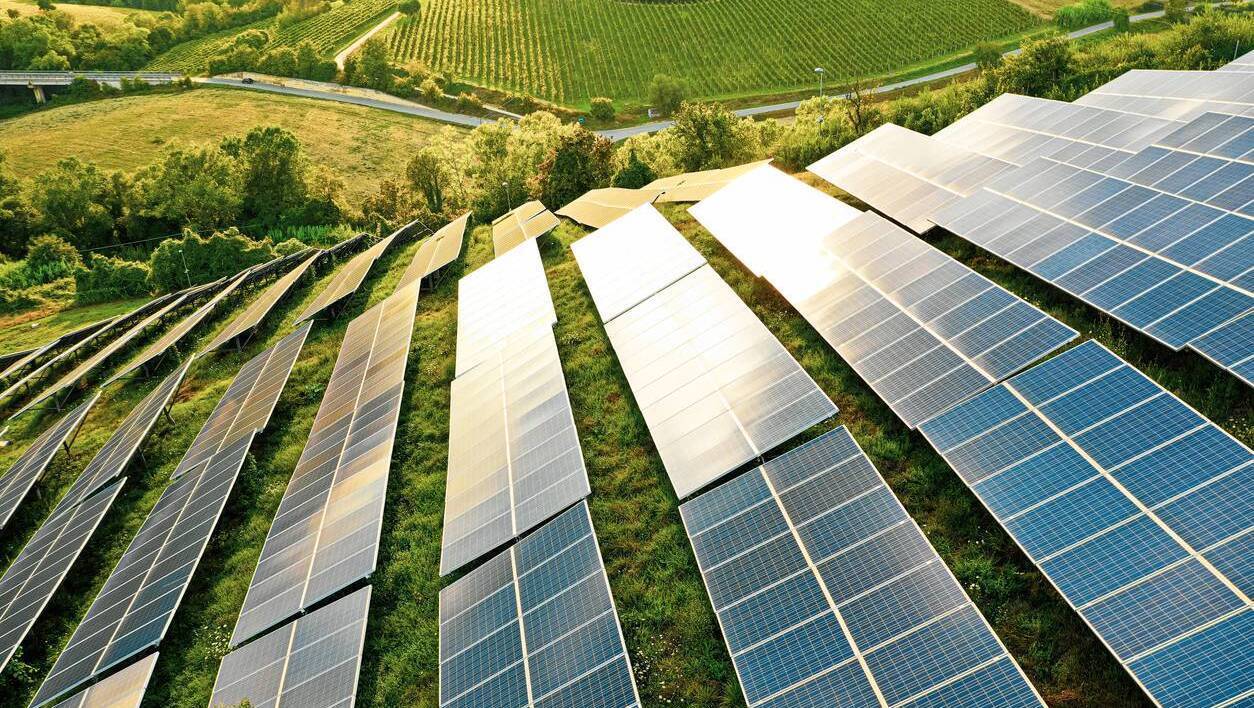
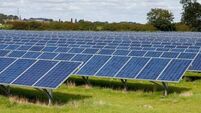
'The Government has set ambitious targets without first completing the dedicated national guidance for deciding where these developments belong and how they should be assessed,' writes Tony Higgins. Picture: iStock
Ireland has pushed ahead with large solar farms while leaving important parts of the national planning framework unfinished.
On September 16, housing minister James Browne confirmed that Ireland still had no specific national planning guidelines for solar development and that a national planning statement was being prepared.
General planning law, environmental protections, and county development plans still apply. But the Government has set ambitious targets without first completing the dedicated national guidance for deciding where these developments belong and how they should be assessed.
Into that gap comes a best-practice guide prepared by the Irish Solar Energy Association and engineering consultants Fehily Timoney.
Guidelines only, from the industry itself.
The Sustainable Energy Authority of Ireland (SEAI) helped fund it, and public bodies were consulted. Nevertheless, it remains industry-produced guidance rather than binding government planning standards.
The State should take responsibility for setting the standards against which the industry’s applications are judged.
There is also a strategic problem. A national electricity target does not tell us how much development a particular rural area can reasonably accommodate.
Several projects concentrated around the same grid connection raise different questions from the same acreage spread across the country.
Read More
We need consistent decisions about productive farmland, water, landscape, nearby communities and the combined effects of neighbouring developments.
An Taisce raised this planning gap with the Oireachtas in November 2025, reporting that many counties lacked designated areas for solar development and that those with designations appeared to use different criteria.
And here we are, almost one year later, still waiting for the national guidance.
Other EU countries offer concrete examples we could learn from.
The Netherlands puts panels on buildings ahead of agricultural and nature land in its national preference hierarchy. Its regional energy strategies consider where, when, and how much renewable generation to develop, taking grid capacity into account.
France has specific legal rules for projects combining farming and solar generation. For crop-based projects in that category, the normal rule requires average yields above 90% of a comparable reference without panels, subject to specified exceptions. That makes the claim that farming will continue something that can actually be measured and checked.
Our electricity infrastructure is a significant issue too. The system already cannot handle all the renewable generation available to it.
EirGrid reported that 11.2% of available renewable generation was turned down in the first half of 2026. It identifies grid constraints, system-security requirements, and surplus generation as reasons.
That is wasted potential.
There are grid upgrades underway. But the Government is pushing ahead with more generation while the infrastructure needed to use it is still catching up.
Surely you make sure your infrastructure can handle what you want to produce before you create more waste?
Then there is community engagement.
In our community in Lackagh, Co Galway, we had no meaningful opportunity to influence the Blackthorn Solar Farm plans before submission.
The developer held an information evening on a Wednesday. By the following Friday morning, the site notices were up. What opportunity did that give residents to raise concerns and have them properly considered before the application went in?
Albert Dolan raised our community’s experience in the Dáil on September 30 and called for clear solar planning guidelines. We now have five weeks to work through the application, understand the technical reports, and prepare our submissions.
Ireland has introduced faster permitting under the EU’s RED III directive. Yet the ordinary five-week submission window remains for applications like ours.
The regulations did not introduce a general minimum period for developers to consult neighbours before submission.
These developments can remain for decades. It is absolutely shocking that communities can receive so little meaningful engagement beforehand.
We need clear national requirements. Developers should demonstrate that construction traffic can safely pass schools, that drainage will work in the actual ground conditions, and that they have properly assessed glare and effects on water and wildlife.
They should explain the impact on existing farming and secure restoration when the development ends.
And they should engage with communities early enough for local knowledge and concerns to influence the plans; that should be a basic expectation.
The Government needs to finish the rules, co-ordinate the infrastructure, and require meaningful community engagement before applications go in.
Alcohol Action Ireland CEO Sheila Gilheaney writes that excise is not the problem for rural pubs; off licences are — ‘Decline of rural pubs is not down to excise duties’ ( , October 5).
All national discourse on the alcohol industry seems to shriek through a neo puritanical lens, yet once again the pubs are the whipping boy. We live in an era where pubs are closing, yet alcoholism and trauma-related coping are rising. While there might be a modicum of truth in what she says about the alcohol industry cannibalising itself, she offers an all too simplistic argument which must be rebutted.
What exactly is the alcohol industry?
Did rural pubs drive what the modern alcohol industry has become, did they ask for what was up to recently below-cost alcohol in supermarkets ? Did they sell their licences to facilitate the off trade because they could, or was it the crushing force of business over-compliance that brought them prostrate to the auctioneers hammer out of desperation?
To baldly state that a decent rural publican is part of the cannibalisation of his own trade shows scant understanding of the Irish pub. The truth of the matter is the rural pub has diverged so much from what Gilheaney calls the alcohol industry that it deserves special attention in an existential crisis not only for its social benefits but increasingly as vital national tourist infrastructure, the lack of which is becoming increasingly clear as the absence of pubs is rapidly becoming a negative for tourism and is a major talking point in the USA for potential visitors.
The VFI has asked for a €75 m excise rebate out of a total of €1.26bn. In years to come it will be seen as the cheapest way to support rural and provincial pubs. They are right to ask for it and government would be wise to listen.
Time must be called on those who are caught up solely in the dangers of alcohol at the expense of the positives of the pub. I may be a publican but I grew up with firsthand experience of addiction, all of which went on at home, not in the pub. I understand it all too well. Alcohol Action on the other hand must learn more of the public house for articles like these only serve to worsen the outcome that they work so hard to help avoid.
Regarding social welfare changes in the budget: The politicians live in another world — ‘You get the pension on Friday and on Monday there isn’t too much of it left’ ( , October 6).
I am 95 and live on my own as I lost my wife three years ago. I have to spend quite a lot on car fuel going to town shopping and hospital appointments, as well as car insurance, road tax, and household bills. I light a fire in the one room I use most as I cannot turn the central heating on as the oil is too expensive
Senator Tom Clonan has written an excellent article explaining the triple lock issue — ‘Spin and misinformation around triple lock is eye-watering’ ( , October 7).
As a former army captain and security correspondent, he knows his stuff. It is a pity the Government don’t know their stuff. Instead, they are being led by the nose by a rapidly re-arming EU as the world heads towards major conflicts.
As a neutral country, we should not be drawn into these military operations. Our military have a good record as UN blue helmet peacekeepers. And this commitment to neutrality is supported by several polls of voters.
The Government needs to listen to the people, not to out-of-sight influencers.