'I felt completely abandoned by the State when we were at our most vulnerable', Jason Corbett's sister says

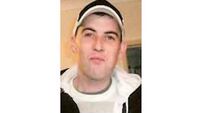
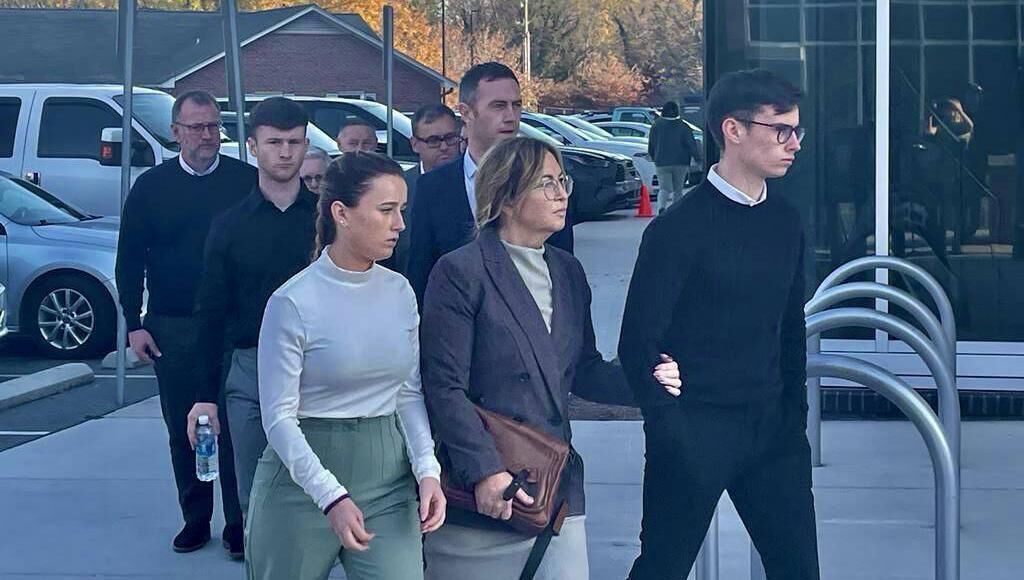
The picture on the left shows Jason Corbett and on the right is his daughter Sarah Corbett (in white) with her aunt, Tracey Corbett Lynch, leaving Davidson County Court in Lexington for the sentencing hearing of the killing of Mr Corbett on November 8, 2023.
The sister of Limerick man Jason Corbett, who was bludgeoned to death by his second wife and her father in the US, says she felt abandoned by the State when she stepped in to become the carer of his two children.
Tracey Corbett Lynch brought her brother’s children, Jack and Sarah, home to Jason’s native Limerick following the killing in August 2015 by Molly Martens and her father Tom, a former FBI officer.
Ms Corbett Lynch and her husband David were successful in a court challenge against a decision which had granted Martens custody of the children just days after Jason Corbett’s death.
In a plea to the Government to take action to help kinship carers such as herself, Ms Corbett Lynch says: “I had worked in the community and voluntary sector, giving me far more access to information and signposting than most — yet still I felt completely abandoned by the State at a time when we were at our most vulnerable, dealing with an unimaginable family crisis that went on endlessly.”
She recalls: “When my brother Jason was cruelly taken from us, bringing Jack and Sarah home to Ireland wasn't just dealing with the American justice system — it was being met in return to Ireland with a devastating fight against a system that labelled our situation a ‘private arrangement’.”
Ms Corbett Lynch explains: “Because we chose to step in, because of that label, we were denied automatic access to the crucial therapeutic counselling pathways readily provided to foster parents, who do truly amazing work.
"Grieving and traumatised children and their carers should never be penalised for being cared for by their own flesh and blood. Alone, private regular counselling cost €80 per session for each child, not to mention the vital art and equine therapies they desperately needed to process their profound trauma.”
Read More
Ms Corbett Lynch points out that when she brought Jack and Sarah to Ireland, formal State kinship care didn’t exist in policy. She only became aware of whatever help was available when the founder of Kinship Care Ireland contacted her.
She reflects: “I had worked in the community and voluntary sector, giving me far more access to information and signposting than most — yet still I felt completely abandoned by the State at a time when we were at our most vulnerable, dealing with an unimaginable family crisis that went on endlessly.”
She is highlighting her family’s experience during Kinship Care Week which runs until October 11.
An estimated 10,000 to 12,000 children in Ireland are currently in kinship care, living with family members or close family friends outside the foster care system.
Care is provided by grandparents, aunts, uncles, adult siblings, and other relatives when parents are unable to do so because of issues such as death, addiction, ill health, or imprisonment.
The Limerick woman says: “These arrangements are rarely planned; they are emergency interventions born out of love. This means children and their relative carers enter kinship care facing exceptionally high, complex needs. Everyone affected is left reeling and requiring immediate, wrap-around support.”
Ms Corbett Lynch points out that less than a quarter of kinship carers receive State support. “Beyond the devastating emotional toll, the practical disruptions shatter a household's basic structure," she says.
"Overnight, an aunt, uncle, relative, or grandparent is forced to reconfigure their entire life to accommodate traumatised children. Families are suddenly left scrambling to find homes with enough rooms, struggling to upgrade car sizes for sudden car seats, and absorbing astronomical spikes in everyday grocery, clothing, and utility bills.”
Children's minister Norma Foley, in a reply to a recent parliamentary question, confirmed that a policy on the rights of children living in informal kinship care is being examined, with a view to having it finalised before the end of the year.
Kinship care received dedicated funding in Budget 2027 , announced on Tuesday, with €1.2m allocated to support the rollout of a new kinship care policy and a child and family homelessness action plan.
Kinship Care Ireland welcomed progress on the development of the policy and is represented on its steering group. However, it said a broader approach is required, calling for a whole-of-government response with clear roles for all departments involved in delivering the national policy.
The group is also calling for:
- Legal guardianship pathways for kinship carers to avoid issues for children accessing essential medical care;
- Housing pathways and succession rules that reflect kinship family circumstances;
- Children in kinship care to have their rights, wellbeing, and best interests recognised across State services;
- Meaningful involvement of kinship carers, children, parents, and wider families in shaping policy implementation and supports.
Ms Corbett Lynch says that action must be taken to help families. “Grieving and overwhelmed relatives are left to navigate exhausting systemic, legal, and economic barriers completely alone. The State is using the unconditional love of families as a cheap safety net.”
She is urging the Government to “stop forcing vulnerable Irish families to choose between financial survival and keeping their children safe at home”.
As part of Kinship Care Week, kinship carers joined Treoir's Kinship Care Ireland team outside Leinster House to highlight their concerns to politicians ahead of Budget 2027.
The group presented a Kinship Voices booklet containing first-hand accounts from carers in an effort to raise awareness among policymakers of the realities and challenges of kinship care.
They called on the Government “to ensure children in kinship care and the families caring for them can access the financial, legal, health, education, housing, social protection, and therapeutic supports they need”.
Among the carers who attended the event was Lorraine Carey, who is a kinship carer for her nephew. “I know only too well the challenges that kinship carers can face," she says.
"Allowing children to remain with family members should be paramount and kinship carers deserve to be recognised and supported on all levels in undertaking a challenging but very rewarding role.”
Kinship Care Ireland spokesperson Laura Dunleavy says: “Every day, kinship carers step up, they provide children with family, connection, stability, and belonging.
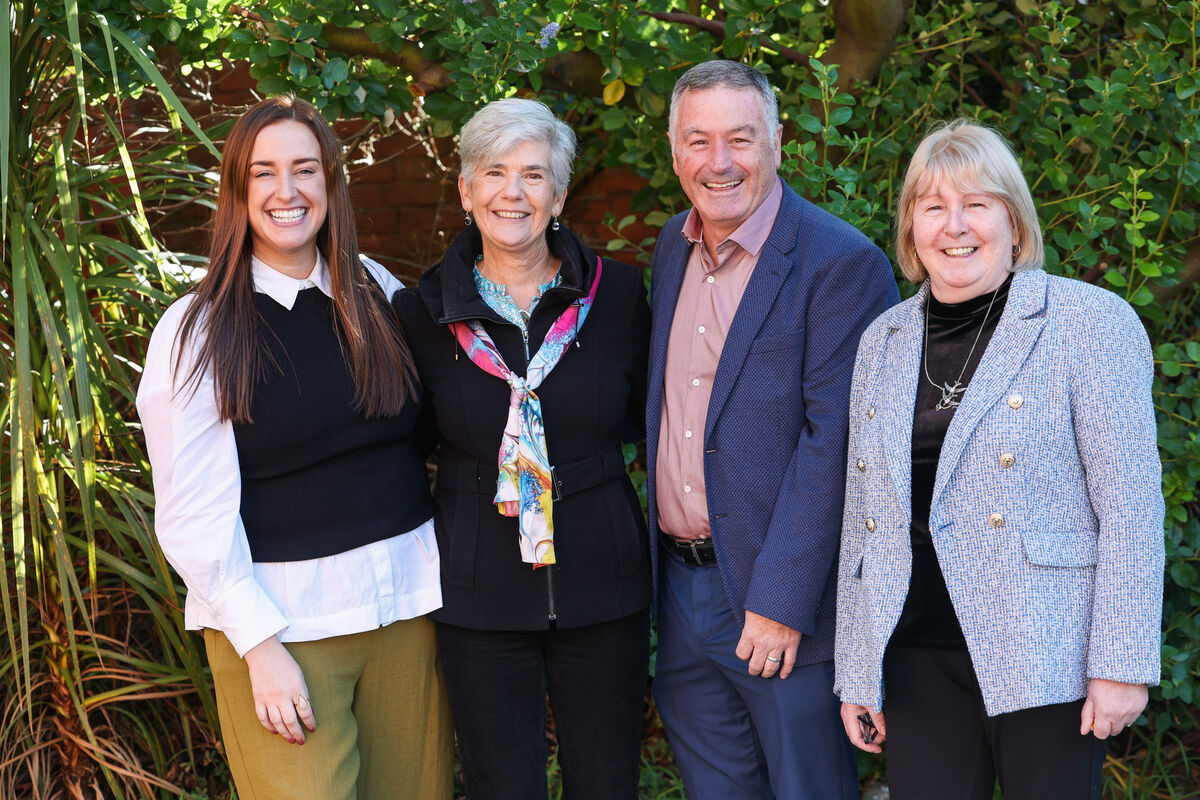
"But love alone cannot meet every need. Kinship carers need practical, financial, and therapeutic support to care safely and sustainably, and children need their rights and needs recognised wherever they encounter the State.”
She added: “Kinship care is a whole-of-government issue. Families should not have to navigate a patchwork of systems or lose out on essential supports simply because they stepped forward to care for a child.”
Ms Dunleavy says that families engaged in kinship care are saving the Government “billions” by taking on the job of caring for their relatives instead of seeing them go into the care system.
The programme for government included a commitment to “improve support for kinship care to enhance outcomes for kinship families”.
Ms Foley says the process of developing a national policy for children in kinship care is part of that commitment.
“The department is now preparing draft policy recommendations. These are informed by the scoping exercise, findings from the consultations, and research activities, and are being developed in consultation with the steering and advisory groups for the development of the policy.
"I expect the policy to be finalised in 2026, and this will pave the way for associated implementation plans. This timeline is dependent on the engagement and agreement of other departments.”
CONNECT WITH US TODAY



Be the first to know the latest news and updates