Letters to the Editor: Football fans need to be heard on Israel tie
The refusal of football's governing bodies to remove Israel from their competitions is hypocritical when considering their previous actions
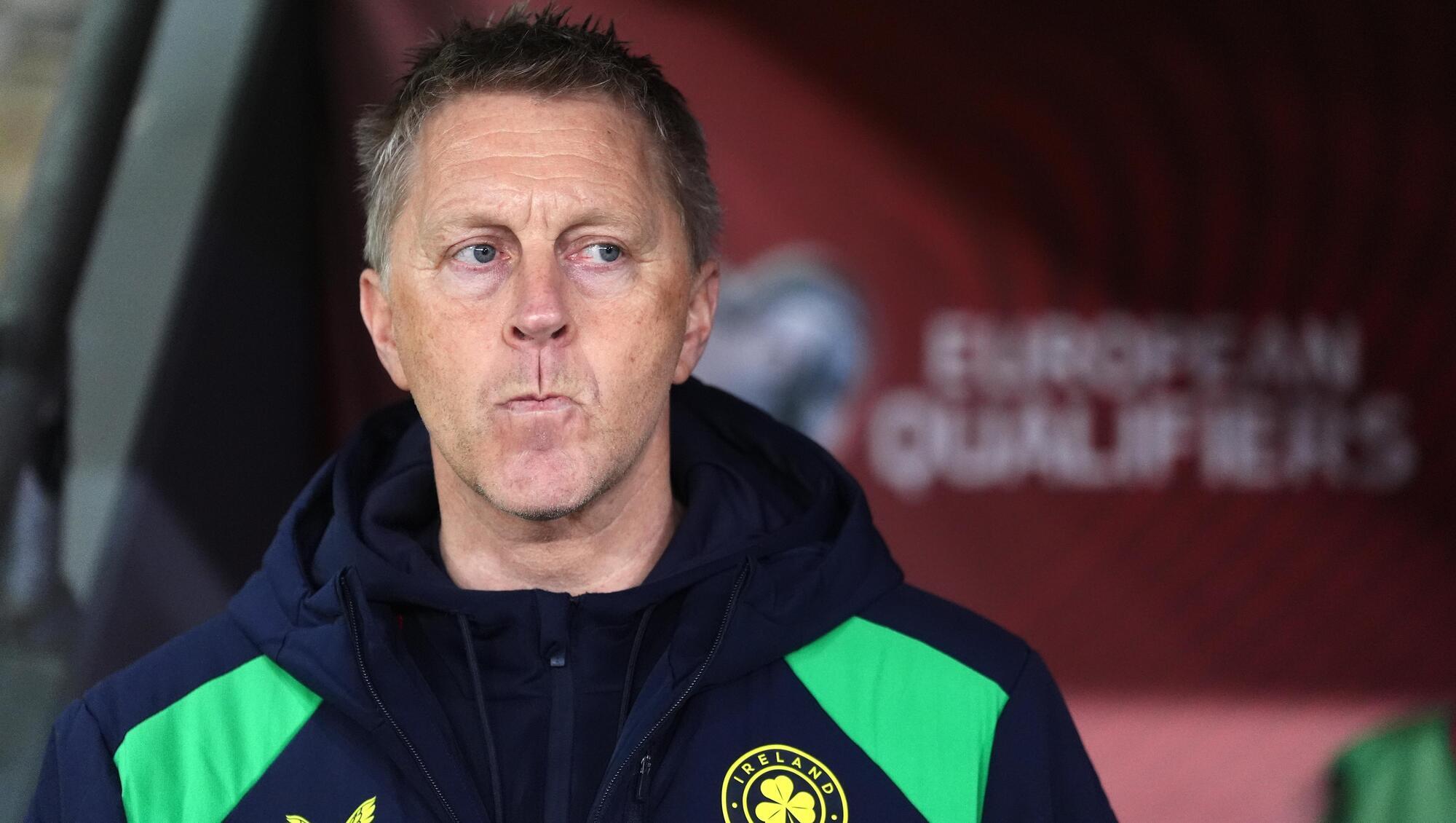
Ireland head coach Heimir Hallgrimsson will lead his team into a pair of controversial matches against Israel in the Uefa Nations League, the first of which takes place on Sunday.

Ireland head coach Heimir Hallgrimsson will lead his team into a pair of controversial matches against Israel in the Uefa Nations League, the first of which takes place on Sunday.

The refusal of Uefa and Fifa to expel Israel from their competitions is symptomatic of the racism, corruption, and greed inherent in these organisations. It is also utterly hypocritical when you consider that Russia was expelled from Uefa only four days after invading Ukraine.

The decision by Uefa, the FAI, and the Government to allow the Ireland matches against Israel to go ahead has to be condemned in the strongest possible terms.

Also, the decision by RTÉ to televise these matches needs to be equally strongly condemned. Despite its stripped back nature, by televising these matches RTÉ continues to lend legitimacy to apartheid Israel and their football team.

The mass public opposition and protests to the Ireland v Israel fixture needs to continue and broaden to opposition to FAI, Uefa, and Fifa demanding an end to corruption and for democratic accountability to the fans. 

To do this, Irish football fans need to link up internationally with other democratic social movements of football fans. Here in Tralee, myself and other fans of Kerry FC have been involved in protests against the match being allowed to go ahead including outside Kerry’s home venue, Mounthawk Park.

The power of football fans as a movement to effect change was witnessed recently when Celtic fans, through mass protest, helped prevent Robbie Keane being appointed manager. Celtic fans have always demonstrated their strong support for the Palestinian cause and consequently were furious that Keane was been even mooted as manager of Celtic. Keane had only recently managed the Israeli club, Maccabi Tel Aviv, whose fans were involved in the most vile racism and thuggery against Arabs at away matches.

Kieran McNulty, Tralee, Co Kerry

A lesson for body and soul

When I was a young lad there was no such thing as a school meal, except the ones we brought in our schoolbags. We had an excellent teacher, Padraig Concannon, affectionately known as ‘Baldy’ in Our Lady’s Primary school in the then small village of Tallaght, Co Dublin. Each week he would buy a large block of cheese and at lunchtime he would set it up on his desk and proceed to slice it up and distribute portions to some pupils in the class.

One day I went home and complained to my mother that he never gave me any cheese. She then asked me to open my lunch box and tell her what I saw. An uneaten sandwich was observed and after further interrogation I was forced to admit that I was too full to finish it. She then explained to me that Baldy was feeding the unfortunate poor children of the school who went there without a proper breakfast. He was doing it in such a way as to hide the fact that it was charity, pure and simple. She then instructed me not to bring home any leftovers, but to offer them to others in the class who were not as fortunate as pupils such as I. 

A valuable lesson was learnt by me that day.

Bobby Carty, Templeogue, Dublin 6W

Whistleblower protection

The enactment of the Protected Disclosures Act 2014 into Irish law and strengthened by the Protected Disclosures (Amendment) Act 2022, was supposed to protect workers/employees.

After RTÉ’s Prime Time Investigates [programme about] protected disclosures made by staff in Garda Heaquarters, who can we trust?

Those “protected disclosures” were to allow staff to disclose relevant wrongdoing that they reasonably believe, where wrongdoing has happened, is happening, or is likely to happen.

The obligation on employers, in this instance the Commissioner of An Garda Síochána, was to:

  • 1) Establish and communicate a clear protected disclosures policy;
  • 2) Maintain confidentiality and fair process;
  • 3) Train staff;
  • 4) Meet statutory timelines.

Given the fact that a second whistleblower's identity was exposed by former minister for justice, Helen McEntee’s, office, after she exposed Detective Superintendent’s Brian O’Reilly’s identity, where are the protections for whistleblowers?.

A person who breaches confidentiality regarding the identity of reporting person, or who penalises or threatens penalisation or permits another person to penalise or threaten to penalise or threaten penalisation against any number of persons mentioned in the act, commits an offence.

On summary conviction there is a fine or imprisonment not exceeding 12 months nor both or on indictment a fine not exceeding €250,000 and a term of imprisonment not exceeding two years or both.

The underlying threat of penalisation, and exposure of whistleblowers’ identity, should be investigated fully.

No minister or commissioner should be protected where there is clear and unequivocal evidence, and facts, that they committed such offences, if we are to trust in the process of protected disclosures.

The ombudsman and data protection commissioner have roles to play as well as elected officials.

Who will be held to account, or is this just another brushing under the carpet scenario?

Christy Galligan (retired Garda sergeant), Letterkenny, Co Donegal

Privilege of being a father

A chara, permit me to share a recent act of kindness which also served as a reminder of my own senior status. The other day in Naas at the car park, a woman (in the 30s age group), seeing that I had no cash and that I was struggling with the QR code, offered to help me and I was glad to accept her gracious offer. She said, if it was her own father, he’d be getting a heart attack in this situation!

As well as reminding me of my own age, this also set me thinking about the wonderful privilege it is to be a father of children and, perhaps for a man even more so, of daughters. The woman who helped me the other day obviously has a deeply caring and loving relationship with her father and isn’t that such a wonderful thing, both for her and for him.

John Glennon, Hollywood, Co Wicklow

Going down the wrong track

Recently in the European Parliament, Ireland made its case for rail at a community of European Railway organised event.

The debate, co-hosted by the Irish presidency of the council of the EU, and Nina Carberry MEP, with Iarnród Éireann, and the Community of European Railway and Infrastructure Companies (CER) together. The message was that an ambitious EU rail budget is not a luxury but an essential investment in EU competitiveness, resilience and sustainable growth.

Ireland’s rail development programme was cited in the same context as the Brenner Base Tunnel and Rail Baltica, both flagship projects at the heart of EU vision for a connected Europe. The EU Council is due to take up discussions on the EU Term Budget in October, and rail advocates want a bigger share of the budget locked in before it is all agreed.

Simultaneously, back home in Sligo, a different story was unfolding on the same historic rail corridor that Ireland was holding up in Brussels as evidence of its commitment to rail. Iarnród Éireann has reportedly agreed to lease roughly 30km of the currently disused Western Rail Corridor between Collooney and Bellaghy to Sligo Co Council for a greenway. 

The decision follows sustained local political lobbying and a reversal of Irish Rail’s own earlier opposition to the prefered route. In Brussels, Ireland’s rail programme was framed as a model of the ‘strong regional connections’ that the EU wants to see towards completing the Trans European Network (Ten-T).

In Sligo, a regional rail connection is being handed over for a cycle path, having the track bed intact since the 1970s in order to allow the future restoration of the railway. The section of the Western Rail Corridor that sits within the Ten-T network — Athenry to Clarremorris — is now a live funded project, added to the Ten-T network in 2024 with a reported EU commitment to cover a percentage of capital costs. The Collooney — Bellaghy stretch further north is not yet part of that designation.

Irish Rail suggested that progress on the funded southern section could eventually strengthen for extending north to Sligo. In reality once track and sleepers are ripped up the political and financial threshold for reinstating a railway rises sharply, licence or not.

It’s one thing for the Irish Government to argue in Brussels that regional rail lines matter to Europe’s competitiveness and resilience. It is quite another to make the case in the same week that a regional rail line back home is being relegated to a walking trail. Any sensible person can see you don’t need to abandon the greenway proposal to fix this problem, but it does need a better answer than ‘different section, different rules’ if Ireland wants its Brussels advocacy to be taken seriously.

One thing is certain. If this foolish decision is not reversed, future generations will look back and wonder how it was ever allowed to happen?

Tom Towey, Cloonacool, Co Sligo

Kate Durrant’s article

  • I was so moved by the article at the weekend about the couple from Blarney where the husband has Alzheimer’s and the wife Kate had such a beautiful approach and way of vocalising her challenges and love. So many of us with parents with Alzheimer’s find it so hard to see their personalities disappear before our eyes but looking at it from a partner’s perspective, it was heartbreaking and beautiful too. We need more of this please.

Annette Dilworth, Dripsey, Co Cork

  • I absolutely loved your recent feature by Kate Durrant. It was so heartfelt and true of so many peoples’ difficulties but also a rewarding journey on having a family member with dementia.

Kate’s idea of keeping a diary was inspiring and I think would be very helpful for anybody on this journey. Her writing was so powerful while still remaining respectful of her partner. It’s the little moments of ordinary life being made extraordinary. Looking forward to more articles like this.

Gillian Singleton, Killeens, Cork

  • A great pleasure of living overseas is sitting in the morning sunshine with my digital copy of the Irish Examiner.


This weekend, I was particularly moved by Kate Durrant’s piece about living alongside her partner’s dementia. Dementia is so often discussed only in clinical terms, but Kate reminds us that behind every diagnosis is a person, a relationship and a shared life being changed in ways few of us can fully understand. Her beautiful piece stayed with me long after I had finished reading it.

Sandra Dwyer, Tenerife

More in this section

Revoiced

Newsletter

Had a busy week? Sign up for some of the best reads from the week gone by. Selected just for you.

Cookie Policy Privacy Policy Brand Safety FAQ Help Contact Us Terms and Conditions

© Examiner Echo Group Limited