Letters to the Editor: Dementia proves we must make most of time
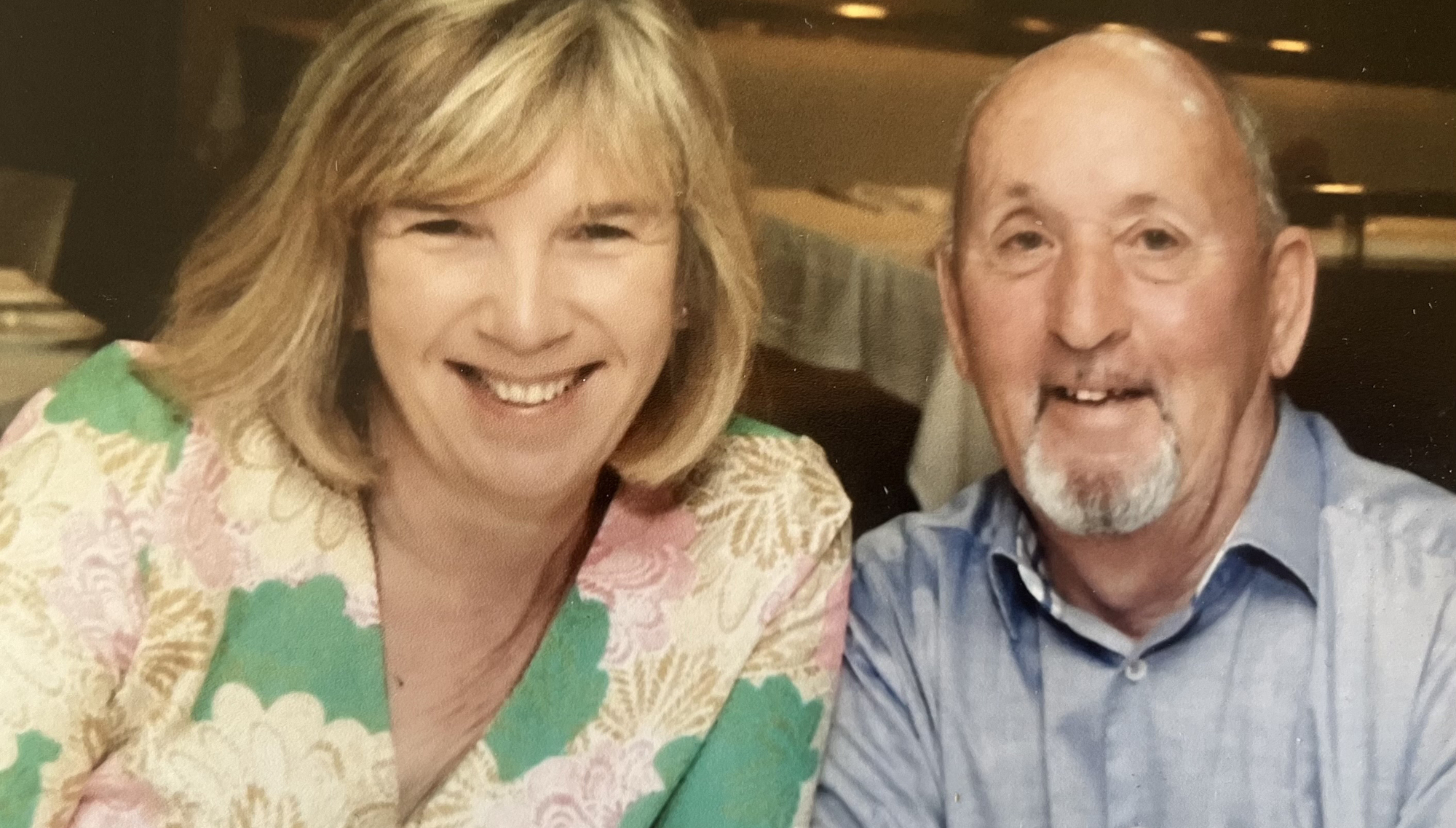
Kate Durrant with her partner PJ Lynch, who was diagnosed with dementia in February 2017.

I felt compelled to write to you after reading Kate Durrant’s incredibly moving article, ‘I wish I had recognised “lasts” for what they were’ ( , September 19).
It is difficult to put into words just how deeply this piece affected me. Kate is an exceptionally talented writer, but what makes her writing so powerful is the honesty, tenderness, and humanity with which she tells her story.
Her words drew me completely into a world that, although I can never fully understand, she allowed me to glimpse with extraordinary clarity — the world of someone living alongside and caring for a person with dementia every single day.
My grandmother had dementia, so perhaps that is part of the reason Kate’s words resonated with me so profoundly.
Although my experience was different, there were moments in her writing that brought back memories and emotions I hadn’t thought about in a long time. She captured something about dementia that is incredibly difficult to explain to someone who hasn’t experienced it within their own family.
I found myself immersed in the small details of Kate and PJ’s life together: The routines, the frustrations, the humour, the tenderness, and the quiet moments that might otherwise seem insignificant. Kate has an extraordinary ability to take these everyday experiences and make the reader feel their enormous emotional weight.
What stayed with me most was the idea of the “lasts” — those ordinary moments that we don’t recognise as being the final time until they have already passed. It made me reflect on my own grandmother and on how many moments we experience in life without realising their significance until they are gone.
More than anything, the article has made me think differently about the way I approach each day. We can become so caught up in routines, responsibilities, and what needs to happen next that we forget to appreciate the moment we are actually living.
Kate reminded me that every day is unique and deserves to be noticed, valued, and appreciated, because we simply don’t know which seemingly ordinary moment might one day become a cherished “last”.
There was something incredibly beautiful about being allowed into Kate and PJ’s world. Despite the sadness and heartbreak running through her words, the article is also filled with love, humour, dignity, and deeply human moments.
I found myself laughing in places, feeling heartbroken in others, and, most of all, feeling incredibly grateful for the ordinary moments in my own life.
Kate’s writing managed to make you feel, for a little while, what it might be like. That is a remarkable gift for a writer to give her readers.
Her words have stayed with me long after I finished reading, and I suspect I will think of them often in the future.
Thank you also for publishing such an honest, beautifully written, and profoundly human piece. It is the kind of article that doesn’t simply inform a reader; it changes the way they see the world around them.
I wish to express my sincere gratitude to Kate Durrant for her beautifully written piece ‘I wish I recognised “lasts” for what they were’.
As the son of a mother living with dementia, I found myself almost in tears as I read her words.
The article really captured, with extraordinary honesty, the heartbreak, exhaustion, tenderness, frustration, and enduring love that accompany this journey.
So much of what she described resonated deeply with my own family’s experience of watching someone we love gradually change before our eyes.
What touched me most was her reflection on the “lasts” we never recognise at the time.
Those ordinary moments that seem insignificant until they are gone. Anyone who has a loved one with dementia will understand that painful truth.
Too often, dementia is spoken about in clinical terms, through statistics and diagnoses.
This piece reminded readers that behind every diagnosis is a family adapting daily to loss while still finding moments of connection, humour, and grace.
Kate Durrant’s writing gives voice to so many families who may struggle to find the words themselves.
Reading the article made me feel less alone, and I’m sure it speaks directly to other families affected by a diagnosis. It was a powerful reminder that even as memories fade, love remains. For that, I thank her.
This time last year, four survivors — Miriam Moriarty Owens, Mary Donovan, Mary Dunlevy Greene, and Maurice Patton O’Connel — held a hunger strike outside Dáil Éireann.
They were calling on Government to meet their unmet needs, for pensions, healthcare, psychological supports, and other services, as promised numerous times over the past few decades — promises not yet fulfilled.
Micheál Martin and others ignored their pleas for 52 days.
Then, as the election for the presidency of Ireland was beginning to roll out, they relented, met with the four survivors, and made a series of promises to deliver the policies to meet the unmet needs of aging survivors.
An apology was read out in the Dáil, and promises to meet the unmet needs of survivors were signed off in an agreement between ministers and the survivors. The hunger strike was called off.
Today, a year later, those promises remained unfulfilled.
Is it the strategy of the Government to delay and prevaricate on meeting those unmet needs until the survivors have passed on?
Is this failure driven by some kind of bureaucratic budgetary concern and/or a lack of empathy for the survivors, simply because they are a minority voting bloc?
What valid reason can the Government have to renege on their promises?
The State is responsible for the condition of survivors and cannot claim integrity and probity as things stand.
It must fulfil its duty to the survivors, at pace.
All of the money seems to be going into creating more special classes, with no support for inclusion in mainstream. Children in special classes are expected to integrate into what are the most crowded classes in the EU.
The illusion is that children in special classes spend as much time as they can in mainstream with support. The reality is that such children are often going into a large class where there are already a lot of different needs. We know that about 75% of children who are waiting for a special class place are currently in a mainstream class.
Can we reduce class size to better support inclusion? There is a commitment in the programme for government to do just that, but we have seen no move on it in the last two budgets. The time for action is now. Our children can’t wait any longer.
I believe that these parents need to know before they die that their adult children will be looked after. Ostensibly, we have 9,022 residential places at the moment, but we need another 500 to 600 places over the next three years, if we want to crack this imbroglio.