Millennials have a moral obligation to avoid the Harry Potter reboot
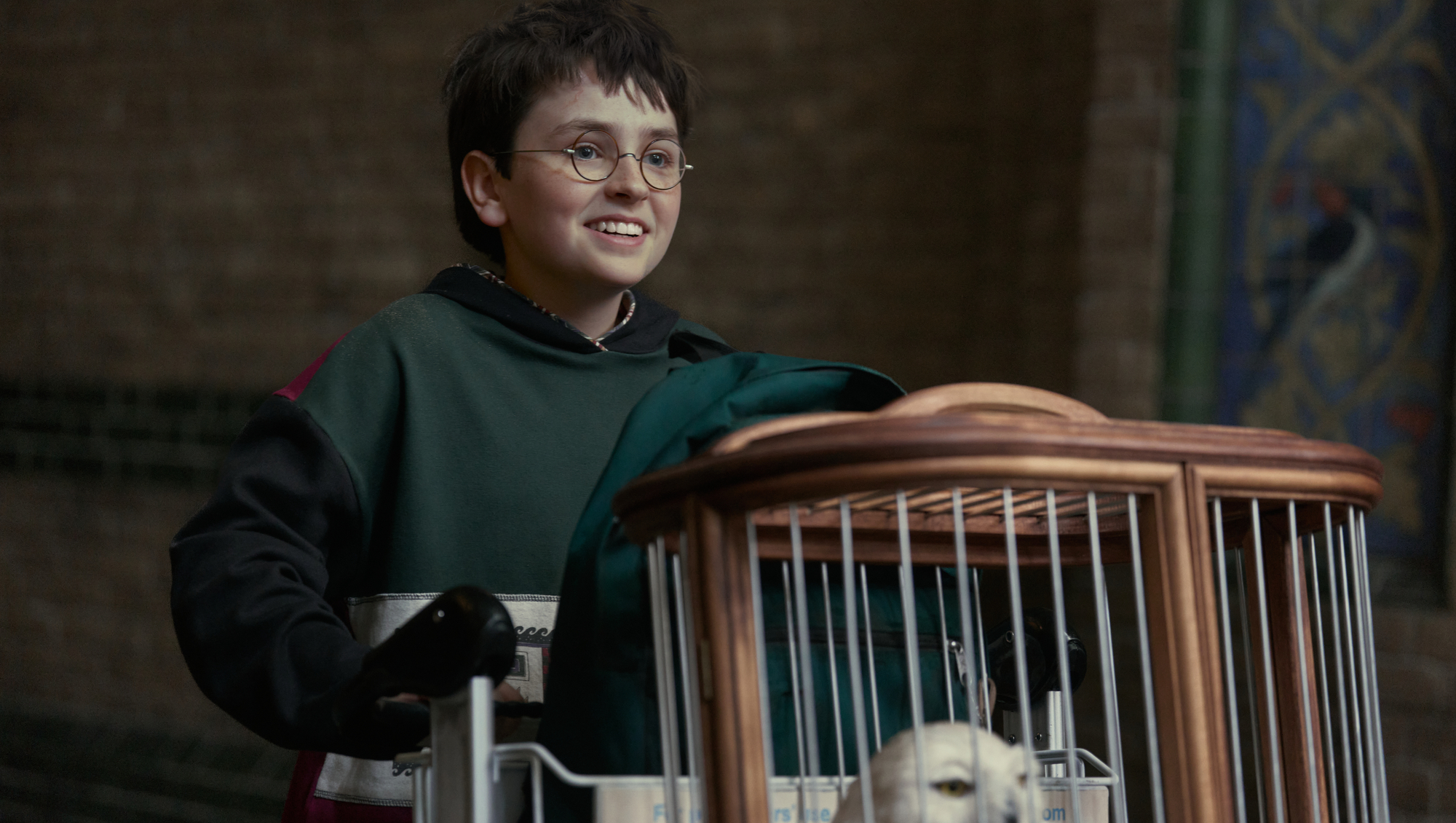
Dominic McLaughlin as Harry Potter in the new HBO Max Harry Potter series. By watching this show, we are giving money to someone with the power to really hurt the vulnerable, like trans people.
The trailer for the upcoming Harry Potter reboot has naturally led to a flood of social media posts from excited millennials; crying face emojis abound. And just what exhilarated them so? Desaturated visuals of Harry and friends on the London Underground.
Why does it look so grey? Could it be that the target audience for this new version of Harry Potter is not children, but rather those same millennials; the muted colours an attempt to add a veneer of prestige to what is, ostensibly, a series for pre-teens?
The impact of Harry Potter cannot be overstated. It remains the best-selling children’s book series in history. The film adaptations have grossed over $9.6 billion at the global box office.
It was an inescapable part of millennial culture: gifs from the films were shared ad nauseum across Tumblr, Hogwarts house quizzes powered the BuzzFeed quiz economy, and I think we all know at least one person with a tattoo of the Deathly Hallows symbol. We won’t even mention the weddings.
I am a younger millennial (or rather, a zillennial: a term used by people who can’t admit they’ve hit 30). I am smack bang in the target demographic, yet I agree with the criticism levelled by zoomers against some millennials who appear to make Harry Potter a fundamental personality trait.
I get the appeal of nostalgia. If you are burned by housing precarity, a cost-of-living crisis and the innumerable psychic shocks beamed from your phone, a show like this can come as a balm; a slice of comfort to remind you of simpler times.
The trailer makes no effort to pretend it is not a rehash; despite boasting a new cast, a new director, a new serialised TV format, it looks like an identical (albeit muted) carbon copy of the film series we all know.
It’s not just the empty nostalgia that bothers me. There is a far more pernicious element, one that taints any discussion of the series.
Since 2020, Harry Potter author JK Rowling has gone out of her way to make life more difficult for trans people — trans women in particular.
Twenty minutes before celebrating the new trailer’s release, she once again regurgitated the vile conspiracy — in a post on X, where else — that Algerian boxer Imane Khelif is a man.
Khelif was born female; she is a cisgender woman. She is part of a category of people that Rowling claims to defend. Yet, Rowling has made her life hell. Why? Because Khelif has elevated levels of testosterone in her system, which she has been reducing under medical supervision.
This exposes the end goal of the gender critical movement — that any variance be curbed for total gender authoritarianism. Rowling’s support for far-right agitators in the gender space such as Kellie-Jay Keen-Minshull (aka Posie Parker) whose rallies attract neo-Nazis is equally revealing.
After the release of the Harry Potter trailer, fans invoked — a 1967 essay by literary theorist Roland Barthes — to passively sidestep ethical concerns.
Barthes’ theory posits that a text should be divorced from its author’s biography. "Separating the art from the artist" is a similar sentiment. It can be a helpful analytical touch point to use when engaging with work by complicated people.

But why is supporting Rowling more complicated than supporting, say, Roald Dahl, whose antisemitism is well documented?
Or other living creatives like director Woody Allen, who has never been convicted of a sexual offence, but has been accused of sexual abuse by his adopted daughter Dylan Farrow, and who married another adopted daughter, Soon-Yi Previn.
Because Rowling uses the vast wealth accrued from the Harry Potter franchise to actively campaign against a vulnerable minority. She donated £70,000 to anti-trans group For Women Scotland, who successfully lobbied the UK’s supreme court to redefine womanhood to be based on biological sex.
In 2025, she set up a legal fund dedicated to removing trans women from women’s spaces. Trans people make up less than 1% of the world’s population, yet they face a disproportionate level of scrutiny because of people like JK Rowling.
A 2025 report released by the non-profit Institute for Strategic Dialogue (ISD) stated that hate crimes against LGBTQ+ individuals have increased across the US, UK and Europe since 2020.
Transgender and gender-nonconforming people have been particularly hard hit. According to statistics released by the British Home Office, in 2023 sexual orientation-based hate crimes fell by 6% in the UK, while transgender-based hate crimes increased by 11%, to 4,732 offences.
Engaging with Harry Potter directly funds Rowling’s anti-trans crusade. I am not naive; the reboot will be a hit.
No argument I make will shift the dial, but I still believe we have a moral duty, wherever possible, to remind people that sometimes our actions have consequences, and that, by watching this show, we are giving money to someone with the power to really hurt the vulnerable.
Unlike previous generations, millennials have become more left-wing as they get older, and with that comes a basic empathy and respect for difference.
It’s time to ditch the nostalgia and extend that empathy to our trans siblings. If that means missing out on a trip on the nostalgia train to Hogwarts, we’ll get over it.
- David Monaghan is a journalist