Letters to the Editor: Flawed legislation is not in public interest
Readers call for a thorough investigation of the harassment of Wicklow Pride and for Ireland, as a neutral state, to promote international peace rather than being complicit in unjustified wars and exploitation
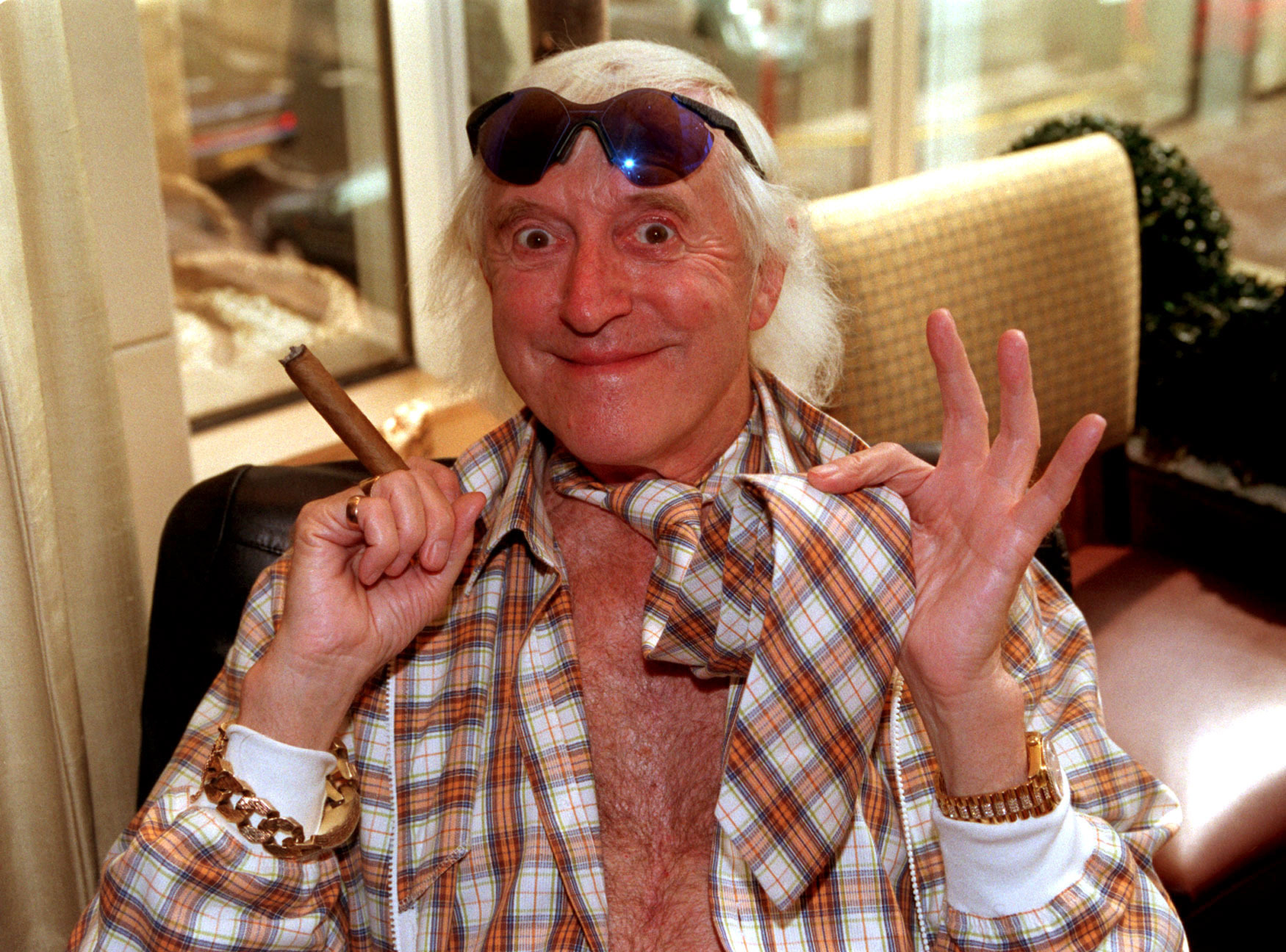
If an appeal goes ahead, lawyers will defend the right of the North's justice minister to make it an offence to state that Jimmy Savile, who was never prosecuted, was a paedophile. Picture: PA

If an appeal goes ahead, lawyers will defend the right of the North's justice minister to make it an offence to state that Jimmy Savile, who was never prosecuted, was a paedophile. Picture: PA

Northern Ireland justice minister Naomi Long is deciding whether to appeal a Belfast High Court decision after a media challenge to strike down a prohibition on naming sex offenders during their lifetime and 25 years after death.

Questioning the first occasion in which a court struck down Assembly legislation appears reasonable; defending the legislation struck down is not.

If the appeal goes ahead, the minister’s lawyers will defend the minister’s right to make it a criminal offence to state publicly that Jimmy Savile, who was never prosecuted, was a paedophile.

The minister’s defence, that those seeking to publish that fact could apply to the PSNI chief constable for permission to do so, is one most people will consider an improper inhibition on freedom of speech and not in the public interest.

Besides Savile, there is another example that should concern the wider public.

Since August 2023, attention has been drawn to the Church of Ireland Historical Society deleting from its web pages the name of its founder, the Rev WG Neely, and altering the history of the WG Neely Prize — the society’s one and only academic award.

Past winners of the WG Neely Prize were announced as winners of a ‘COIHS Prize’, which did not exist when they won it.

The society censored itself in order to avoid dealing with allegations that Neely, who died in 2009, was a child-sex abuser.

While no explanation was forthcoming to media organisations, the society may have been relying on Ms Long’s flawed legislation.

The society still refuses to explain online alterations that remain in place. Since the historical society altered its own history, why should academics trust anything it says or publishes on Church of Ireland history?

This view is reinforced by letters sent to newspapers after the Church of Ireland settled a claim late last year by the late Eddie Gorman that Neely abused him.

A legal firm representing the Church wrote to newspapers and warned them that it was illegal to name Neely until 2034.

An apology from the Bishop of Down and Dromore, David McClay, stated that Ms Long’s law prevented him from naming Neely. How convenient.

Naomi Long has the option of stating that her legislation was fundamentally flawed, while challenging the principle that legislation may be struck down by the courts.

She could, alternatively, wait until a politically — as distinct from legally — more defensible case comes along.

Niall Meehan, Journalism and Media faculty, Griffith College, Dublin

Lost opportunity to film barracks

Co-financed and supported by the European Union since 2015, “to foster EU integration through culture by providing new subtitled versions of selected TV programmes across Europe”, a French film crew arrived in Dublin on Sunday, June 30, to do interviews and gather material for three documentaries expected to be broadcast in six languages in early 2025.

One documentary is on the Irish Soldiers Pardons Campaign (WW2), which succeeded in achieving an amnesty for blacklisted Defence Forces personnel, signed by the President on the May 14, 2013.

The operation of Irish neutrality during 'The Emergency' (1939-1946) was of particular interest to the interviewer.

However, it is of concern that a staff member of Collins Barracks National Museum — when advised that contact had already been made by the programme maker seeking permission to film an interview on site — refused, adding: “No letter, no permission to film anywhere on the Collins Barracks location.”

Notably, the French journalist had already emailed the museum before travelling to Ireland — but received no response. Apparently, the person contacted was now on holiday when we arrived.

As an alternative, one suggested that an interview could take place using the front wall of Collins Barracks as background. That was refused, even though that location was on grass, away from any public access, and had been used before when filming with other journalists. At that stage, one took the crew to the public road at the back of the barracks and resolved the issue.

In contrast to the inflexibility and lack of foresight shown by the museum, filming was concluded with the permission of the Office of Public Works in the National War Memorial Gardens in Islandbridge, and I thank them for their courtesy. An opportunity to highlight the National Museum and its exhibits to a European audience lost.

Peter Mulvany, co-ordinator, Irish Soldiers Pardons Campaign (WW2)

Where is the probe for Wicklow Pride?

Paul Hosford’s article on the bomb threat our Taoiseach was subjected to raises some interesting points, most of which I wholeheartedly agree with. Threats against anyone are unacceptable and illegal.

Section 5 of the Non-Fatal Offences Against the Person Act, 1997 clearly states that making a threat to kill or cause serious harm to someone is an offence which can result in a sentence of up to 10 years in prison. The harassment of the organisers of the Pride disco in Wicklow is also illegal, as Section 10 of the same act makes clear, and carries a similar sentence.

The fact remains that the intimidation can have an effect. The Pride disco was postponed and the Taoiseach and his family will continue to feel the impact of the threat.

Simon Harris and family will continue to feel the bomb threat's impact. Picture: Gráinne Ní Aodha

Thankfully, there will likely be a thorough investigation and the person who made the bomb threat will hopefully be identified and convicted for their crime.

However, the intimidation of Wicklow Pride is not likely to receive the same treatment.

The intimidation of our library workers demonstrates this clearly, or more specifically, the lack of support that library workers have received does.

Even though the actions of protesters against library staff have frequently crossed the line into harassment, there has been only one arrest, and it has yet to be seen if the arrest was related to the harassment of library staff.

Some discrepancy between dealing with direct threats of harm and dealing with harassment is expected.

The fact that the law requires persistent behaviour for harassment is a significant factor in this, as it makes it much more difficult to prove. However, the complete lack of a response from gardaí while library staff were subjected to months of harassment — including openly planning their harassment on social media — is appalling. It is also inviting more harassment, such as that experienced by Wicklow Pride.

I have written to this publication before, defending the right to protest outside politicians’ homes.

A significant element of that defence is that there are laws in place which allow for protesters who cross the line to be dealt with.

The trouble is that, in order for those laws to act as a deterrent for crossing the line, they must be enforced. So, let's have a thorough investigation of the harassment of Wicklow Pride and see if we can have a few arrests for it.

Send a message to these groups that their behaviour will no longer be tolerated.

Thomas Forde, Cork city

Ireland should promote international peace

US president Joe Biden justifiably criticised the US Supreme Court ruling on the immunity that former president Donald Trump can avail of.

Mr Biden said: “Any president, including Donald Trump, will now be free to ignore the law,” adding: “I know I will respect the limits of presidential power as I have for the last three and a half years."

US president Joe Biden criticised the US Supreme Court ruling on the immunity former president Donald Trump can avail of. Picture: Mario Tama/Getty

While these comments were addressing US constitutional and legal issues, it is important to point out that this same Joe Biden — as vice president and president — and other former administrations have taken upon themselves the powers to wage wars around the world.

Since the end of the Cold War and especially since 9/11, the breaches of international and humanitarian laws by the US Government and its Nato and other allies have caused millions of deaths in Serbia, Iraq, Afghanistan, Libya, Syria, and elsewhere.

This includes multiple breaches of the UN Charter, UN Convention Against Torture, the Geneva Conventions on War, and being complicit in very serious breaches of the Genocide Convention.

Successive Irish Governments have entangled Ireland in US/Nato and EU defence alliances that are engaged in resource wars by the West against the rest of humanity.

Ireland is not immune to the Western democratic crises, whereby the centre is moving dangerously towards the extreme right. Past and ongoing unjustified wars and exploitation are among the root causes of many of these problems.

As a neutral state, Ireland should not be involved in, or complicit in, these crimes against humanity, but should be promoting international peace and global justice.

Edward Horgan, Castletroy, Limerick

x

More in this section

Revoiced

Newsletter

Had a busy week? Sign up for some of the best reads from the week gone by. Selected just for you.

Cookie Policy Privacy Policy Brand Safety FAQ Help Contact Us Terms and Conditions

© Examiner Echo Group Limited