Letters to the Editor: Reject and reword the care amendment
Among the topics addressed by readers is the care referendum, with one reader saying the proposed amendment is 'a kick in the teeth' to people with disabilities and people in need of care
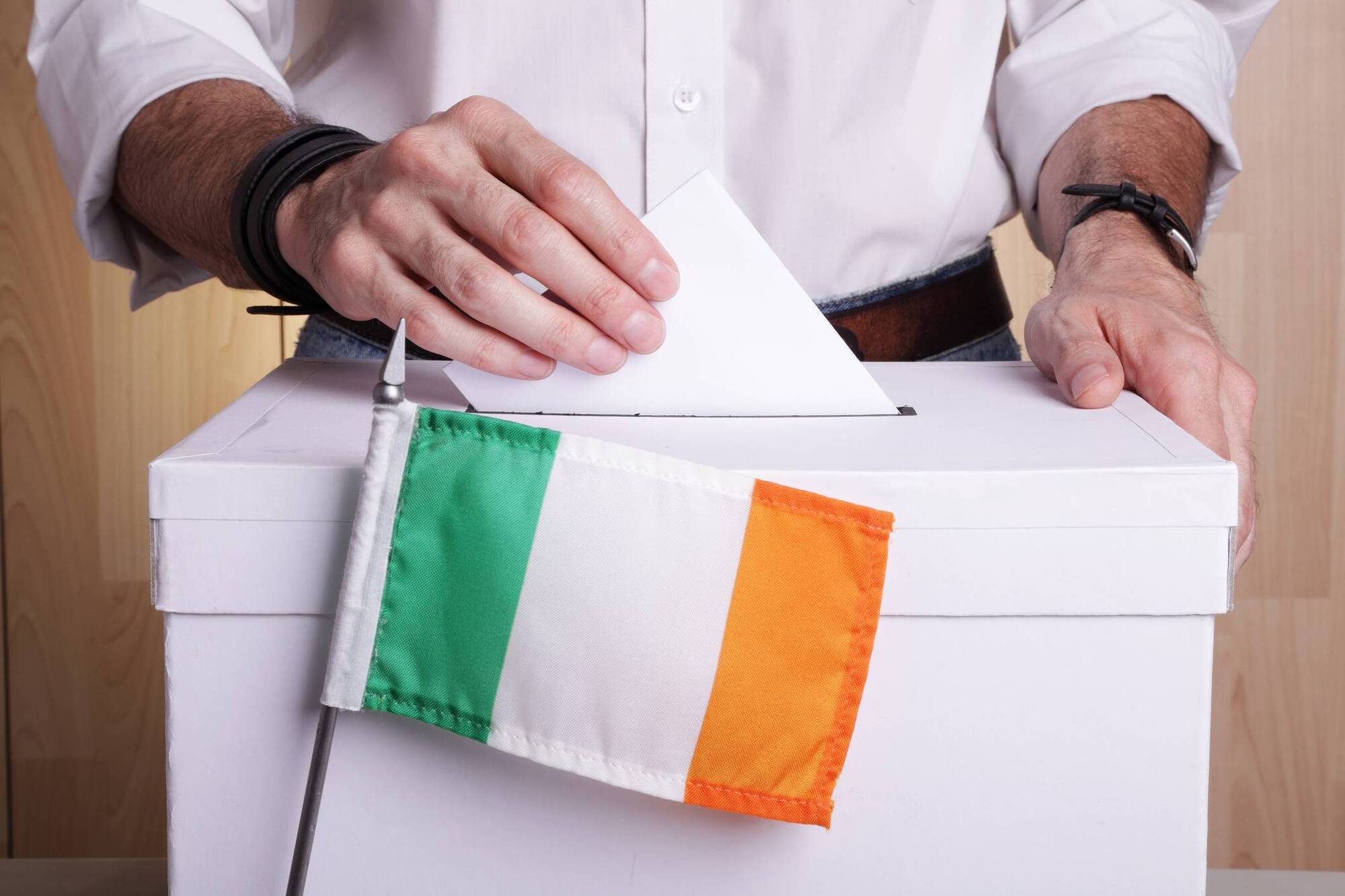
One letter-writer says: 'What would be meaningfully symbolic is to vote no, demand better, and stand in solidarity with people with disabilities.' Picture: Electoral Commission

One letter-writer says: 'What would be meaningfully symbolic is to vote no, demand better, and stand in solidarity with people with disabilities.' Picture: Electoral Commission

Many advocating a yes vote on the care referendum refer to the importance of symbols and having a Constitution that reflects the values of today. Almost all those who consider themselves progressive agree that the wording is not perfect but is somewhat better. 

We are asked to not tie ourselves up in knots, that it won’t have any concrete effects, and that change is incremental. I would like to put a counter argument against this thinking.

I agree that symbols matter and we should have a Constitution that reflects the values of today. This amendment places care as the responsibility (or burden as the wording implies by referring to bonds) on the family. 

The wording is carefully chosen to provide zero accountability on the state. It does not recognise those in need of care as autonomous human beings but only subjects of care. Are we, as a society, satisfied with the symbolism in this amendment? Are we satisfied with wording that is utterly ableist, paternalistic, and demeaning to anyone in need of care and people with disabilities? Are these the values and symbols we want?

The sentiment values implied by the wording in this amendment is no better than the wording it is replacing. If the amendment was implicitly racist or homophobic there would be uproar and it would rightly not be accepted regardless of what it was replacing. So why are we, as a society, accepting something so woefully ableist?

The fact that this amendment will not set in motion more concrete effects is equally depressing as it could, and should be, not just symbolic but also meaningful. It is a deliberate and clear choice of the government to ensure this amendment is limited to symbolism. The citizens assembly, set up by the state, spent many hours seeking wording that would be robust, actionable, enforceable, and reasonable. 

When Taoiseach Leo Varadkar argued there was no difference between the wording from the Citizens’ Assembly and the wording in the amendment he either does not see the difference or is being disingenuous. The Citizens’ Assembly identified excellent wording that was both symbolic and meaningful. The state refused to follow the Citizens’ Assembly recommendation as they do not want to set in motion a more rights-based approach where people with disabilities, and those in need of care, can live independent, autonomous lives outside the family — supported to participate fully in the social and cultural life of the Republic.

The rationale and sentiment behind the state not accepting the Citizens’ Assembly recommendations aligns entirely with their behaviour which has concrete effects on the quality of life for people with disabilities. 

It is this same sentiment that lies behind the reason why Ireland has the joint lowest rate of employment for people with disabilities in the EU alongside Greece, even though Ireland has a healthy rate of general employment where Greece does not. It is this same sentiment that lies behind Ireland not signing the optional protocol to the UN Convention on the Rights of Persons with Disabilities.

This protocol establishes a mechanism through which individuals or groups who claim their rights under the convention have been violated, can argue their case.

To date, 94 countries have signed the protocol, Ireland has not. It is the reason why more than 1,300 younger people feel like they have no option but to live in nursing homes due to lack of support from the state. 

It is the reason why there is such a respite crisis and why so many people with disabilities and carers feel like they are in a constant fight to get even the most basic of supports that they should have a right to. We are a country that clearly demonstrates how society disables people, not their impairment or difference. We should not enable the state to allow themselves off the hook like this. It should outrage us.

Voting yes to this utterly ableist amendment would be a further kick in the teeth to people in need of care and people with disabilities. We will all likely, at some point, be a carer or in need of care. 

I want to live in a society that wraps its arms around anyone in need of care to uplift and empower them. I do not want to live in a state that makes them feel like a burden and makes them fight for basic rights. 

What would be meaningfully symbolic is to vote no, demand better, and stand in solidarity with people with disabilities. Reject and reword with rights.

Anthony Hannon, Tallaght, Dublin 24

Civil service sacking

How a Sinn Féin government will handle the civil service is an interesting question. However, a more interesting question is how the Civil Service is going to handle dealing with Sinn Féin. After all, Article 28.4.2 of our constitution states that the members of the government administer the departments of government, and that includes the power to sack insubordinate members of the senior management.

That doesn’t mean that Sinn Féin ought to go around sacking anyone who disagrees with them. 

While there is no law which states that the cabinet must bow down to senior civil service members, the civil service are the ones most experienced with the process of running the nation and Sinn Féin should keep that in mind. 

It’s just that the senior managers should be aware that the only reason Eoin Ó Broin apologised to John McCarthy is because Eoin wasn’t a member of the sitting government and therefore not in a position to make a judgment about whether a member of the civil service should be sacked, a fact which will almost certainly change following the next election.

Thomas Forde, Gardiner’s Hill, Cork

RTÉ oversight failed

My opinion differs from that of Michael Gannon— ‘RTÉ debacle is never-ending’, Irish Examiner Letters, February 26) — regarding the scrutiny of RTÉ personnel by Oireachtas sub-committees.

I see them performing a necessary and valuable service in the public interest. Indeed, I believe it was the absence of such over many years which allowed the secret, closed shop, RTÉ mentality to develop. 

Oversight was to be provided by RTÉ's board of directors, the relevant department, the minister, and government itself — in that order. All failed in their duty and in the resulting vacuum the RTÉ luvvies cultivated their charmed, otherworldly and extravagant, existence out of sight of the rest of us mere mortals. Now, as public servants, and in the public interest, they are, albeit belatedly, called to account — all of them.

And if posturing results, then so be it; the said same luvvies are, after all, the experts in that field.

Tony O’Neill, Bishopstown, Cork

Irish energy crisis

Patrick L O’Brien sums up Ireland’s energy crisis succinctly: “As a nation, we are unfortunately out of touch with energy reality and for which we are paying dearly and will pay dearly” — ‘Out of touch with energy reality’, Irish Examiner Letters, February 20. 

Our precarious situation is a direct result of gross mismanagement of the energy sector by successive governments as far back as the 1950s when the Fianna Fáil government gave away our entire offshore exploration rights to Marathon Oil for a song. 

During the intervening years, short term government policy chopped and changed, depending on the exigencies of which party was in power.

The ultimate showboating decision by the present coalition to stop indigenous oil and gas exploration highlighted just how irresponsible and how far out of touch our politicians indeed are, knowing full well that our entire energy security was and continues to be on a knife edge.

This policy, driven by dogma and political expediency, was exacerbated by the wholly irresponsible and inexplicable decision to interminably delay issuing a licence for Inishkea near Corrib, and for permanently stopping any further investigative exploration of the Barryroe oil and gas field.

Barryroe, just off the Cork coast, has independently proven reserves of over 300m barrels of high-quality oil and copious quantities of low carbon gas, which would have guaranteed Ireland total energy security for decades as back up to intermittent renewables.

Contrast Ireland’s situation with that of Norway’s which, like Ireland, was a poor country in the 1950s with their economy based on fishing and forestry.

When oil exploration became a reality, Norway set up an independent company, Statoil, away from the meddling hands of politicians, to oversee and manage all exploration matters. They took 50% equity in every licence, and as a result, today they have the biggest national sovereign wealth fund in the world of $1.5tn, equivalent to $275,000 per citizen.

Ireland, on the other hand, has a national debt of €235bn, equivalent to €42,000 owed by every Irish citizen and with an annual interest bill of €3.5bn, paid by all of us.

Furthermore, we are paying €1m an hour or nearly €9bn a year importing up to 80% of our energy needs of oil, gas, and coal.

Indeed, as Mr O’Brien writes “we are paying dearly and will continue to pay dearly”.

John Leahy, Wilton, Cork

More in this section

Revoiced

Newsletter

Had a busy week? Sign up for some of the best reads from the week gone by. Selected just for you.

Cookie Policy Privacy Policy Brand Safety FAQ Help Contact Us Terms and Conditions

© Examiner Echo Group Limited