Irish Examiner view: Motorway practice vital for learner drivers

As reported here yesterday, Seán Canney highlighted the anomaly whereby learners cannot drive on motorways — but are free to do so as soon as they pass their test. Picture: iStock
Road safety continues to focus minds across the country, which is no surprise in the wake of the M9 crash that killed five young people and left four others in hospital with serious injuries.
In recent days, we have heard minister of state at the Department of Transport Sean Canney say that “all types of technology”, including artificial intelligence, are under consideration when it comes to keeping our roads safe.
Deploying that technology comes with its own challenges, from finance to infrastructure, but credit must be given to Mr Canney for pointing out one area of road safety that could be addressed immediately.
As reported by Elaine Loughlin, Mr Canney is to contact the Road Safety Authority to deal with a test anomaly that faces learner drivers.
While learners, they are not allowed to drive on motorways, even with a qualified accompanying driver. Yet as soon as a person has passed their test and holds a full licence, they are free to do so.
Read More
As a result, either those newly qualified drivers are encountering driving conditions they have never experienced before, or they have been practising on motorways all along with no legal right to do so.
Including a specific element of motorway driving in educating learners is therefore a good idea, though the realities of the Irish landscape make that more challenging than it first appears.
As Mr Canney pointed out, some parts of the country simply do not have motorways on which to practise.
Improving and upgrading driver education is a laudable starting point for a general discussion, but some specific points need to be included in any such debate.
Waiting times for driving tests, which vary greatly around the country, and the relatively lax enforcement of our traffic laws, should also be addressed.
An approach which involves all elements of this debate is clearly needed.
For the thousands of students who received their Leaving Certificate results last week, the second level curriculum is now in the rear-view mirror.
For many thousands more it remains a live issue, and this week we learned of serious concerns about one of its key subjects.
The National Council for Curriculum and Assessment’s (NCCA) mathematics development group is tasked with considering reforms of Leaving Certificate mathematics, but it has been rocked by two high-profile resignations.
Read More
Aoibhinn Ní Shúilleabháin, associate professor of mathematics education at DCU, resigned as the group was “no longer something I could be part of”, adding that the curricula it had produced “are not mathematically coherent in their structure”.
Her departure follows that of Pauline Mellon, emeritus professor of mathematics at UCD, who resigned earlier this year.
As reported by Jess Casey, Prof Mellon said content on the proposed higher-level curriculum had “been significantly hollowed out as so much material has been cut”.
It is difficult to see how the group can continue its work in these circumstances.
The departure of the two committee members has been marked by extremely sharp criticism of the curricula it has produced — how can such curricula be taken seriously now they have been rubbished by two members of the group?
This situation has serious implications for Irish education. It leaves current and future Leaving Cert students in limbo: If the examinations are left unchanged, then teachers and students alike know that those examinations are not considered fit for purpose, because the group is seeking to change them.
If the examinations are changed and the curricula promoted by the group are incorporated into schools, teachers and students will also know those changes were not supported by members of the group.
The NCCA has stated that the published curricula “are not final specifications”, but this situation needs to be resolved quickly. Ireland’s reputation in the education, tech, and employment sectors could suffer serious damage if it is not.
The death was announced yesterday of beloved Cork broadcaster Elmarie Mawe. Although she had spells as a teacher and actor in her past, she was best known in Cork and beyond as a voice for the arts.
For over 25 years she was host of on Cork’s 96FM and C103, where she earned a reputation for her passionate support of the arts in Cork.
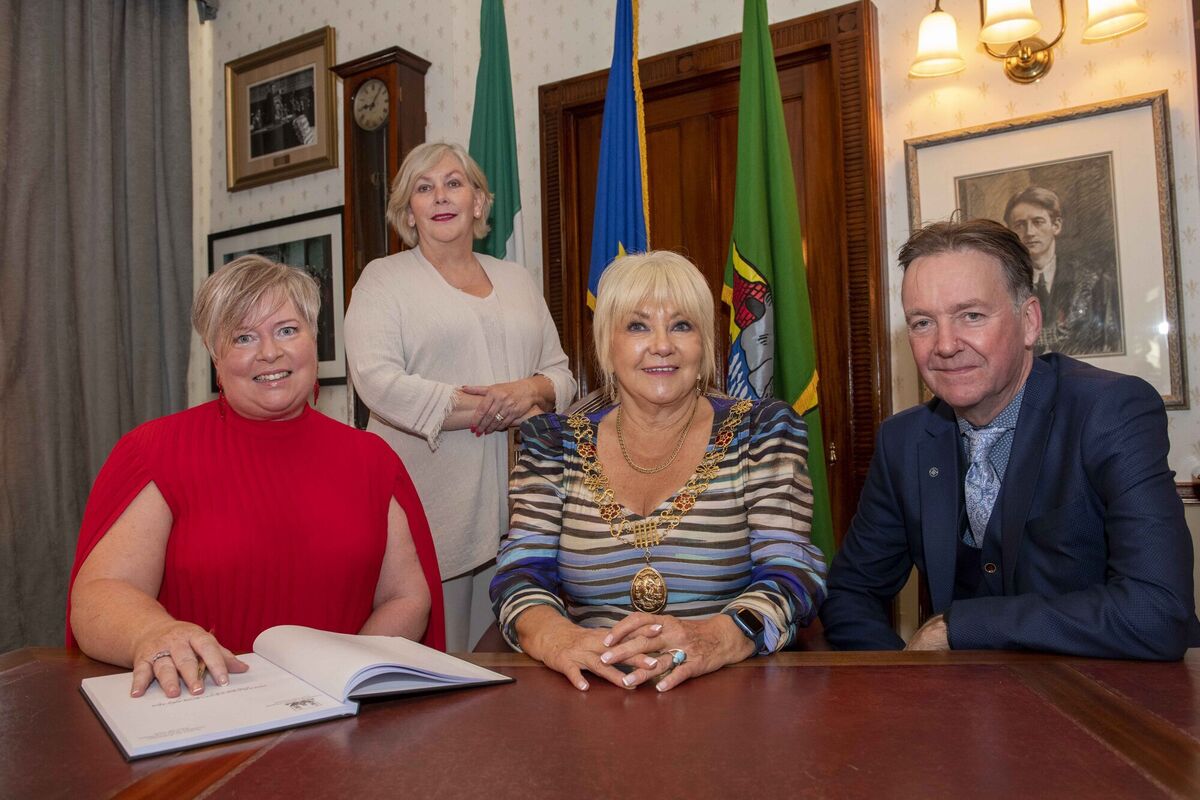
That passion was evident at a very early stage, when she made her debut in the Cór Fhéile competition at the age of five, and there was a pleasing symmetry to that early appearance later in her life.
The Cór Fhéile was held in Cork City Hall, and Ms Mawe went on to host several major civic and cultural events and concerts on that same stage, including the Lord Mayor’s Christmas Gala.
Appropriately, Lord Mayor of Cork Damien Boylan was among the many who paid her a warm tribute, describing her as “a brilliant broadcaster and teacher, and a passionate and much-loved champion of the arts ... She worked very hard during the covid pandemic to ensure that the arts remained an essential part of public life”.
Ms Mawe had been living with serious illness for some years but her support for the arts was unflagging. Her recent posts on social media praised live music at the Counting House Plaza in Cork City and an exhibition in Millstreet Library.
Ar dheis Dé go raibh a hanam.
CONNECT WITH US TODAY



Be the first to know the latest news and updates