Irish Examiner view: Intimidation from inside prison walls
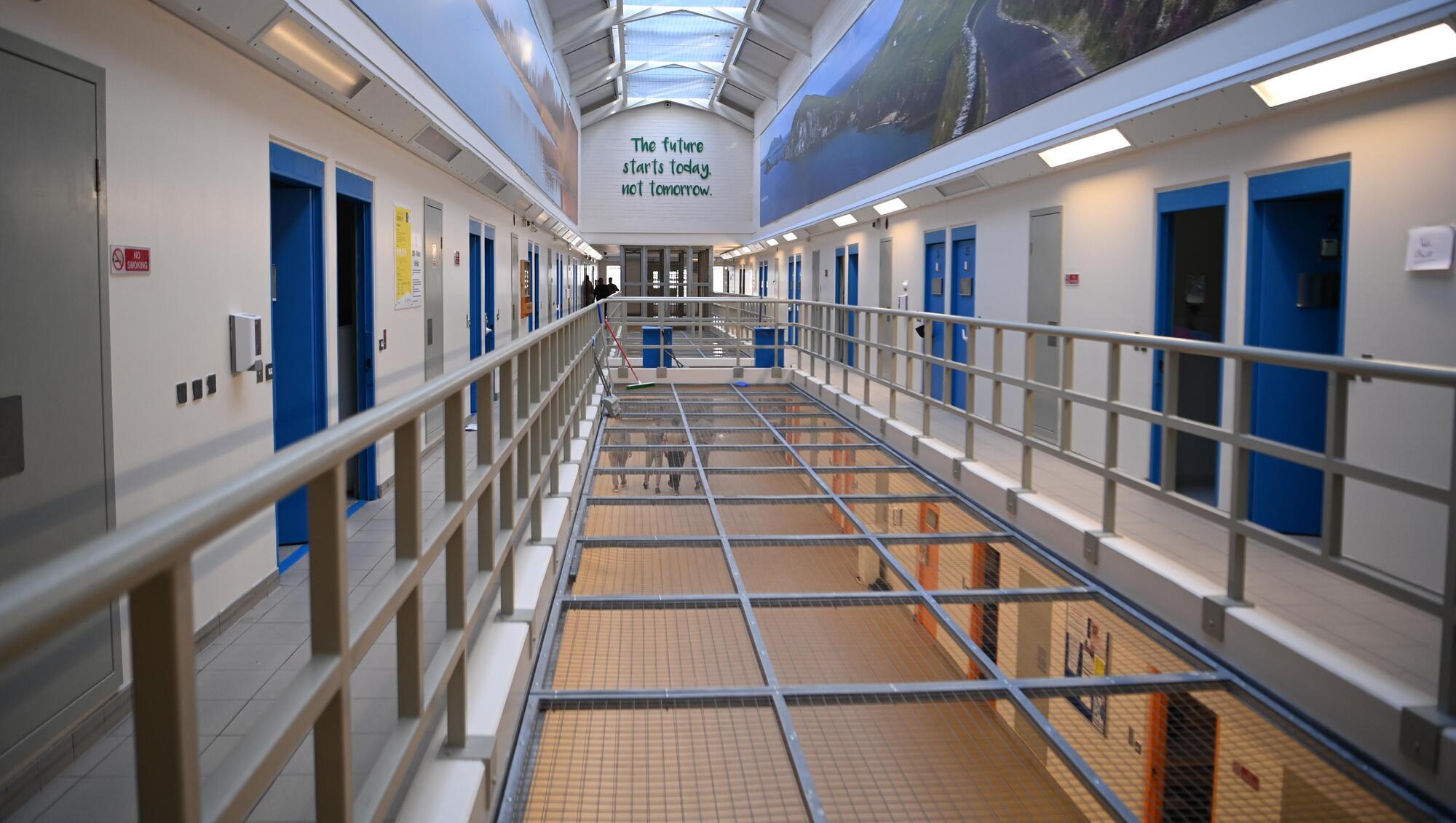
Clearly the prison has a design flaw if homeowners’ gardens give people the opportunity to get drugs into the jail
Generic picture stock shot picture

Generic picture stock shot picture

Intimidation of people because of drugs is in the news lately, which is understandable. The deaths of four people, including two children, in an arson attack in Waterford last Monday have horrified the nation, and as reported by Cormac O’Keeffe, families plagued by drug-related intimidation are planning a protest at Leinster House, in a show of “anger and frustration”.

Figures released to the Irish Examiner bear out the sense of a growing problem. Those statistics show that 367 court cases have been taken in 2025 against people for
intimidation, in comparison with 136 in 2021.

A slightly different form of drug-related intimidation has been going on for years near Cork Prison. Donal O’Keeffe reported here this week about the ongoing issue of people getting drugs into the prison by entering the gardens of those living in houses on the eastern side of the facility, then launching drugs over the prison wall.

One resident reported that prisoners can see into her garden from their cell windows, adding: “You can hear them at night, threatening to rape each other’s sisters, mothers, girlfriends; my children shouldn’t have to listen to that.

“They know my name and my kids’ names. One time one of the prisoners shouted down that I’d want to take my kids in. It is intolerable that someone should face this level of harassment in their own home.”

Clearly the prison has a design flaw if homeowners’ gardens give people the opportunity to get drugs into the jail.

However, those prison cells should not offer inmates a view of people in their homes or gardens either, and abuse shouted from the prison should not be audible to those outside.

Such matters have come into focus because of justice minister Jim O’Callaghan’s plans to demolish the derelict old Cork Prison for two new prison facilities.

However, before any such projects are undertaken, there are clearly serious design issues with the ‘new’ prison which the minister should address for the sake of residents nearby.

CyberBreak 2026

Credit is due to everyone supporting CyberBreak 2026, from individuals to organisations such as the HSE and CyberSafeKids.

The idea behind the project is to get families, schools, and workplaces to switch off all smart devices from 7pm on Friday, taking a 24-hour break from the online world. It is intended to get people to reflect on digital habits, to promote a healthy online and offline balance, and to enjoy an essential digital detox.

Such a break is badly needed, going by a recent survey by CyberSafeKids, which advocates for online safety for children. The organisation found that over one third of children aged 8-12, and two-thirds of those aged 12-15, have no time restrictions on their online activity, and over half of children stated that their parents are on
devices when they are together.

This is a crucial element of the discussion of children’s online activities, which often runs along expected lines. All of us are familiar with the focused exploitation of children’s data by many tech companies, and how vast fines appear to have no impact on those companies’ behaviour.

The normalisation of online tools in secondary schools, meanwhile, may be helpful with teaching, but it is also keeping children on laptops and smartphones — something the CyberBreak seeks to address.

However, one element of such discussions which is not often thrashed out is parental responsibility, which is why the CyberSafeKids’ survey findings are so interesting.

“Children need clear boundaries around device use at home,” the organisation stated. “And the fact that many have no restrictions at all is alarming, given the harmful content and contact inherent in digital environments.”

However, such boundaries and restrictions need to be imposed and enforced by parents and guardians, surely? Children’s online access must be policed by adults taking their responsibilities seriously, but if such adults are themselves glued to smartphones or laptops, then children can hardly be blamed for copying such behaviour.

Big Tech and social media companies are easy targets in this debate, but parents and guardians may want to look closely at the example they are setting.

Universal appeal of ‘Disco Pigs’

This is the 30th anniversary of the first performance of the play Disco Pigs by Enda Walsh, which caused a sensation back in 1996 thanks to local theatre company Corcadorca’s production.

The performances of two gifted actors — Oscar-winner Cillian Murphy and Eileen Walsh — in the lead roles added greatly to the play’s impact.

This time, those roles as Pig and Runt, two 16-year-olds speaking their own hybrid language as they roam Cork, are played by Clare native Aoise Meaney and Scot
Séamus McLean, whose parents Ricky Ross and Lorraine McIntosh are members of Scottish band Deacon Blue, best known for their 1988 hit Real Gone Kid.

When speaking to Des O’Driscoll earlier this week, both performers acknowledged the challenge of learning lines in an invented language, while playwright Walsh conceded the world of the play is so small — “two Cork people talking about Cork” — that it was “almost parochial”.

However, Walsh also noted that that aspect of the play “was its strength”, and he is correct.

It is a local work which retains a universal appeal.

Disco Pigs runs at the Everyman Theatre, Cork, from October 31 to November 14.

More in this section

Revoiced

Newsletter

Had a busy week? Sign up for some of the best reads from the week gone by. Selected just for you.

Cookie Policy Privacy Policy Brand Safety FAQ Help Contact Us Terms and Conditions

© Examiner Echo Group Limited