Irish Examiner View: We should heed Irish Fiscal Advisory Council's budget warning

Finance minister Simon Harris said that that the deficit in national infrastructure in Ireland means spending is required.
Finance minister Simon Harris said that that the deficit in national infrastructure in Ireland means spending is required.

With Budget 2027 due on October 6, we can safely say that we are entering the peak pre-budget period, in which all interested parties will be making their voices heard.

For many, it is a case of simply seeking to influence the budget provisions to favour their specific focus. Others choose a slightly different tack, camouflaging attempts to influence the budget by describing them as beneficial to the entire nation rather than to narrow interests.

One organisation which can genuinely claim to be operating in the national interest is the Irish Fiscal Advisory Council. Earlier this week it issued a warning about the upcoming budget, advising that it is actually likely to be much bigger than the figures that will be announced on October 6, and encouraging the Government to exercise restraint in spending.

It is in the nature of a fiscal watchdog such as this to be conservative, and warnings such as that cited above are no surprise.

Tánaiste Simon Harris pointed out this week that the deficit in national infrastructure in Ireland means spending is required, which is a valid point. However, an examination of the fine print of the council’s warnings is sobering.

It points out that financial overruns have become “routine and have repeatedly pushed spending above budget-day plans... over the past decade, spending overruns have averaged more than €2bn per year in today’s terms”.

Readers need not be professional economists to appreciate that the basic notion of an overrun is meaningless if it is an accepted part of the cost — and that arriving at accurate costs is clearly impossible if there is a prior acceptance that there will be vast overruns.

The council has also pointed out that following the Government’s current medium-term plan would “result in an even greater dependence on risky corporation tax receipts”.

Identifying issues such as this may not find favour with Government departments eager to spend, but in doing so, the council is doing the State some service.

BusConnects: Action needed on public transport

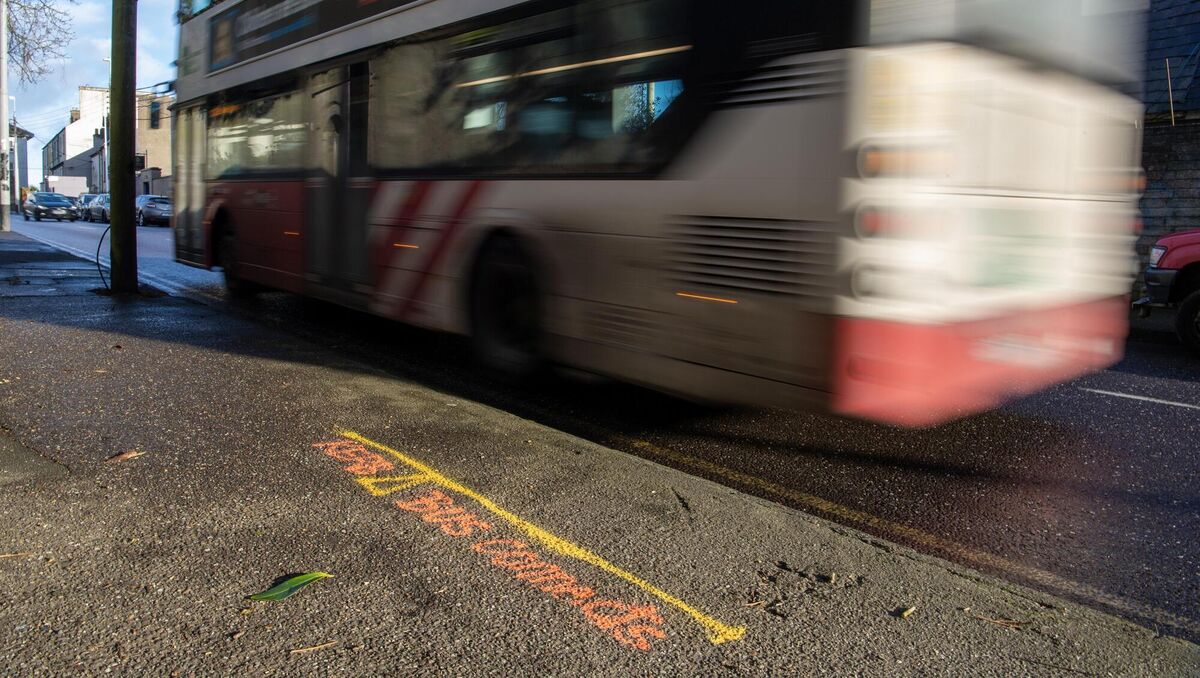
The yellow line narrowing the footpath on Summerhill North, Cork when the BusConnects proposals are introduced. Picture Dan Linehan

We have grown accustomed to lengthy delays when it comes to transport infrastructure in Ireland. The slow progress on Dublin’s Metrolink project is an ongoing issue, for instance.

The same is true of Cork’s BusConnects plan, which appears to be beset by problems on all sides.

As reported by Amy Campbell in the Irish Examiner this week, planning applications for some of the sustainable transport corridors, which are central to the BusConnects plan, are not expected to be lodged until the final quarter of this year, almost two years later than initially planned.

The €23m spent on bus depot projects includes €15.3m on a temporary depot at Tivoli which opened last week, over a year behind schedule.

A new bus network was originally due to be rolled out in 2023, but just one new route has been introduced, and no funding has been allocated for additional routes in 2026.

Little wonder that Cork North Central TD Thomas Gould said this week: “How has €11m been spent in the last eight months, with no measurable benefit?”

The litany goes on. Dermot O’Leary of the National Bus and Rail Union told the Irish Examiner that bus drivers had left the industry because of antisocial behaviour, or been out on leave due to assaults, and he specified at least one bus route in Cork which is of particular concern in this regard.

And the travails of public transport are not confined to Cork. Paul Hosford reported this week on Green Party leader Roderic O’Gorman’s criticism of Indra — the company contracted to provide Irish Rail with a train traffic management system which was written off at a cost to the taxpayer of €50m. Mr O’Gorman raised questions over the rollout of next-generation transport ticketing in the capital, for which Indra has also been given the contract.

This string of disasters and delays has real-world consequences. A lack of viable public transport options leaves people relying on private cars to access work and education which leads to deterioration of the environment and to health challenges.

That reliance also means more cars on the road and traffic congestion, which makes public transport even less reliable, and perpetuates the vicious circle.

If we are serious about public transport, then we must see tangible progress on projects such as BusConnects.

x

‘Right to be forgotten’: Just measure for cancer survivors

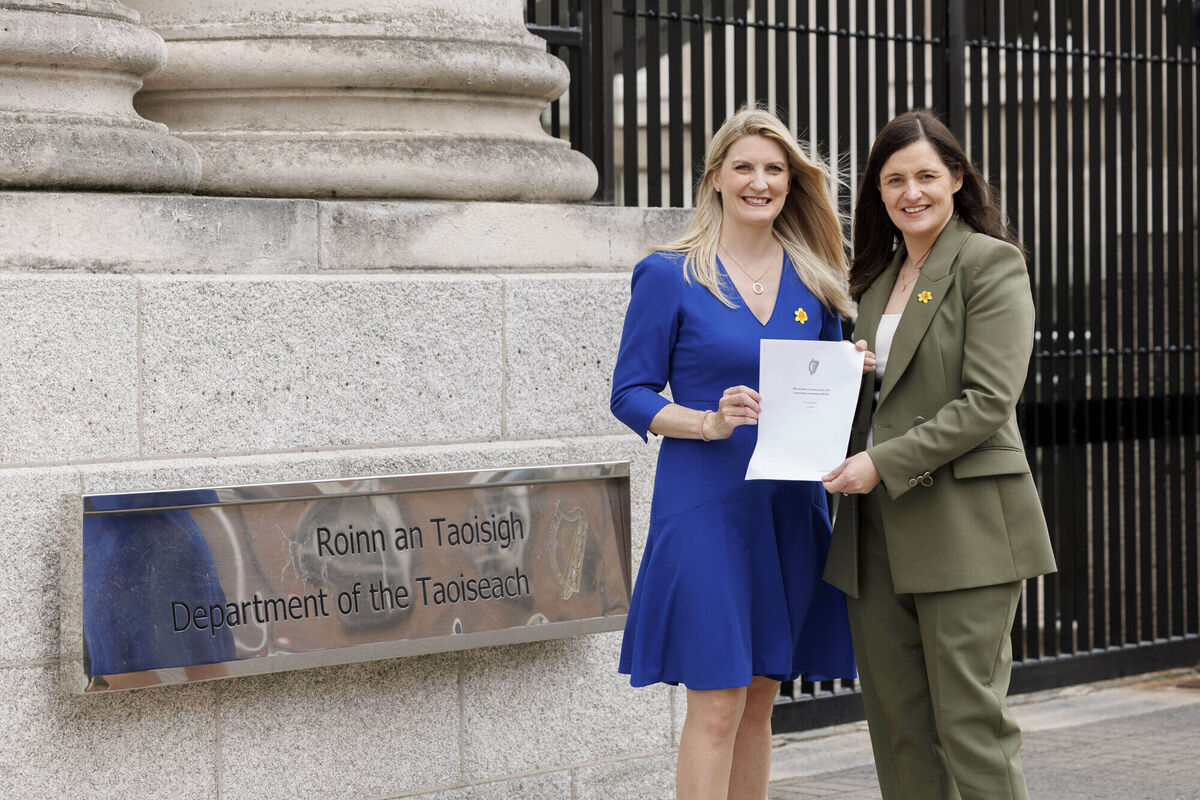
Averil Power, CEO of the Irish Cancer Society and Catherine Ardagh, Fianna Fáil TD, who first proposed initial Right to Be Forgotten legislation on back of Irish Cancer Society campaign, at Government buildings following memo to Cabinet of Central Bank (Amendment) Bill 2025. Picture: Andres Poveda

There cannot be a household in Ireland which has not been touched by cancer. Progress in medical treatment means a diagnosis may not be as devastating a blow now as it was in decades past, but it is still a life-changing, and life-challenging, event.

For that reason, a new law allowing cancer survivors the legal “right to be forgotten”, which will allow them to obtain mortgage protection without discrimination based on their past diagnosis, is particularly welcome.

The new legislation comes into force in October, and means those who have been free of cancer for five years will not be penalised when applying for a mortgage.

This is a hugely positive step. As the Tánaiste said: “People who have come through cancer have continued to face barriers when buying a home, switching a mortgage, or seeking security for their families, even years after their treatment had ended.”

He added that the new legislation would be a milestone in delivering statutory protections.

The Irish Cancer Society has also welcomed the move, saying it would make a real difference in the lives of many cancer survivors. That is an important point. Here is a practical, useful improvement in the lives of people who have already been through an ordeal. It is all the more laudable because of that practicality.

More in this section

Revoiced

Newsletter

Had a busy week? Sign up for some of the best reads from the week gone by. Selected just for you.

Cookie Policy Privacy Policy Brand Safety FAQ Help Contact Us Terms and Conditions

© Examiner Echo Group Limited