Irish Examiner view: Budget 2027 gave a bit all around, but not enough for anyone
'A budget that promised a lot, delivered a little, and left many wondering where the money went'
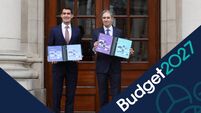
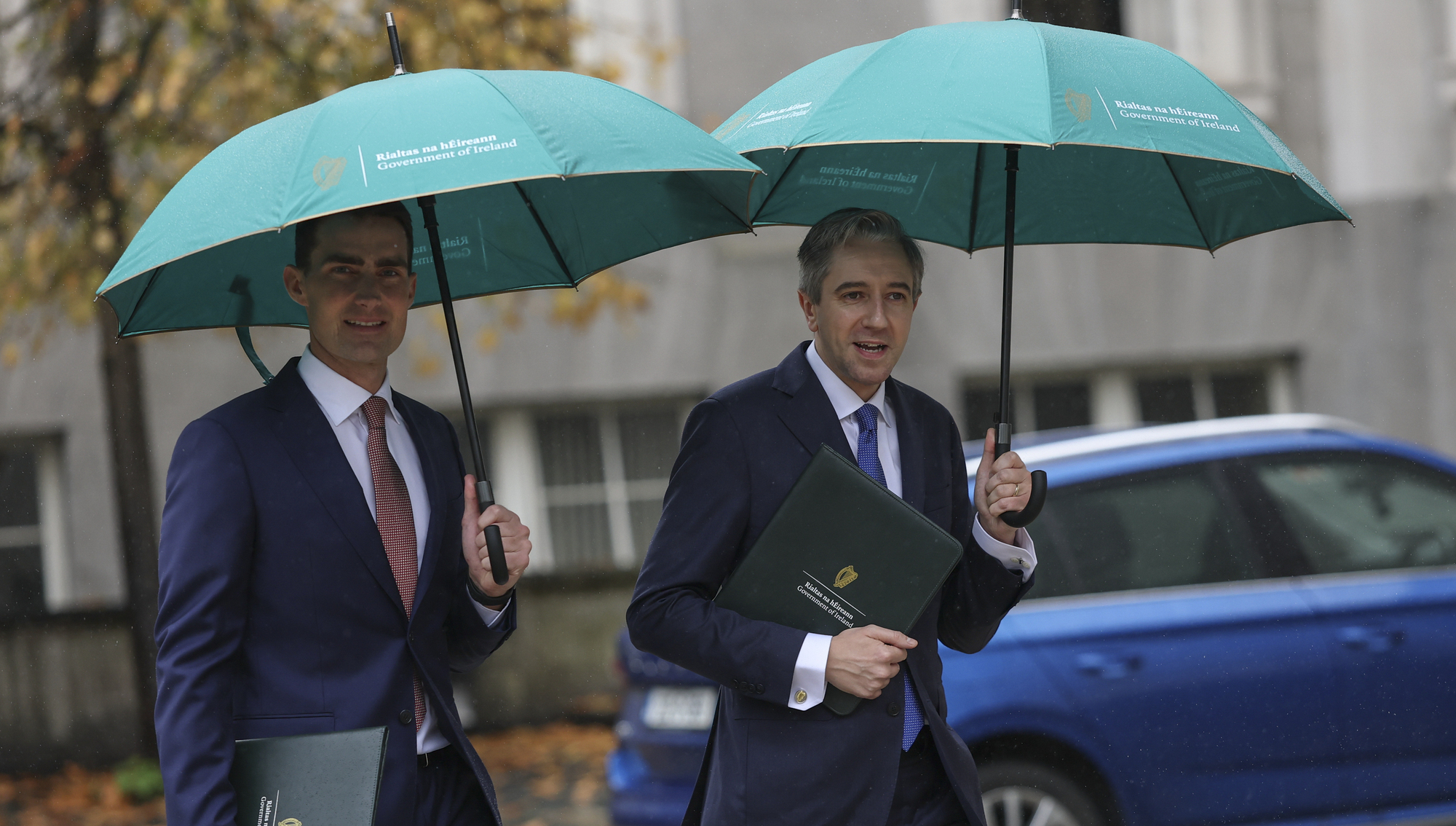
Public expenditure minister Jack Chambers and finance minister Simon Harris. 'The Government will be hoping that initiatives such as the change to the entry point for the higher rate of tax to €46,500, the increase in social welfare payments by €10 and the 79c hike in national minimum wage to €14.94 an hour will make a notable difference to people but, in reality, many will struggle to recall these measures in six months’ time.' Picture: PA

Public expenditure minister Jack Chambers and finance minister Simon Harris. 'The Government will be hoping that initiatives such as the change to the entry point for the higher rate of tax to €46,500, the increase in social welfare payments by €10 and the 79c hike in national minimum wage to €14.94 an hour will make a notable difference to people but, in reality, many will struggle to recall these measures in six months’ time.' Picture: PA

On Tuesday, the formal announcement of Budget 2027 took place in Dáil Éireann, but for anyone with even a passing interest in politics, there could be little sense of novelty or surprise involved.

Leaking is a serious understatement when it comes to the stream of information that has flowed from well-placed
spokespeople for weeks ahead of the official unveiling of the budget.

Clearly we are a long way from 1995, when Phil Hogan, then a minister of state at the Department of Finance, felt compelled to resign because one of his officials forwarded details of an upcoming budget to a journalist.

We were warned earlier this year, when the summer economic statement was published, that we were facing the tightest budget since before the pandemic. In the cold light of day, though, this was a budget that delivered a little something for everyone, but not enough for anyone.

For cash-strapped families, the reduction in the maximum fees for childcare to €550 per month from next September will be welcome but still leaves many families struggling with “a second mortgage” in childcare fees.

The Government will be hoping that initiatives such as the change to the entry point for the higher rate of tax to €46,500, the increase in social welfare payments by €10 and the 79c hike in national minimum wage to €14.94 an hour will make a notable difference to people but, in reality, many will struggle to recall these measures in six months’ time.

Pausing the planned carbon tax increases on home heating fuel and extending excise duty cuts on petrol and diesel until next year smacks of kicking the (fuel) can down the road and certainly will not appease the cohort who have been protesting loudly on this issue.

When the dust settles on Budget 2027, it will be remembered as a budget that promised a lot, delivered a little, and left many wondering where the money went.

Travelling for treatment

The vexed question of medical facilities, and how those are dispersed across the country, raised its head again this week.

This time the particular service under scrutiny is a stem cell transplant laboratory, or rather its absence. Patients in the Cork region who have blood cancer have been asking the HSE for a dedicated cell transplant laboratory at Cork University Hospital (CUH), to replace the lab which was closed in the 2000s over compliance issues.

It is estimated that approximately €27m would be needed to restore stem cell treatment in Cork.

Because there is no such facility at present in the Cork area, patients must travel to the labs in Dublin and Galway.

Patients have pointed out, rightly, that treatment for such serious diseases is challenging enough without the additional discomfort and stress involved in long journeys.

In testimony this week, some of those patients shared horrific stories with reporter Amy Campbell: One man endured a six-hour trip by ambulance due to a crash on the road, while another who travelled to Galway for treatment found there was no bed available and had to find accommodation in a B&B for the night.

It has long been a cliche about our medical service that a ‘postcode lottery’ dictates the efficiency of one’s treatment. Those in need of treatment can often find that their location has a disproportionate impact on the services available to them.

This is a particularly striking case, however. Not only is such treatment unavailable in the second largest city in the country, the nearest options are in cities 210km and 250km away, respectively. Those are extraordinary distances in such a small country.

The patients’ call for such facilities to be re-established in Cork should be heeded, and the unnecessary stress caused by long journeys should come to an end.

A life full of plot twists

The death was announced earlier this week of Jeffrey Archer at the age of 86.

Archer’s was a name redolent of a particular time and place, and with good reason.

He was a prominent Conservative politician in Britain, a favourite of Margaret Thatcher, and a credible candidate to become lord mayor of London, only for his political career was destroyed almost overnight.

In 1987, he had won a libel action against The Star and was awarded £500,000 in damages after the newspaper had accused him of paying money to a sex worker.


Twelve years later, however, the tables turned when he was convicted of perjury and perverting the course of justice during that libel case, and he was duly imprisoned for four years.

It was a plot twist worthy of his other career. In latter years, he was unquestionably more famous as an author than as a former politician. In the mid-70s, he lost a fortune in an investment scheme and turned to writing thrillers to make money, a career change that was to prove staggeringly successful and which he maintained even as he built a political career.

After his first book, Not a Penny More, Not a Penny Less, was published in 1976, he spent 14 years and five months on the Sunday Times bestseller lists and over five years on the New York Times bestseller lists.

His total sales topped 300m books in 119 countries and 49 languages, and one of those, Kane and Abel, has sold over 30m copies since its publication in 1979.

He passed away on Monday, the day before his latest novel, Adam and Eve, was published.

x

More in this section

Revoiced

Newsletter

Had a busy week? Sign up for some of the best reads from the week gone by. Selected just for you.

Cookie Policy Privacy Policy Brand Safety FAQ Help Contact Us Terms and Conditions

© Examiner Echo Group Limited