Irish Examiner view: We must update our laws to defend against wildfires
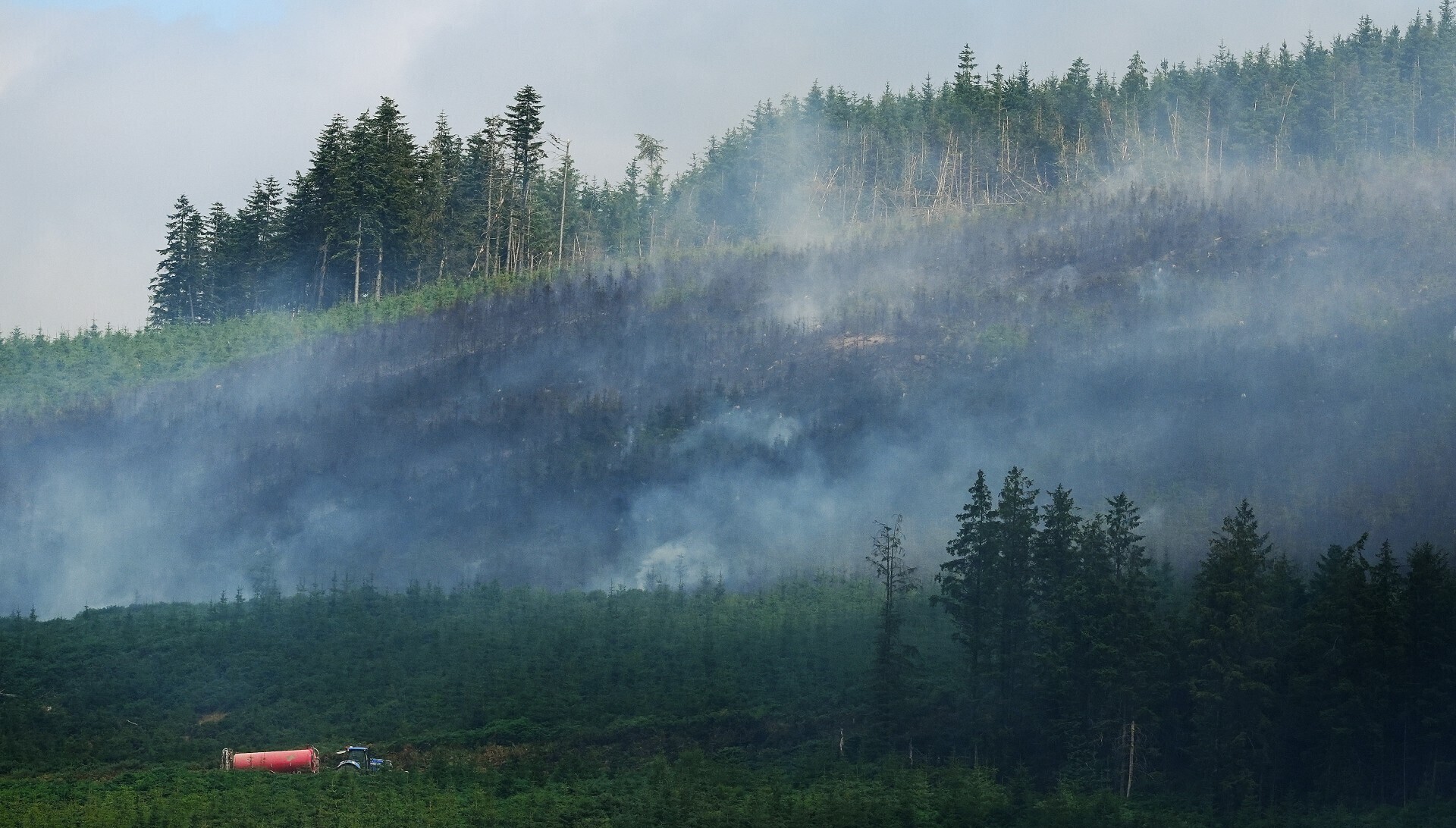
The wildfire at Slievenamon in Co Tipperary, above, and others in Crosshaven and Wicklow suggest we need more vigilance against such outbreaks, whether started deliberately or otherwise. Picture: Brian Lawless/PA
The new reality of our rapidly heating planet is manifest in the wildfires raging both on the continent and here at home. That new reality is also inserting itself into more aspects of modern life than ever before, as underlined by developments this week.
The fires raging in France and Spain are so big that simply describing them has become a challenge, with some reports leaning on comparisons with well-known areas to convey the sheer scale of the disaster.
Since July 1, for instance, the area burnt by fires near Madrid has amounted to over 66,000 hectares — or an area roughly the size of greater London.
In France, fires near the city of Bordeaux have forced the evacuation of a quarter of a million people from the area. The French authorities estimate that 162 square miles of land have been ravaged by the blaze — or an area roughly seven times the size of Manhattan.
We are also contending now with phenomena which need bespoke descriptions for those unfamiliar with obscure meteorological terms. The latest European fires have been linked to the ‘fire cloud’ effect, when pyrocumulonimbus clouds form and drive winds to spread wildfires even faster. In recent weeks, we have become familiar with the ‘heat dome’, an atmospheric system which traps hot air over a region.
The extreme weather conditions may require new and updated terminology in yet another sector here in Ireland.
Read More
As emergency services contend with wildfires in Slievenamon in Tipperary and the Comeraghs in Waterford, ecologist Padraic Fogarty pointed out to RTÉ that Irish laws which govern the deliberate starting of fires are years out of date, adding that in the “very unlikely event” of a person being caught for such a crime, a fine of hundreds of euro would not really be a deterrent.
It is disheartening to have to consider modernising our laws to deal with such a scenario but the scale of recent fires in Slievenamon, Crosshaven, and Wicklow shows it is necessary.
Our environment needs all the protection it can get.
Surprising news this week from an EU research agency: Europe looks likely to fall 5m jobs short of its 2030 digital decade target. This was the objective of having 20m information and communications technology specialists working in the EU by 2030.
The figures come from EU research agency Eurofound and some of the detail in the report make for worrisome reading. For instance, Eurofound points out that education, vocational education, and training systems are not meeting the current and projected employment demand in most EU states, which means recruitment of labour from non-EU countries.
From an Irish perspective, the news is not all bad. Employment in this sector has increased here, rising from 4.7% of total employment in 2011 to 6.3% in 2024, which puts us above the EU average of 5%.
On the other hand, the proportion of people employed in that sector here aged 35 or under is below the EU average: 34% here compared to 37.7%, as an average, across the EU as a whole.
Readers with a taste for irony might like to compare these findings with a story here this week. Martin Claffey reported that OpenAI is to create 250 jobs in Ireland after announcing it intends to base its new European headquarters in the former Tropical Fruit Warehouse in Dublin’s Docklands.
While the announcement of new jobs is always welcome, there is a widespread expectation that AI (artificial intelligence) will sooner or later eradicate many jobs by taking the place of human workers. The roles expected to be filled at OpenAI’s new headquarters include human resources, finance, privacy and legal, and corporate secretarial operations — jobs which are coming into the crosshairs of AI.
As a result, we may need to look at the shortfall in technology jobs across the continent indicated by Eurofound in a new way.
Were those 5m jobs always destined to be swept away by AI anyway?
The week rolls on with little decline in the appetite for all things Mayo. Following the county’s stirring victory in last Sunday’s All-Ireland football final, there have been any number of markers of the impact of the westerners’ All-Ireland win.

Congratulations were shared online by figures as diverse as former US president Joe Biden and Oasis frontman Liam Gallagher — both with roots in the county — but there have been other striking indications of the Mayo win.
Readers may be aware of the term ‘TV pickup’, the name given to the surge of energy use during major TV events, such as half-time during a huge sporting event as viewers put on the kettle for a cup of tea. The Irish equivalent seems to be a data pickup.
As reported here by Martin Claffey, evidence of the Mayo celebrations was clear in mobile data usage.
The Eir network pointed out that when the final whistle blew in Croke Park and supporters took to their phones to celebrate, there was an “unprecedented” 36% increase in data usage compared to an average day.
In a similar vein, Vodafone Ireland reported its highest roaming data traffic peak yet during Sunday’s game — roaming traffic increased by 80% above the typical daily peak, making it the highest-roaming traffic spike recorded on the Vodafone Ireland network.
Then again, when something happens after a 75-year wait, it just has to be shared.

CONNECT WITH US TODAY



Be the first to know the latest news and updates