Irish Examiner view: Ireland must study results of inquiry into Spanish rail disaster
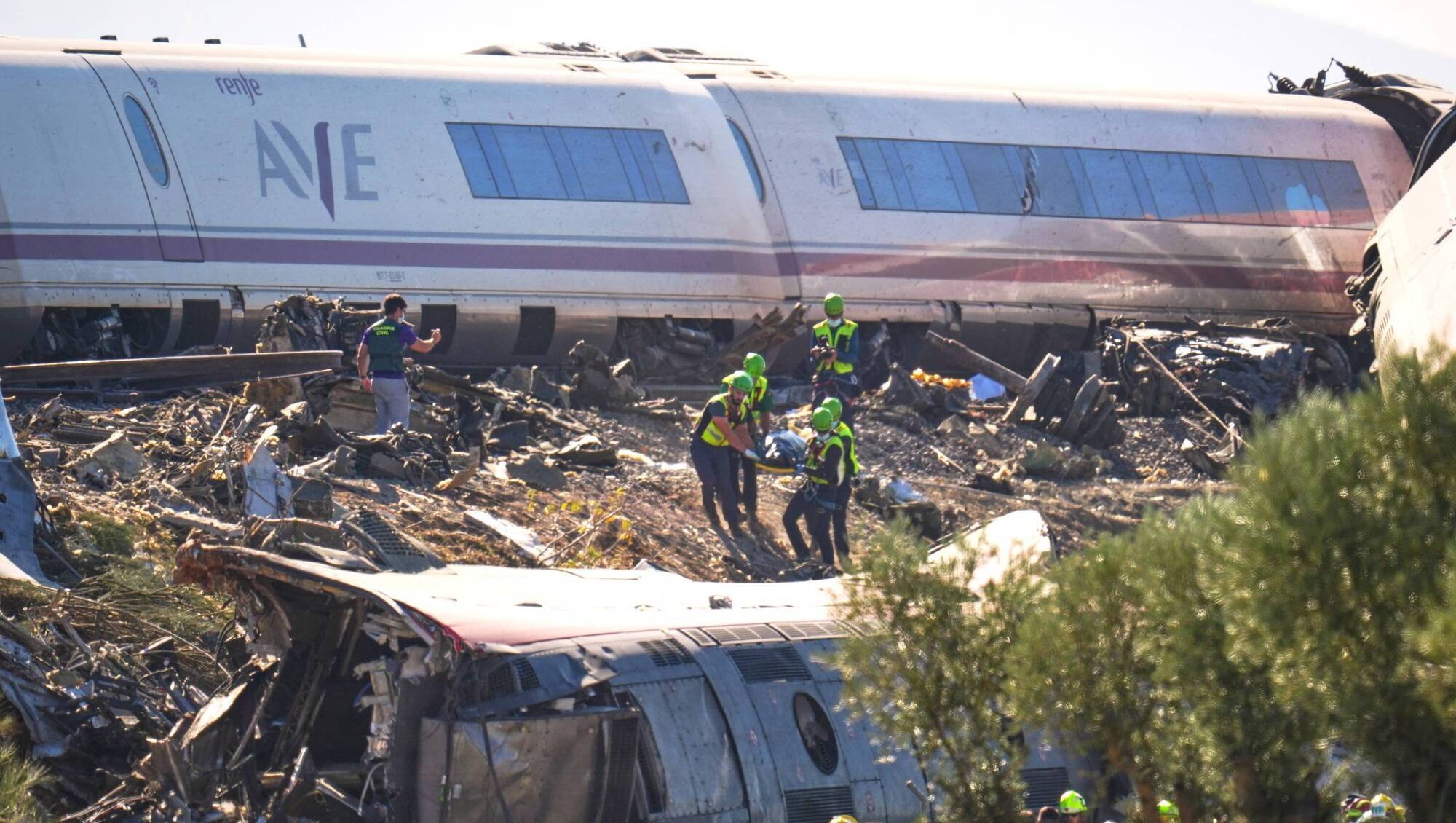
Emergency services attend to the victims at the scene of the collision between two trains in Urda, Spain, on Wednesday Picture: Manu Fernandez/AP
A train journey begins with an act of trust. Passengers take their seats, put away their bags and turn their attention to work, family, or the view outside. They entrust their lives to people and systems they will never see. Arriving safely is the basic promise on which everything else depends.
The disaster in Spain on Wednesday has shattered that trust. At least 68 people were killed when two trains collided near Urda, in Toledo province. Behind that number are families waiting for news and survivors whose lives have been changed beyond recognition.
Spain’s grief deserves our solidarity. It also demands answers.
According to the preliminary account given by transport minister Óscar Puente, a signalling failure stopped trains before one was authorised to proceed despite another remaining stationary ahead.
The investigation must establish precisely what happened. Ministerial statements, however forcefully delivered, cannot substitute for its findings.
The immediate question is how the safeguards intended to keep trains apart failed to prevent this collision. If a technical system stopped working, what procedures governed the response? Who could authorise movement, on what information, and subject to which restrictions? What protection remained against a mistaken instruction?
These are questions about the design and operation of an entire safety system. Any finding of human error must prompt further examination of the conditions in which that error became possible and the safeguards that should have prevented it becoming fatal.
The investigation must be independent, properly
resourced, and transparent. Families deserve information delivered with care and consistency. Railway workers must be able to give evidence freely. Records must be preserved, decisions traced, and recommendations assigned to people and institutions responsible for implementing them.
Read More
This was Spain’s second deadly high-speed rail collision this year. That fact intensifies the obligation to examine safety across the network, while establishing the causes of each disaster on its own evidence. A country can take justified pride in modern infrastructure.
That pride brings a continuing duty to maintain it, staff it properly, and scrutinise its operation. Safety depends on work that attracts little attention when performed well: Inspections, training, maintenance, clear procedures, and the willingness to interrupt services when uncertainty arises.
Political leaders must account for the resources and oversight supporting that work. Operators and infrastructure managers must explain their decisions. Where failings are established, responsibility must carry consequences.
Ireland should follow the findings closely. Every country investing in public transport has an interest in understanding how safety protections withstand technical failure and human fallibility.
For now, the victims and their families must remain at the centre of Spain’s response. Mourning requires compassion. Restoring confidence requires evidence that the circumstances of this catastrophe have been understood and addressed. Passengers should never have to understand the machinery of railway safety to rely upon it. Those entrusted with that machinery must now explain, fully and publicly, how it failed.
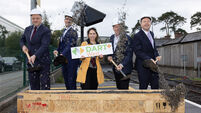
For Cork residents, the prospect of digging up as much as 60km of busy streets to repair the city’s wastewater network invites a weary response: It was ever thus. That resignation is understandable. It must not become permission for nobody to explain how we arrived here.
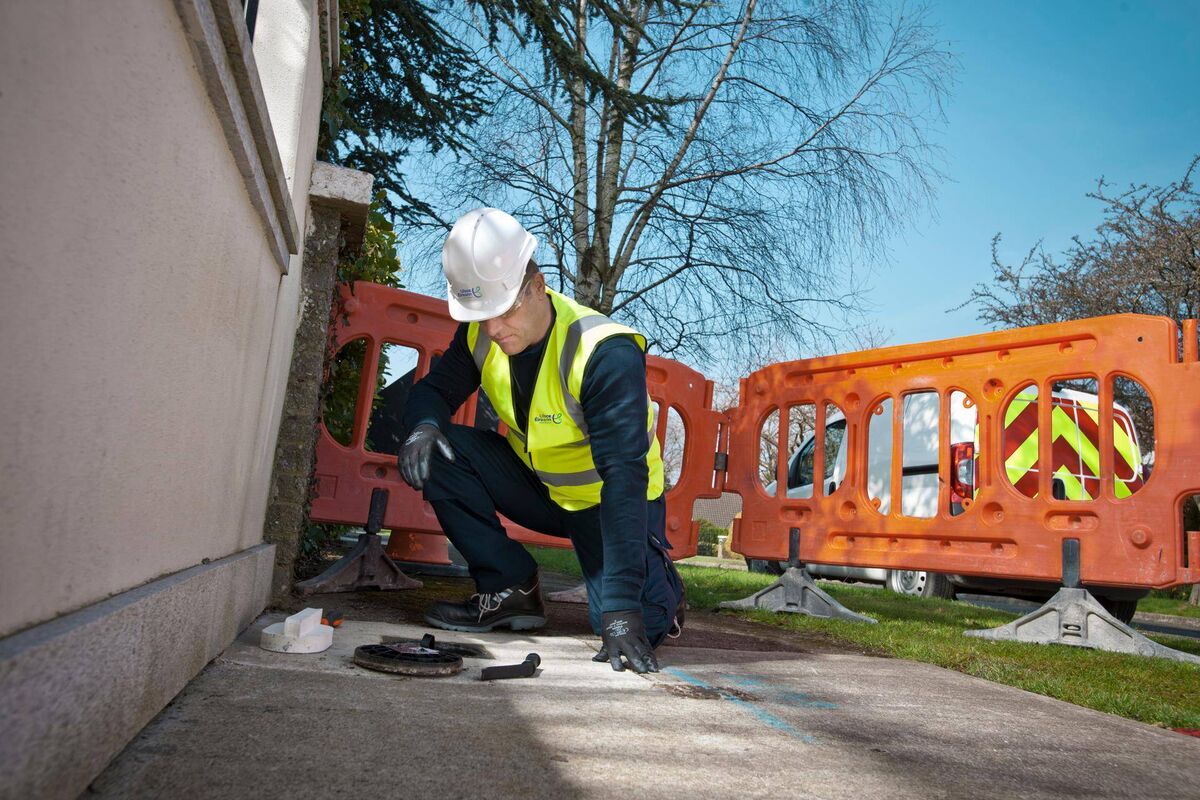
Uisce Éireann has told the Public Accounts Committee that fixing Cork’s network could cost approximately €2bn. Ireland also faces substantial European financial penalties for continuing failures to meet wastewater obligations, with Cork a major contributor to that non-compliance. The public will ultimately bear the cost of both the remedial work and any fines.
Residents and businesses will also endure the disruption of opening streets to repair infrastructure on which a functioning city depends.
They are entitled to more than another reference to historic underinvestment. That phrase describes a condition. It does not explain the decisions that produced it. Who identified the deficiencies, and when? What investment was requested, approved and delivered? Where was the money spent? Which warnings went unheeded, and who had responsibility for acting on them? These questions do not presume that money disappeared or that every delay was avoidable. They ask that responsibility be traced through the public bodies and political decisions involved.
Read More
Ireland’s adverse European court judgment dates from 2019. The need for action cannot reasonably be presented as a sudden discovery. Complex engineering requires careful planning. A phased programme may be necessary. Neither consideration removes the obligation to explain past failures or publish a credible timetable for correcting them.
The Government and Uisce Éireann should provide a
plain account of what went wrong, alongside costs, milestones, and named responsibility for delivery. Cork also needs a co-ordinated plan to protect access, trade, and daily life during construction. Essential work requires public patience. That patience must be earned through honesty, competence, and demonstrable accountability.
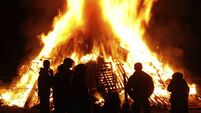
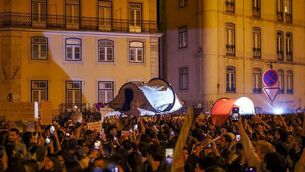
There was a powerful argument for investment in the arts on Galway’s streets last Sunday. It could be seen on the faces of children and adults watching the Macnas Halloween parade.
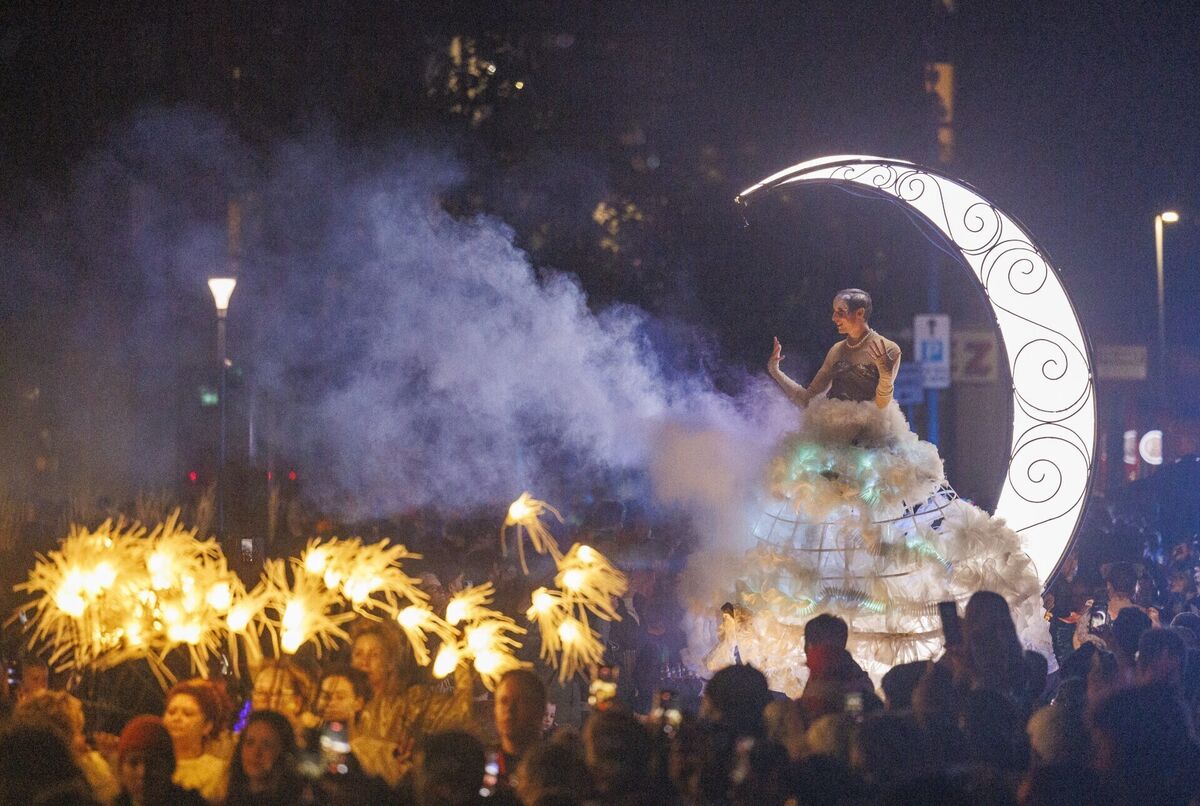
Marking its 40th anniversary, the company brought its spectacle, Fiáin, into the city, turning familiar streets into places of possibility and surprise.
Behind that wonder lay the work of artists, makers, performers, and volunteers. What appeared magical depended on skill, patience and preparation. In a world increasingly mediated through screens, there is particular value in gathering outside, in the cold, to experience something together.
Such occasions give a community memories it can share. Public support helps make that possible. The return includes pleasure, belonging, and the discovery — especially for children — that imagination can transform the world around them. We should remember those faces when arts funding is discussed. The wonder we celebrate requires sustained investment in the people who create it.

CONNECT WITH US TODAY



Be the first to know the latest news and updates