Irish Examiner view: Indifference to homelessness reflects badly on all of us
This is a national crisis that needs to be addressed with vigour and determination
Irish Examiner view: Indifference to homelessness reflects badly on all of us

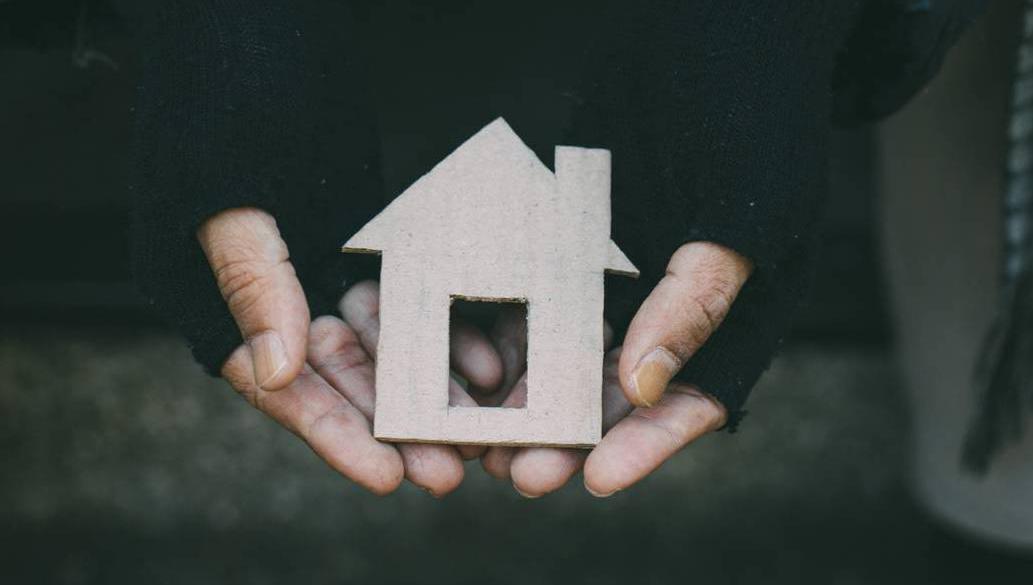
There are now 10,000 more people homeless in Ireland than there were in 2021 — giving us a shameful total of 17,548 homeless people in this country at the end of last month. And there is no sign of the crisis abating any time soon. Picture: iStock

The unchecked growth of homelessness in this country appears to indicate that, as a nation, we have become inured to the plight of the growing number without a permanent roof over their heads.

We traditionally laud ourselves for being a caring society which embraces those on the extremities of life, but the hard evidence of homelessness statistics indicates a certain level of indifference towards those for whom the basic right of having a home no longer seems possible.

There are now 10,000 more people homeless in Ireland than there were in 2021 — giving us a shameful total of 17,548 homeless people in this country at the end of last month. And there is no sign of the crisis abating any time soon.

Successive governments have formulated and implemented plans to stem the numbers of individuals and families descending into homelessness. None of them have impacted on the problem in any meaningful way.

In times past, the Irish public would have mobilised in great numbers to voice their dissatisfaction with the government’s inability to produce workable solutions.

Not now, it would appear.

This is a national crisis that needs to be addressed with vigour and determination.

But a level of public apathy has allowed governmental stagnation on the homelessness issue as plan after grand plan failed to stem the growing numbers.

In the Irish Examiner today — in print and online — we clinically examine the path which has led us to this appalling situation and how one government after another has been seemingly unable to put a stop to a situation which is going to create massive societal upheaval in the long term.

That is because the official figures conveniently hide the fact that there are tens of thousands more people living in overcrowded accommodation, all too many women and children living in domestic violence refuges, and thousands who are legally allowed into this country but who are stuck in Ipas centres.

As pointed out in the Irish Examiner today by Ber Grogan, the executive director of the Simon Communities of Ireland, the answer to homelessness lies with preventing it happening in the first place.

Sadly, as she highlights, early intervention is something which has historically been underfunded and unprioritised.

She calls for a total reform of the private rental sector, Housing Assistance Payment (HAP) rates that reflect the real market, stronger protections against the growing scourge of eviction, and easier access to supports when people run into problems.

We also need the real frustration of the wider public to be reflected in their interactions with our politicians — be they in government or on opposition benches.

Broad indifference to the problem of homelessness is a poor reflection on us all.

Without doubt, this is a problem that can be solved. It might be that the solutions will be unpopular with some sectors in our society, but the priority has to be putting people in proper homes — and quickly.

This is an issue that cannot be accepted by any society which regards itself as just.

The Department of Housing cannot be expected to stem the problem on its own, and each and every government body — from justice to health and on to social protection — must co-ordinate action.

Other countries face similar issues, but there are obvious examples — Finland being one — where political will, social endeavour, and sustained investment eventually overcame this insidious and growing societal cancer.

Grand political gestures are no longer welcome. We need concerted action and we need it now. The people of Ireland have their part to play in demanding that it happens.

Yes, we can face up to the global climate crisis

The globe is facing a polycrisis that is pushing us towards climate breakdown, political extremism, and increasing social and economic upheaval.


But there is hope that humanity can raise living standards, reduce inequality, and keep global heating within a 2C rise.

That hope is contained in a report published last week from the World Inequality Lab (WIL) which points the way forward for human and planetary survival.

Solutions it proposes include hefty wealth taxes on billionaires, sharp reductions in working hours, dietary changes, and shifting investment from materially intense sectors such as mining and industry into education and health.

The authors suggest that, if these and other measures are adopted, 89% of the world’s population will see incomes double, and globally warming could be kept below the 2C preindustrial average.

There is little doubt we are witnessing a huge political, cultural, and intellectual battle going on globally. Right now, it is being won by far-right activists, nationalists, and billionaires who predict a future dominated by fossil fuels, climate disruption, and gross inequality.

It need not be that way and the lab’s global justice report says that the ideology being followed by US president Donald Trump and his many acolytes across the globe is unsustainable.

The aim of the report is to overcome the shortcomings of mainstream thinking on the polycrisis. It suggests the world will have to come to some kind of co-operative redistribution of resources and power — largely because the alternatives are going to be disastrous for humanity and the planet we live on.

An interesting core element of the report is the concept of sufficiency, whereby people can live sustainably and enjoy a healthy and prosperous life without constantly striving to consume or accumulate material possessions, a pursuit that degrades the natural world upon which all life depends.

Would it not be fantastic for us today to anticipate a habitable and equal future? Such a concept, according to the report, is materially possible, but will require hard political choices to be made and hard work to build a coalition behind it. It might be utopian, but it does show us there are paths available to us other than the disastrous one we’re on.

CLIMATE & SUSTAINABILITY HUB

More in this section

Revoiced

Newsletter

Had a busy week? Sign up for some of the best reads from the week gone by. Selected just for you.

Cookie Policy Privacy Policy Brand Safety FAQ Help Contact Us Terms and Conditions

© Examiner Echo Group Limited