Louise Burne: Unions have the upper hand — and could embarrass Government at flagship EU event
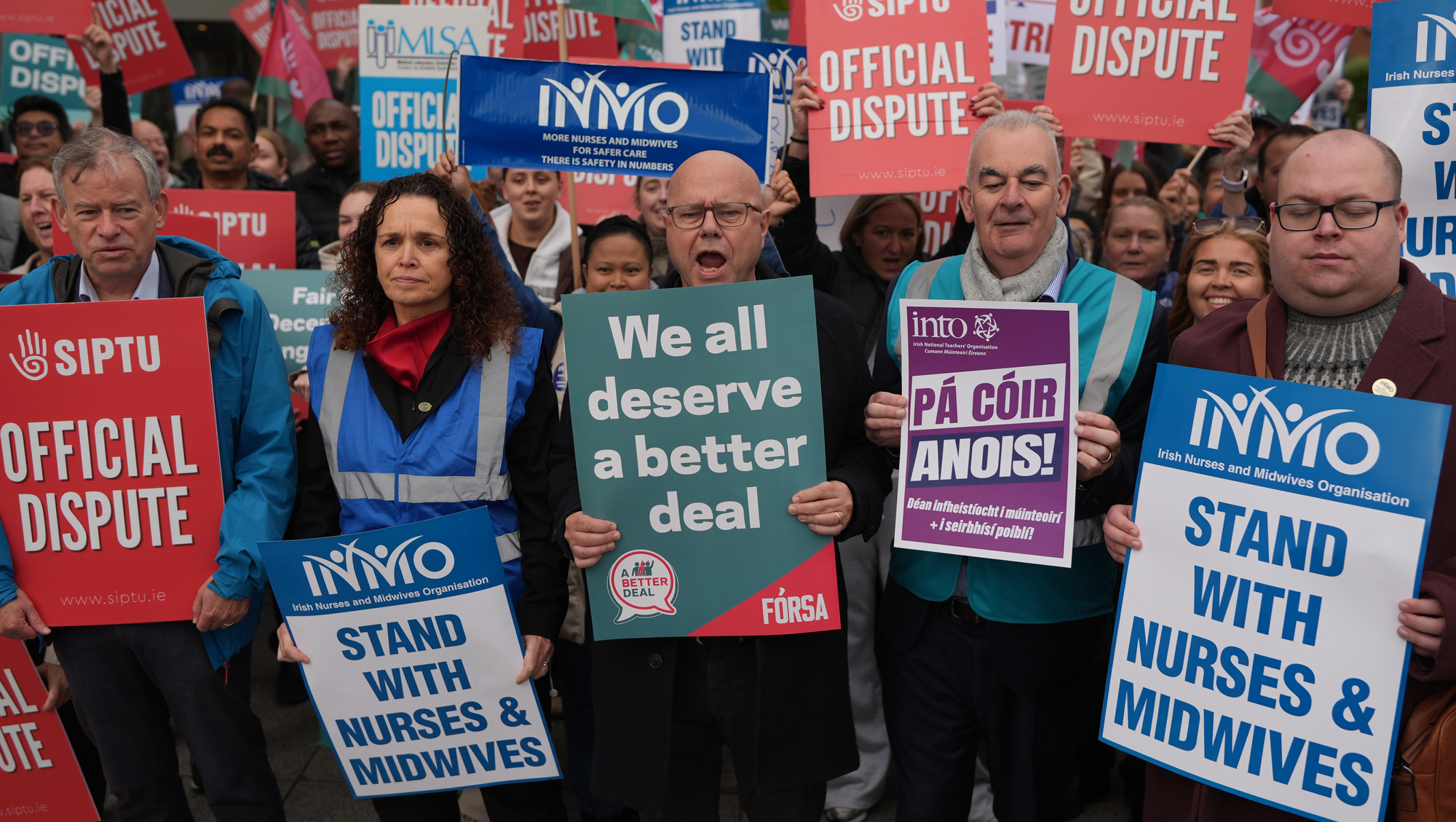
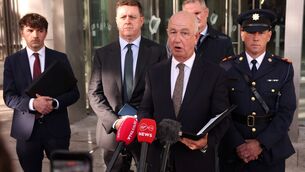
Siptu deputy general secretary Adrian Kane, INMO general secretary Phil Ní Sheaghdha, Fórsa general secretary Kevin Callinan, and INTO general secretary John Boyle during last month's strike. Picture: Brian Lawless/PA
You may not have noticed, but Ireland's presidency of the EU has been trundling along for the last four months.
After a big kick-off in Dublin Castle and a large meeting of the European Commissioners in Cork in July, it has been pretty low profile.
Meetings have been continuing, with EU ministers jetting in and out of the country. But if you did not know they were on, you may have missed them.
Everything is expected to kick up a notch next week. A meeting of the European Political Community (EPC) will take place in the Convention Centre next Thursday.
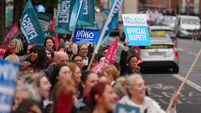
Ahead of more than 50 leaders jetting into Dublin for the high-profile meeting, the Government is facing the embarrassing situation of having 300,000 public sector workers on strike as the stalemate at the Workplace Relations Commission (WRC) continues.
The pay talks were rumbling on for 10 days at the WRC before they came to a screeching halt last Friday evening, as the Government and the unions hit an impasse on pay.
Shortly before the talks adjourned, Kevin Callinan, chair of the Irish Congress of Trade Unions, wrote a letter to members saying that union leaders were considering another strike on Wednesday, November 11.
Over the weekend the union bosses clearly checked their calendars and discovered that the EPC was taking place on Thursday, November 12.
While Mr Callinan was quick to say on Monday that the date change was due to “logistics”, it is clear it will cause the Government maximum damage and embarrassment if the strikes were to happen on Thursday.
A happy coincidence? Maybe I am cynical, but it seems unlikely.
The EPC meeting is the highlight of Ireland’s six-month presidency of the EU. It is a relatively new group; Dublin will be the group's ninth meeting.
Conceived by French president Emmanuel Macron in 2022 following the Russian invasion of Ukraine, it brings EU leaders together with counterparts of European countries outside the bloc, including Britain and Ukraine.
There are a total of 47 countries in the EPC, as well as the presidents of the European Commission and Council.
It is a high-stakes operation involving tight security and well-planned logistics.
A work-to-rule by rank-and-file gardaí and representative associations was already casting a long shadow over the EPC meeting.
The prospect of a public service strike will cast a larger one, with some members of the civil service potentially unable to work at the event if the strike goes ahead.
Our European colleagues are well used to protest; look at what has been happening in France, Spain, and Germany in recent weeks.
However, strikes that would disrupt the EPC and the meeting of EU heads of state on Friday would be a major embarrassment to Ireland.
It now puts increasing pressure on the Government and public expenditure minister Jack Chambers to get a deal done on public sector pay.
Talks at the WRC have been unsuccessful to date. Union and Government sources last Friday admitted that a deal was “touch and go” but argued that the fact both sides were at the table showed a desire to strike a deal.
However, there was no agreement on pay. And until there is an agreement on pay, there can be no deal.
Until there is a deal, the threat of a strike will continue to loom.
Government sources have admitted they are unsurprised by the union tactics — however, the Government has allowed them to get the upper hand.
And, if they want to avoid embarrassment at the flagship event of Ireland's EU presidency, they need to strike a deal and avoid a strike.
Back in June, as Chambers lamented the unions not coming to the table to discuss a new pay deal, he warned that the Government would not do a deal “at any cost”.
However, this has now gone on so long that the cost will end up being Ireland’s reputation if this strike cannot be sorted before the EPC.
And avoiding that will come with a heavy financial cost.
- Louise Burne, Political Correspondent

CONNECT WITH US TODAY



Be the first to know the latest news and updates