Organics is not just an environmental scheme — it’s a resilience tool
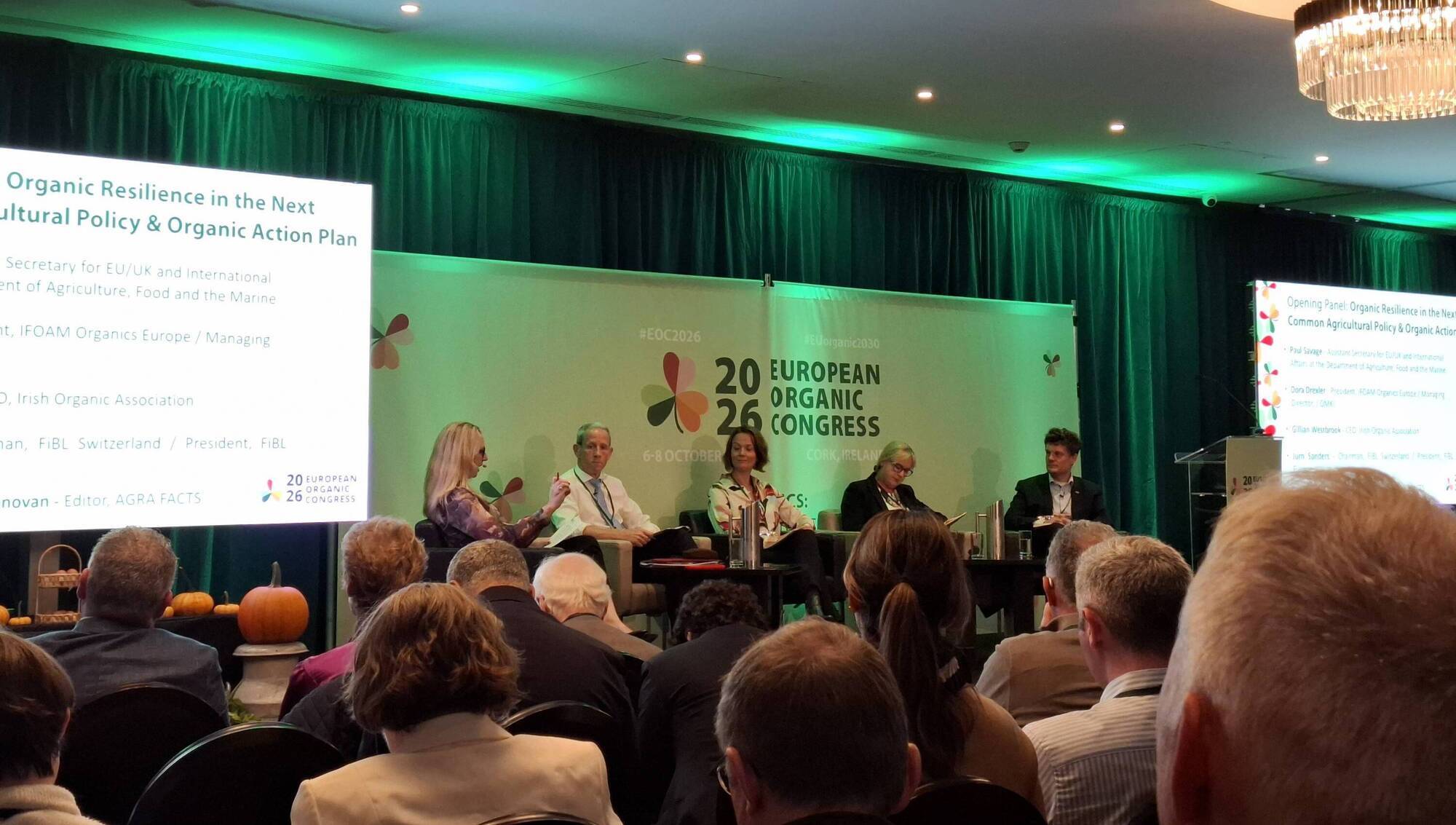
The opening panel of the 2026 European Organic Congress in Cork.
Putting organics at the core of future CAP policy to bolster food security and climate resilience was the main message at the 2026 European Organics Congress.
The event, which was held in Cork on October 6, as part of Ireland’s European presidency, highlighted organics as a key tool for the resilience and longevity of Europe's agricultural sector.
International Federation of Organic Agriculture Movements Organics Europe president Dora Drexler made her debut at the congress and told attendees in her opening address that, with major discussions under way on the future Common Agricultural Policy (CAP) and EU budget, it was vital the organic movement was involved in shaping policy.
"It is important that the organic movement is part of the conversation, bringing not only our ambitions... but also the practical experiences of people across the organic value chain."
Read More
She stressed decisions being made now on the Multiannual Financial Framework and CAP would shape Europe's food and farming systems for years to come.
She warned allowing member states more flexibility under the new CAP structure carried risks of fragmentation. To avoid this, she announced the International Federation of Organic Agriculture Movements was seeking “30% of the CAP to be ring-fenced for environmentally relevant and climate-relevant actions including organic”.
“Investing in organic means investing in resilience,” she said, presenting organic farming as a strategic investment rather than a niche sector, arguing organics contribute to resilient farming systems, healthy soils, biodiversity, climate action, thriving rural areas and sustainable food systems.
Although drought conditions were difficult for all farmers no matter the practices, Ms Drexler said research showed organic farms withstood the drought and heat better due to higher organic matter in soils, more diverse crop rotations, use of good cover crops, greater biodiversity, and reduced dependence on external inputs.
Irish Organics Association chief executive Gillian Westbrook called this year’s drought “just a rehearsal of what’s to come”. Ms Drexler suggested the CAP should move away from repeatedly responding to crises after they occur.
"Instead of repeatedly paying emergency payments for emergency responses, European policy should move to a more systematic investment in those farming systems which really can make us prepared for climate shocks."
Via a prerecorded message from European Commission president Ursula von der Leyen, she described organic farming as a “flagship” of CAP and linked organics to broader EU strategic priorities such as reducing import dependence, protecting soils, improving animal welfare, strengthening value chains and supporting rural communities.
Irish Organics Association chair Sean Condon argued recent CAP supports had helped drive Ireland's expansion in organic farming and shown how policy could complement growing consumer demand.
"It is important to ensure that organic farming remains a priority and mandatory measure in the next CAP."
He added future EU support should also target organic processing capacity, distribution channels, marketing and awareness campaigns, and consumer access to organic products, taking into account the whole value chain and not just primary production.