Cork Airport is going from strength to strength. Now we need to improve how people get there
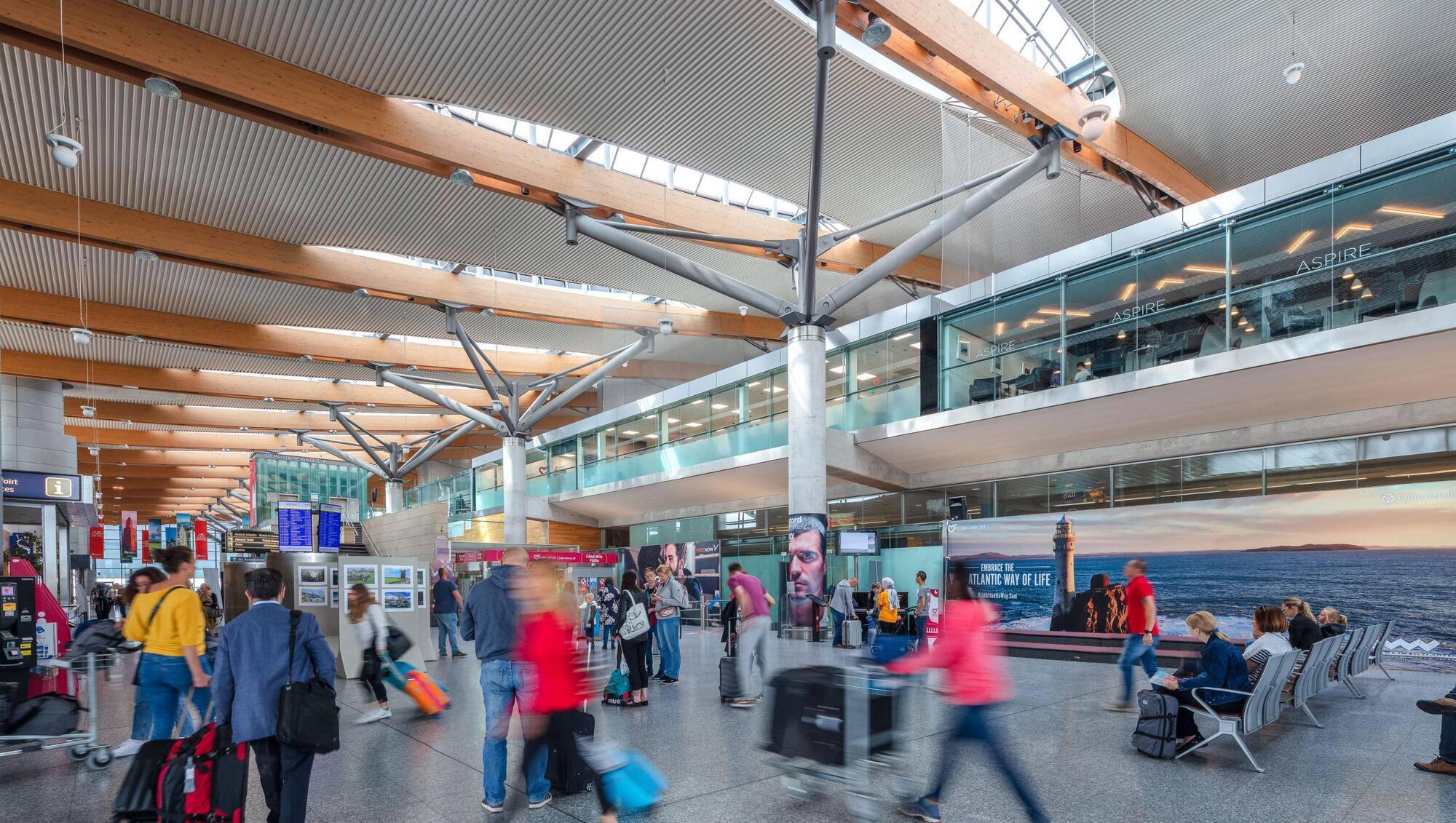
An economic impact study commissioned in 2023 revealed that Cork Airport contributed over €1bn to the Irish economy in gross value added. Stock picture
Cork Airport continues to play an essential role in the Irish economy. Last year, the second-biggest airport in the State recorded its busiest year ever, with 3.46m passengers. Its importance to tourism, industry, trade, and foreign direct investment cannot be understated.
An economic impact study commissioned in 2023 revealed that Cork Airport contributed over €1bn to the Irish economy in gross value added.
The airport also supports some 13,000 jobs, directly and indirectly, with a substantial number of those in tourism and hospitality.
These are significant figures and demonstrate just how important the airport is to Cork and the wider Munster region. Beyond the passengers travelling through its terminal, Cork Airport is a major employment centre — supporting businesses, attracting investment, and helping to sustain jobs across the region.
More passengers from across Munster and South Leinster are choosing to fly from Cork, thanks to its excellent customer service, connectivity, and hassle-free experience.
That connectivity is central to the airport’s success.
In June, a visit to Frankfurt Airport provided an opportunity to promote Cork and the wider region at an event organised by Lufthansa and Tourism Ireland, alongside Visit Cork and Cork Airport, to celebrate the restoration of Lufthansa’s Frankfurt–Cork service.
Over 50 representatives of the German travel trade and media attended. Germany is Ireland’s third-largest source market for inbound tourism, and direct access to major European cities is enormously important for tourism and business.
Frankfurt is one of five major European hubs served directly from Cork — alongside London Heathrow, Amsterdam Schiphol, Paris Charles de Gaulle, and Zurich.
Looking to the future, Cork Airport has an ambitious capital development programme underway, with work progressing on a new passenger security screening area and mezzanine floor. Further plans include an expanded duty-free shop, a new executive lounge, additional boarding gates, and a new pier. Altogether, the €200m investment by DAA Group represents the most ambitious development at Cork Airport since the construction of the current terminal 20 years ago.
This investment is hugely welcome. However, as the airport continues to grow, greater attention must be given to how passengers and employees travel to and from it.
For the thousands of people employed at Cork Airport and in surrounding businesses, reliable public transport is particularly important. Many work shifts beginning early in the morning or finishing late at night, when public transport options can be limited.
Visitors face similar difficulties. An airport serving millions of passengers annually should have bus connections that reflect the demands of modern international travel.
A 24-hour, seven-day-a-week bus connection between Cork Airport and Cork city centre should be a clear priority.
The recent Budget 2027 negotiations presented an important opportunity to address these challenges.
Throughout those negotiations, securing additional funding for bus services was a priority for me, particularly given the demands on Cork’s growing transport network. The increased allocation now gives us an opportunity to deliver the improvements that passengers, workers, and communities have been seeking for years.
The increased allocation for public service obligation services, including an 11% uplift nationally, will help support about 140 new and enhanced bus services in 2027.
As a Cork TD and minister of state in the Department of Transport, ensuring that Cork benefits substantially from this additional investment remains a particular priority.
Cork Airport must feature prominently in that work.
Discussions are continuing with the Department of Transport, the National Transport Authority, and Cork Airport on improving bus connectivity.
While the immediate priority must be a frequent, reliable service between the airport and the city centre, there is also considerable scope to improve regional connections.
There are already a good number of services connecting Limerick with Cork Airport. Better connections with Killarney, Clonmel, and Waterford would further strengthen the airport’s position as the main international gateway for the south of Ireland.
In the longer term, the proposed Cork Luas should also serve Cork Airport.
The airport should, in my view, have been included in the original route planning for the light rail project. While the initial proposals do not provide for this, the ambition to extend light rail to the airport must remain firmly on the agenda.
Cork Airport has already made positive submissions on safeguarding a potential route, and that work deserves continued support.
For now, however, buses offer the most immediate opportunity to improve connectivity.
Cork Airport is not simply somewhere people go to catch a flight. It is a major employer, a gateway for visitors, an important support for indigenous businesses and multinational investment, and one of the strongest drivers of economic activity in the region.
Its continued growth is good news for Cork and for Ireland.
The challenge now is to ensure that the public transport services supporting that growth keep pace. The additional funding secured in Budget 2027 provides an opportunity to make meaningful progress, and Cork must receive its fair share.
An airport that contributes so much to our economy deserves a public transport network to match.
- Jerry Buttimer TD is Minister of State at the Department of Transport

A collection of the latest business articles and business analysis from Cork.
CONNECT WITH US TODAY



Be the first to know the latest news and updates