The terminally ill must choose to end their life in a way that is clandestine and unnecessary
I meet people in my office suffering from terminal illness who discuss with me the purchase of one-way tickets to Zurich. I counsel caution and explain the law.
It is over 50 years since I began my legal career working almost exclusively with people preparing for end of life. My work has centred around the creation of wills, the administration of estates following death, the handling of trusts, and the resolution of taxes.
Along the way, all manner of family life, including conflict, mediation, and the sale or management of property would rest at my doorstep.
Handling the affairs of the sick and the elderly would become a part of my daily routine as I prepared my clients for their final hours.
Then, in 2021, my wife of 40 years died after two years of suffering from motor neurone disease, leaving four adult children and five grandchildren. She died alone in a hospice. It was pandemic time and, grateful as we were she was comfortable in palliative care, it was not the death she would have wished in the circumstances, or the way that we, as a family, would have wanted.
Months before she died, she begged to be allowed to leave us on her own terms, at home in the company of her family with medical assistance. This was simply not possible given the constraints of our criminal laws.
My clients today are better educated, more sophisticated and comparatively well-adjusted to choosing terminal options than the generation behind them. Modern society is equipped now to handle choice at the end of life.
I meet people in my office suffering from terminal illness who discuss with me the purchase of one-way tickets to Zurich. I counsel caution and explain the law.
If these people implicate their loved ones by discussing plans such as this, there are consequences. Therefore, many of these journeys are undertaken alone or with the help of agents, but mostly undertaken in a manner that is clandestine, undignified and, in today’s Ireland, unnecessary.
Read More
My colleagues tell me my experience is not isolated.
It is over two years since the Oireachtas joint committee on assisted dying issued 38 recommendations to the Government with a view to introducing legislation enabling voluntary assisted dying. No progress has taken place since and one must ask the question ‘Why?’
Conversation on this subject is opening up everywhere. In September 2024, Ireland hosted the biennial conference of the World Federation of Right to Die Societies, bringing together delegates from all over the world to discuss developments in this area in other countries.
It was organised by a small not-for-profit advocacy group known as End of Life Ireland, of which I am a member. This year’s conference takes place in Tokyo next week. We will be there.
World Right-to-Die day will be observed on November 2. End of Life Ireland will conduct a vigil at noon outside Dáil Éireann, followed by a gathering at the Unitarian church on St Stephen's Green. All are welcome.
On November 4, members from End of Life Ireland will travel to Brussels to participate in the presentation of a petition to recognise advance healthcare directives throughout Europe and arising out of which will be the means to enabling the enforcement of the individual's right to decide how and when their life should end and the provision of proper professional assistance for end-of-life decisions across the EU.
The petition will also seek to include the right to voluntary assisted dying in the Charter of Fundamental Rights of the European Union.
The Assisted Decision Making (Capacity) Act of 2015 introduced the office of the director of decision support services. In 2023, after eight years of consultation, Dáil Eireann introduced legislation implementing this act and enabling the registration of enduring powers of attorney (EPA) and the introduction of advanced healthcare directives.
The creation of EPAs is no longer within the remit of practising solicitors. The EPA now exists behind a concrete wall designed to protect the vulnerable. In doing so, it has built a barrier that in many cases has prevented the elderly and the vulnerable from availing of the process.
Nonetheless, I will continue to encourage all my clients to avail of this process in order to spare their families from having to mount elaborate court proceedings, and the time and cost that involves.
The advance healthcare directive is a more direct and accommodating document, even though there is no system of registration available. It is known sometimes as a living will. While a will speaks from death, this document speaks from life. It seeks to prescribe in writing the wishes of the individual when they are unable to direct medical decisions involving their health and wellbeing.
It works something like this. Imagine, Michael and Linda are at home in the kitchen. Michael stumbles with what appears to be a heart attack and falls to the floor unconscious. Linda reaches for her mobile phone and dials 999. She calls for medical assistance.
As Michael is wheeled into the waiting ambulance, Linda turns to the paramedic with a copy of Michael's advance healthcare directive in her hand. She had it in a drawer in the hall stand for just this eventuality. The paramedic is now able to deliver patient and directive to the waiting medical team at the emergency department of the hospital.
In the living will, Michael has specified certain treatments are to be avoided in certain circumstances, including the one in which he finds himself now. Typically, the first treatment on his list relates to resuscitation.
He has stated he does not wish to be resuscitated if he is suffering from a terminal illness, or, if he has a motor degenerative condition, or, if he may have dementia, or, if, in the opinion of his designated healthcare representative, the quality of his life will suffer.
The treatments and circumstances are a matter of his choosing and the appointment of a designated healthcare representative would be included in the document. He has given copies to his family, his close friends and his GP.
What it cannot do under the law at present is to seek medical assistance in dying.
Section 2 subsection 2 of the Criminal Law Suicide Act 1993 states that: "A person who aids, abets, counsels or procures the suicide of another, or an attempt by another to commit suicide, shall be guilty of an offence and shall be liable on conviction on indictment to imprisonment for a term not exceeding fourteen years."
The repeal of this law would enable Michael or his designated healthcare representative choose how he wishes to die subject to regulation or the law, as it would apply enabling voluntary assisted dying.
Such a repeal would complete my function as an adviser in preparing my clients for the decisions needed to exercise legitimate options at the end of their lives and to assist them in the discussion that should take place among their families, taking all prospects into consideration.
Most of all, it would remove from discussion suggestions of one-way tickets to Switzerland or anywhere else that may harbour their shame.
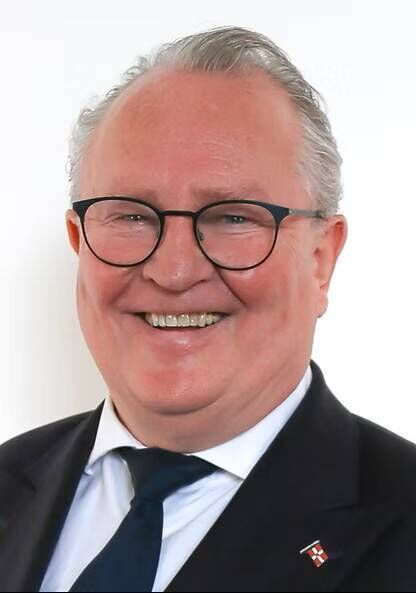
- Justin McKenna is a solicitor and director of End of Life Ireland

CONNECT WITH US TODAY



Be the first to know the latest news and updates