Liz Carolan: Who was the Government AI conference actually for?
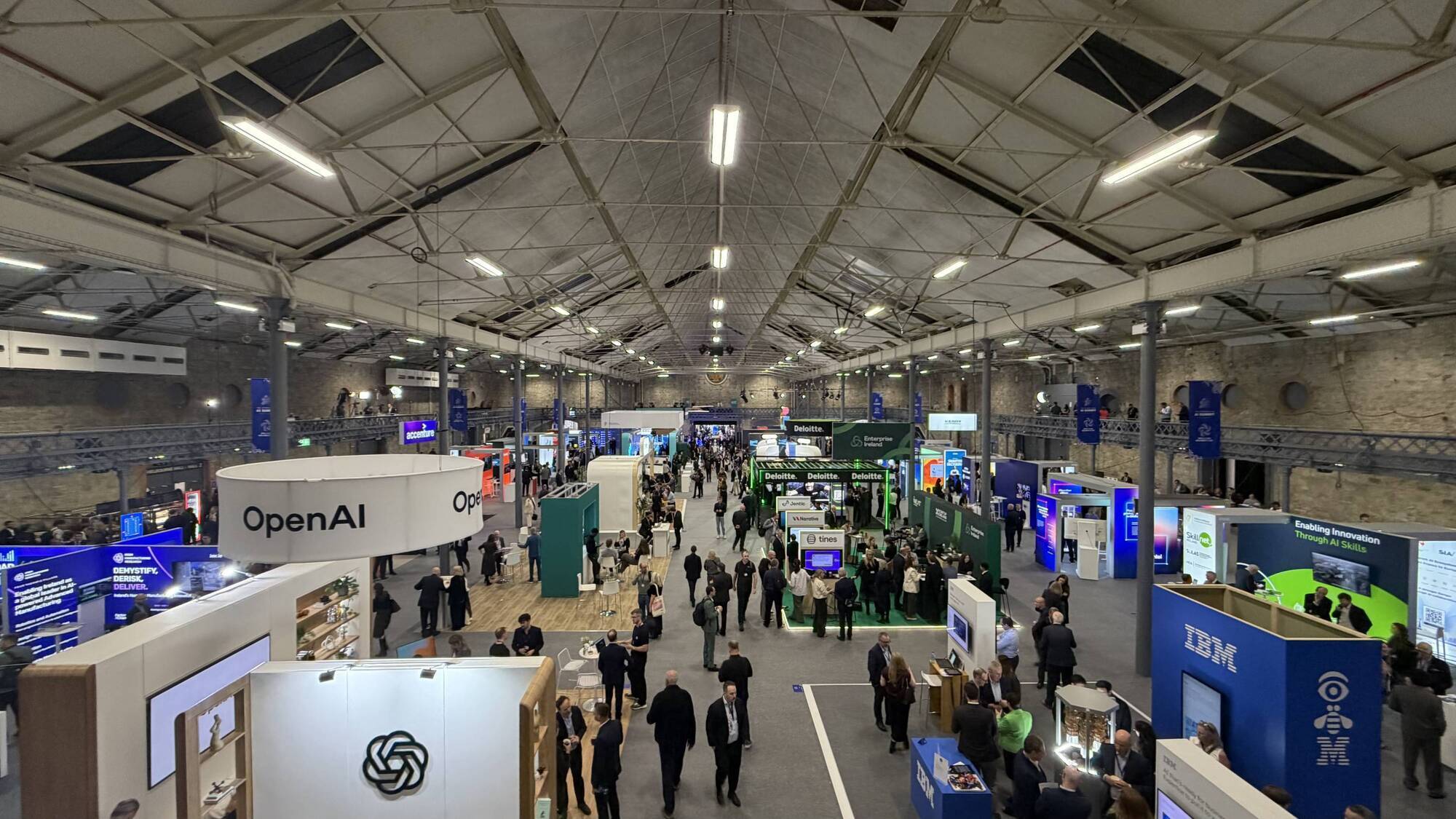
'Conferences are a kind of theatre, and this sub-genre, the Government convened trade show, is a national branding exercise.' File picture
Standing on a strategically lit circular stage, backed by giant screens and the occasional burst of the smoke machine, Europe’s top tech regulator spelled out a vision for the gathered, suited crowd: “a true, European AI Continent”.
Commissioner Henna Virkkunen was opening the Government’s International AI Summit, and she acknowledged her surroundings in Dublin by invoking Seamus Heaney’s .
“He looks at the pen in his hand” she tells us, reading from her notes “and decides it will be his tool, as the spade was his father's. Every generation finds its own instrument. AI may be ours. The time for Europe to dig has arrived”.
Conferences are a kind of theatre, and this sub-genre, the Government convened trade show, is a national branding exercise. So perhaps we can read the event as a critic would, and try to answer the questions that stuck in my mind as I wandered through the exhibition floor; who is this for? And what is it trying to say?
The summit was frictionless, slick. There was evidence everywhere of the kind of planning that takes a lot of work for people not to notice.
Read More
Queues moved quickly, a QR code entry system worked, keeping the protestors and picketers outside the gates and letting the tech executives and Irish and EU officials inside the vaulted halls of the RDS. Ireland is a modern, professional nation, the production said, with a Government that knows the game and knows how to play it.
But there was something disquietingly deferential about the role that the Government gave itself in the proceedings. The Taoiseach opened the event, but the “capstone keynote” went to Microsoft, with a minister given the slightly unseemly job of introducer and hypewoman.
And the Riverdance-inflected performance that opened the morning plenary let us know this show was not really for a domestic audience.
The dancers wore shiny black crop tops, contorting in a mix of Irish and contemporary moves, with the bodhran accompanied by a transparent djembe drum and a sonic backdrop of U2. We have culture, it said, but we also aren’t afraid to twist to serve the zeitgeist.
This may all sound like quibbles about theatrics, but it matters because it tells us something about how those in power want us to be seen, and about the Government’s vision for the future of our economy.
The summit had three producers; the IDA, which attracts foreign firms to invest and locate here; Enterprise Ireland, which supports homegrown firms to grow and export; and the Department of Enterprise, Tourism and Employment, the ministry that acts as both funder and referee to the other two.
Positioned as two sides of the same macroeconomic coin, the IDA and Enterprise Ireland represent an existential question: Do we continue to build our national fiscal wellbeing around overseas investment, or do we pivot our attention to supporting a homegrown, high-tech, industrial base of our own?
Both of these strategies, and both agencies, need an international audience, but the message and the vision of Ireland is different. Enterprise Ireland needs to sell Irish firms and innovation, the IDA wants to sell Ireland’s hospitality, and it uses the international firms already here as its social proof.
And it was the IDA’s global companies that dominated Ireland’s showcase this week. A giant circular 'Open AI' banner loomed over the exhibition hall, next to a Meta stand brandishing its controversial “smart” glasses, and Google execs cajoling bureaucrats into trying their colourful stationary bicycle.
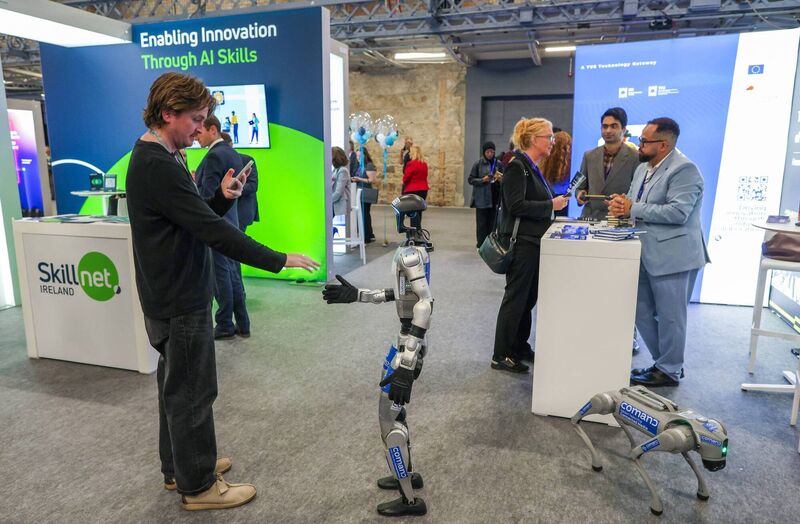
Enterprise Ireland had its own dedicated space on the floor, where it showcased 6 or 7 Irish enterprises in the same floorspace that TikTok dedicated to its child safety interactive quiz. And while many Irish companies were given speaking slots on the agenda, these were panels versus the keynotes and firesides allocated to the global firms.
Irish entrepreneurs would, we can presume, benefit more from being showcased on a global stage, and these are companies the Government believes in and has committed to backing. Yet it felt like in a moment when we had a spotlight to shine, and this real estate to give, we chose to give the prime spots to glitterball household names, who probably didn’t need it, but whose shine we hoped would reflect back on us.
Walking through the RDS, this felt like the wrong emphasis, in the same way that, for some time, foreign direct investment (FDI) has felt like the wrong emphasis in our economic planning and the wrong vision for the future of our country.
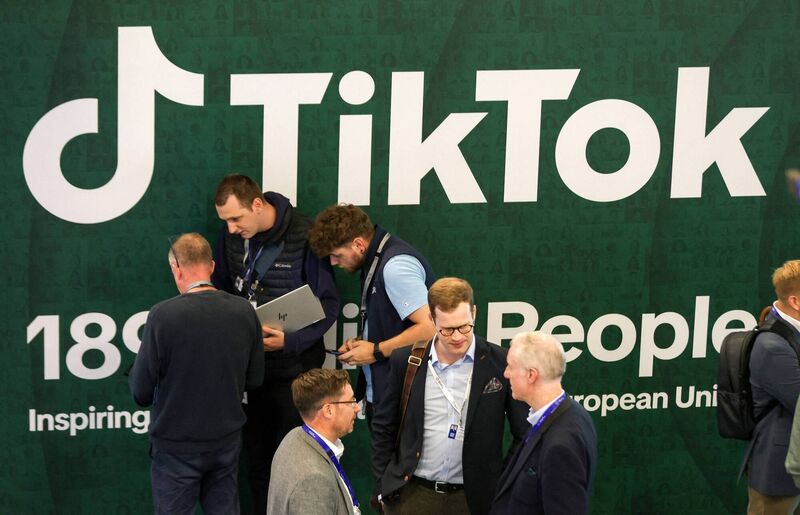
For 30 years, Ireland has grown rich on the investment that the toys on display in the RDS represent. It fundamentally transformed our economy. But sometimes the strategy that gets you where you want to be isn’t the same one that will keep you there. FDI has introduced such extreme public finance precarity that IFAC warnings of overdependence on over concentrated corporate tax have become as much a part of the annual budget traditions as leaks about pension increases and more expensive cigarettes. We have let it become a set of gilded, high-tech handcuffs.
We don’t, realistically, have a choice right now between maintaining our FDI and rapidly expanding our investment in Irish domestic firms. But we do have a choice about emphasis, and on where we want to set our vision for the future. And while the thing we tried to answer this week was how we represent ourselves to the outside world, the underlying question is one of just who it is that we want to be.
Which brings me back to I see that poem as being about a struggle for identity, an unease with generational change, an acknowledgement that our tools can be used for violence or for creation. It is about making choices about what we take up, and what to do with it, about how we interpret and respect that which has gone before.
We can’t hold a Finnish politician overly accountable for a shallow interpretation of a beloved, national artifact. But we don’t have to accept the external flattening of our culture, and of meaning more generally, which is coming to define the AI age. We can instead, once the smoke machines and the tote bags have been tidied away, sit and reflect on who it is that we want to be, and what we want to do with this one shared future that we are hurtling towards.
- Liz Carolan is a tech and democracy writer and analyst.

CONNECT WITH US TODAY



Be the first to know the latest news and updates