We need to keep developing AI ahead of those 'on the malicious side of deployments', summit told
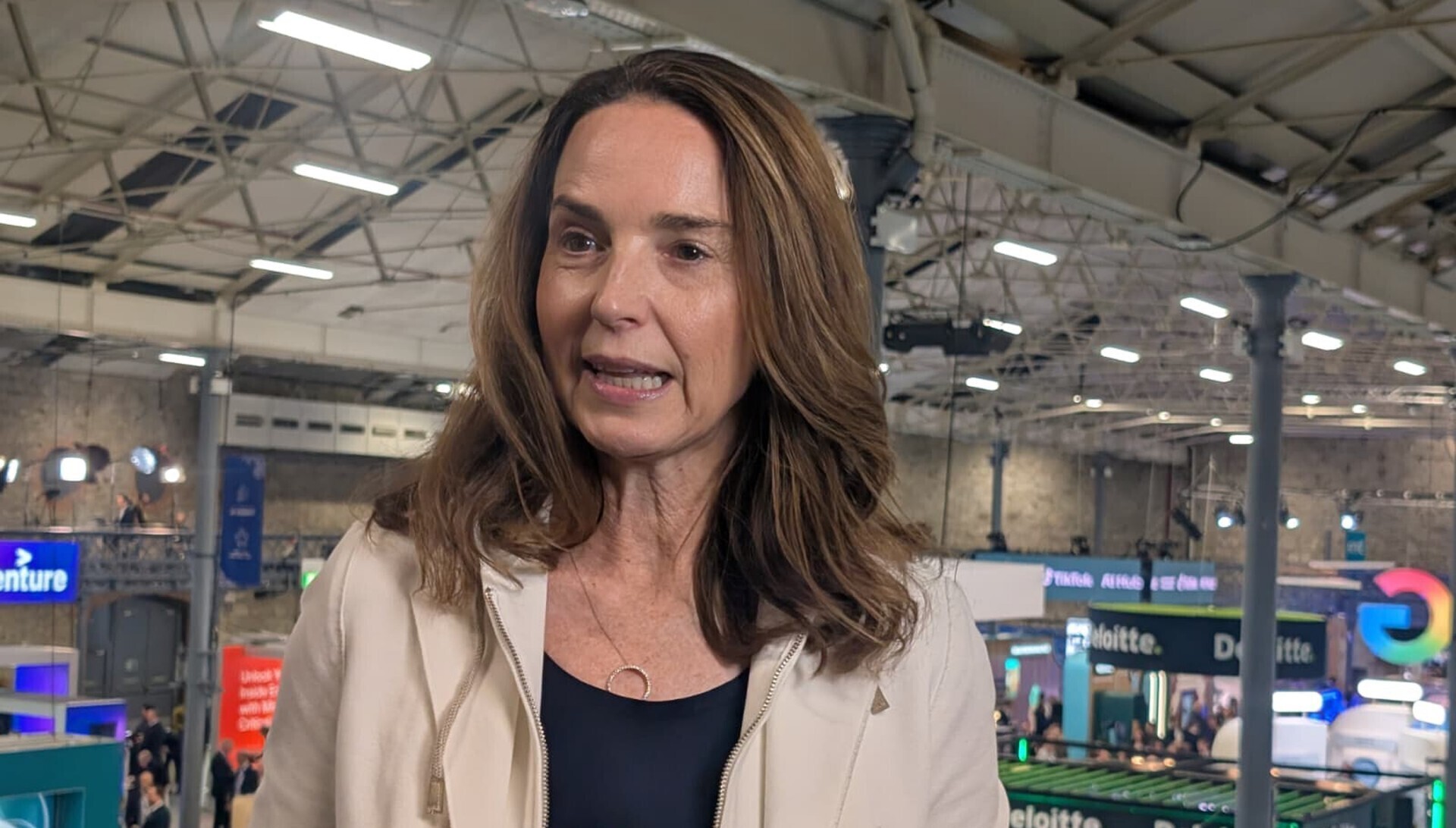
Speaking at the AI Summit in Dublin on Wednesday, OpenAI CFO Sarah Friar said they want to make sure that the 'right people can review models'. Photo: Cillian Sherlock/the Press Association
The chief financial officer (CFO) at OpenAI has said the development of AI technology needs to be paced but not to the extent that “we then end up behind the folks who are on the malicious side of deployments”.
This comes as the firm has admitted to numerous hacks of companies and websites over the last few months, including the hack of a company called Hugging Face as well as a breach of an Australian government health statistics portal.
There were also reports that OpenAI's technology meddled in a number of US government websites.
Anthropic, OpenAI’s main competitor in the AI space, also admitted to a number of incidents where their technology hacked external systems.
Speaking at the AI Summit in Dublin on Wednesday, OpenAI CFO Sarah Friar said “I do think we need to pace it”, referring to the development of AI and that they want to make sure that the “right people can review models”.
Read More
However, she added that development should not be slowed down too much.
“We need to make sure that doesn't slow us down to the extent that we then end up behind the folks who are on the malicious side of deployments,” she said. “I think this does mean the frontier labs, we want to come together and we have called for some sort of global regulation.”
President of Microsoft Brad Smith criticised some of the AI industry’s apparent “allergy” to regulation as something “we need to get over”. “There are more safety rules for a carton of milk than for AI,” he said.
“We need law. We need regulation. It needs to be sensible. It needs to be balanced. It needs to take into account innovations. But we need to put safety in the position it needs to be,” he said.
“It's a good thing that we have labs now signing up for independent evaluation, but it will not go up far enough unless these evaluators are truly independent, unless there is real transparency.”
During his address to the summit, which comes during Ireland’s presidency of the Council of the EU, Taoiseach Micheál Martin said the bloc has “charted our own path through what is a fast evolving situation, balancing innovation and opportunity with a trustworthy, human-centric approach to AI”.
He added that the summit is a “flagship event” for the country’s six-month presidency reflecting the “importance we attach to this moment in the development and deployment of AI, and the impressive assembly we have gathered here today”.
Speaking to reporters afterwards he added that the technology is “advancing at a very rapid pace, and yes, the companies themselves acknowledge that there's a trust issue”.
“So we've got to work with the industry and with trusted leaders in the industry to bring people with us on the journey in terms of AI.. We're not in a position to turn back the clock, but what we are in a position to do, I think, is to put a framework over this that deals with innovation, that deals with productivity, but also safety and security.”
Executive vice-president at the European Commission Henna Virkkunen said: “AI must remain under human direction, oversight and control, and we stand ready to take all necessary steps to ensure that companies follow AI rules.”
AI in the EU is currently regulated by the AI Act. It came into force in August 2024 with provisions being gradually rolled out. Breaches of the AI Act can lead to fines of up to 7% of the company’s global turnover.
The AI Summit also heard from representatives from companies such as Google, Siemens, Ericsson and Stripe.
CONNECT WITH US TODAY



Be the first to know the latest news and updates