Gavin Nugent: Why are environmentalists still pushing the politically toxic carbon tax?
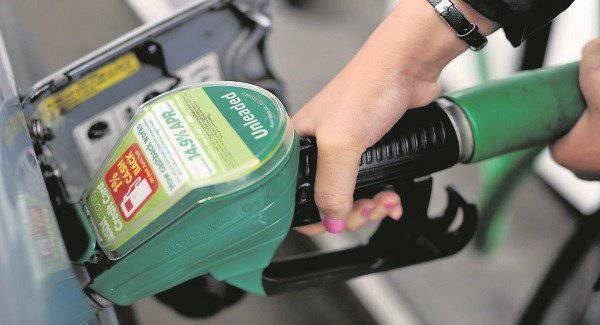
The Government has been forced to cut diesel excise by 32c per litre in response to unprecedented price increases, while we argue about adding 2c through carbon tax.
The Government’s decision to cut carbon tax on home heating oil and gas for the lifetime of the Government, and pause further increases on petrol and diesel, provoked swift and predictable reaction in environmental circles.
Ministers were accused of cowardice, of abandoning Ireland’s emissions targets and giving up on climate action. It is entirely legitimate to question the Government's climate ambition, but the better question environmentalists should be asking is why we are still flogging a politically toxic yet redundant price signal.
The economic case for the consumer carbon tax is seductive in its simplicity. Consumers and households, faced with a graduated price signal and a roadmap that provides certainty, will gradually shift towards cleaner, less carbon-intensive alternatives.
That through a simple price intervention, the invisible hand of the market will gradually make the unsustainable sustainable. It is understandable why the green movement is attached to it.
But successful political movements need to be agile, and the carbon tax was designed for an economic and geopolitical world that no longer exists.
Read More
The gentle ramp-up scenario underpinning carbon tax policy has been obliterated. Most modelling and projections assumed benign and stable energy price environments.
Instead, the Government has been forced to cut diesel excise by 32c per litre in response to unprecedented price increases, while we argue about adding 2c through carbon tax. We don’t need to manufacture another artificial signal right now — households have already been battered by a signal far more powerful than the political system could conjure up.
If today's extraordinary prices have not produced a dramatic collapse in fossil-fuel consumption, what additional behavioural change do we realistically expect from another incremental increase now?
This is not to argue that carbon taxes don’t work, nor is it an argument for scrapping the tax entirely.
The evidence is clear, for example, that industries under the EU Emissions Trading Scheme have substantially reduced emissions, particularly in energy and power generation. Emissions covered by the scheme were already 50% below 2005 levels by 2024, demonstrating that companies with the capital to do so can move quickly in response to price signals.
The picture for households is much less clear. There is little doubt that carbon taxes change behaviour at the margins, but their impact is difficult to disentangle from wider economic circumstances and the host of other policy interventions designed to drive decarbonisation.
We recognise the danger of carbon lock-in associated with decisions made today, but the lack of recognition that many households are already locked into choices made years, or even decades ago, risks alienating large sections of the public, and comes at a political cost.
That political cost is clear to see. Across Europe, the green movement is struggling to regain relevance in a geopolitical and cost-of-living permacrisis, despite public concern about climate change remaining strong. The issue has fallen down the priority list, and concerns about fairness and affordability have grown.
The transition to a sustainable economy capable of securing a stable climate will require enormous and sustained public support. The change required is unprecedented in cost and scale, and it will not happen without political consent.
Against that backdrop, allowing the most visible manifestation of climate policy to be a tax explicitly designed to make driving and heating more expensive looks increasingly self-defeating.
The green movement needs to ask itself whether the marginal emissions reductions bought by further consumer carbon tax increases justify the political price we pay for them. The answer is increasingly clear: no.
Our political capital is best spent on positive policies promoting energy affordability, efficiency, and sustainability, not defending a redundant and unpopular price signal.
Defenders will point out that carbon tax revenues fund important programmes like home energy retrofits, social supports, and grants to make farming more sustainable.
This is true, but overstated — only around half of carbon tax revenues go to systematic capital interventions that lower fossil fuel dependency. Plus, carbon tax revenues are projected to decline from 2029 or 2030, with diminishing returns from further increases.
To put this in context, the planned annual €7.50 per tonne carbon tax increase raises roughly €150 million. With a projected 2027 surplus of €9.5 billion, our ambition must be far greater.
When measured against competing public spending bids, climate capital programmes deliver immediate, measurable dividends. These policies have the economic merit to win the argument in their own right.
This moment need not signal the death of climate action, or a defeat for the environmental movement. It is a huge opportunity to reflect on whether one of our most contested policies is still worth the enormous political capital it requires and, if not, how we win the climate argument in an era of volatility not seen in generations.

With excise cuts still to be unwound, we should not mourn the passing of a redundant price signal.
We should use this moment to re-tool our playbook for the modern political environment, double down on the popular policies that are driving decarbonisation and escape the trap we have created for ourselves.
- Gavin Nugent is a corporate communications expert. He previously served as a communications adviser to the Green Party and to Green Party MEP Grace O’Sullivan.

CLIMATE & SUSTAINABILITY HUB
CONNECT WITH US TODAY



Be the first to know the latest news and updates