Budget 2027: Fuel protest leaders warn action ‘will go ahead’ over diesel and petrol costs

Temporary reductions to fuel excise rates – introduced after April’s fuel protests – are to be extended until February 28, 2027.
Fuel protests “will go ahead” as soon as next month after Budget 2027 failed to reduce diesel and petrol costs or deliver for “the working people of Ireland”, the movement’s leaders said.
Men in Cork were already preparing to take their vehicles onto the roads in protest today, but the action was called off – for now – to allow time to organise.
Fuel protest leaders were also liaising with other angry and disenchanted sectors in Buswell's Hotel outside Leinster House today and are considering a co-ordinated cross-sector protest.
James Geoghegan, a man who has arguably become the face of the fuel protest movement, said people are being left with no choice but to take to the streets in protest.
“We were definitely hoping for a cut in fuel prices today, and it hasn't materialized. And that is going to cost jobs over the winter.
"Men are at the end of their tether now, they're going out of business.
“They don't know what to do. But they're going to try and do something to force the government to react - like we forced the government to react in April [with the fuel protests]. They did act then, and it kept people in business for the last six months.
“But with the price of fuel now being as dear as back then, and no help coming. There's people going to the wall, and they're not going to go down without a fight."
Read More

In today’s Budget, finance minister Simon Harris promised that there would be no tax increase “either at the pump or in your home during this winter period.” But this did not amount to any reduction in the actual cost of petrol or diesel.
Temporary reductions to fuel excise rates – introduced after April’s fuel protests – are to be extended until February 28, 2027.
“From that point we will begin a gradual and responsible restoration of excise in four phases, with a full restoration not occurring until 30 June 2027,” Mr Harris said.
The reduced NORA levy and the enhanced Diesel Rebate Scheme have been extended until December 31, 2026.
Carbon tax on home heating oil and gas is being reduced and will not increase again in the lifetime of this Government, Mr Harris said.
“Rates on these products were scheduled to increase twice between now and May 2027, from €63.50 per tonne of CO2 today to €78.50 per tonne by 1 May 2027," Mr Harris said today.
“Instead, they will both be reduced to €48.50 per tonne.”
Mr Geoghan said that by his calculation, this is a reduction of about 6c a litre on home heating oil, a fuel source that many elderly people rely on.
“But if you look at the VAT take increase because of the cost of oil – the government is up 10c a litre – so it is only giving back 6c of the 10c. So government is still winning on home heating oil which is not fair, especially on older people,” he said.
The Universal Social Charge – a “temporary” tax introduced after the recession – has not been abolished, although some limited reductions were made to it. The upper limit of the 2% USC band is increasing from €28,700 to €30,300, so people will start paying the higher 3% rate from slightly higher incomes of €30,301 to €70,044 from January 1.
“Simon Harris promised to abolish the USC. But he has broken that promise again,” Mr Geoghan said.
The Government now faces “a winter of serious discontent from all sectors because they didn't help the Irish people in this budget,” he said.
"Agricultural diesel today is €1.60 a litre, we can burn up to 2,000 litres a day. That’s an awful bill per day.
“I was talking to one contractor today from Limerick who spent €3,700 on fuel yesterday. And that was all used yesterday.
“He's in a major cashflow situation now where farmers don't have the money to pay him yet."
And high fuel prices are draining so much money from the economy that people no longer have the extra money to spend in local shops, pubs and restaurants, he said.
Mr Geoghan said he knows of many lorries and diggers parked up already this week with fuel at €2.15 at the pump. If the price rises further, more and more heavy vehicles will have to park up, unable to afford to fill their tanks and therefore unable to work on building sites, farms and for other businesses, he said.
To run an arctic lorry now costs €3,000 a week on fuel, he said.
“The building business is going to grind to a halt," he said.
“We're heading for a recession, and the government could have averted this easily by dropping fuel prices across the board."
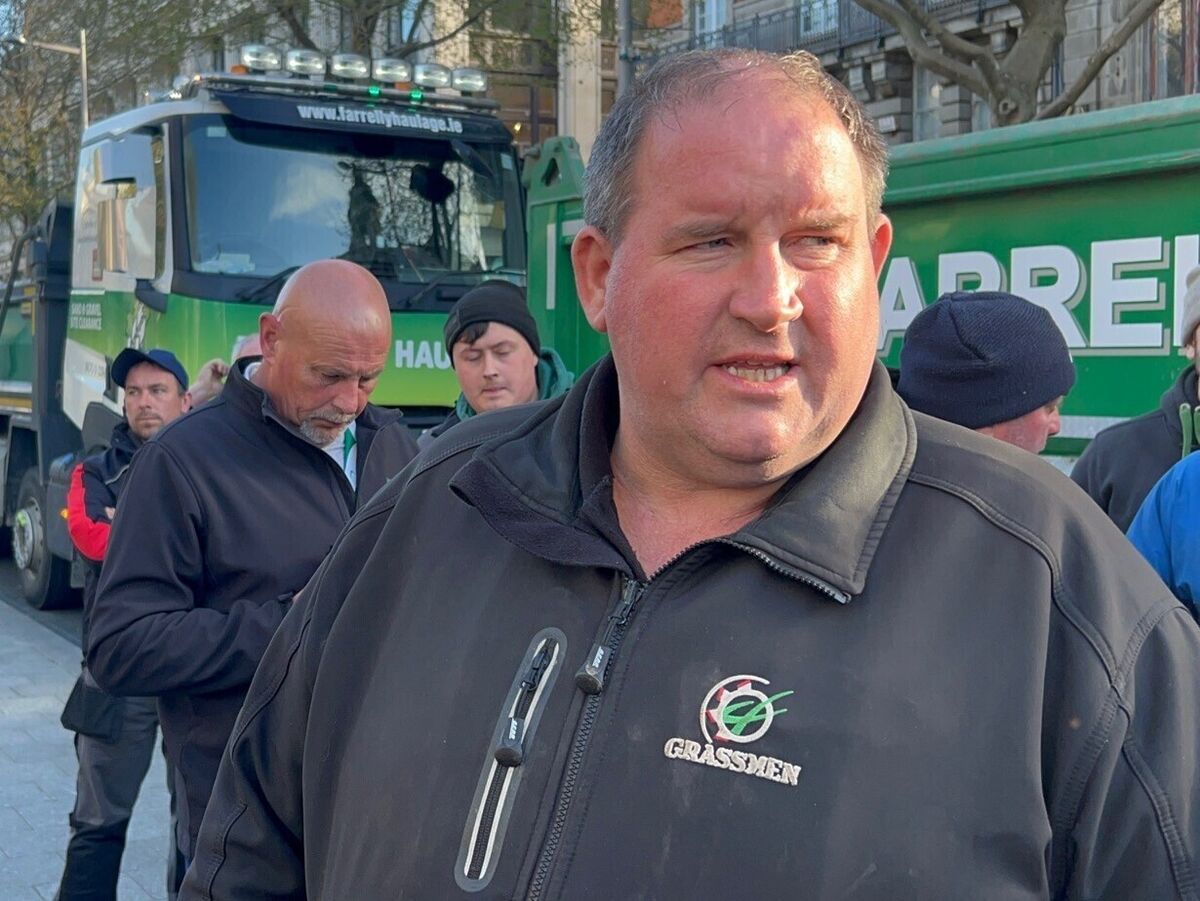
Chris Duffy said that his phone “lit up” this afternoon halfway through the Budget speech with hauliers and agricultural contractors angry at the Budget’s failure to deliver for them.
“There were a group of lads from Cork who were getting ready to take to the streets,” he said.
“Fuel protests will go ahead.
“Because we won't have any choice. The government could have done more. But they've done nothing.” Mr Duffy said his diesel is still going up in cost this week.
“I ordered diesel yesterday, but it's going up in prices all the time.
“Eventually, I won't be able to order diesel because I won't have the price of it in the bank."
CONNECT WITH US TODAY



Be the first to know the latest news and updates