The death of Anne Fitzsimons severs our last link with cultural artifact Bungalow Bliss
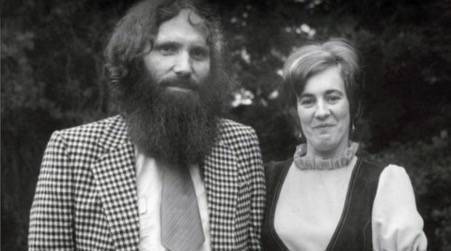
Jack and Anne Fitzsimons in the early 1970s. Anne was a direct link with one of the most influential books in Irish publishing history which was written by her husband, Jack, but typed up by Anne.
For the launch of my book last week, I had invited some guests who were VIPs to me, if not necessarily famous outside my world. One of these was Anne Fitzsimons, wife of the late Jack Fitzsimons, architect, surveyor, senator and author of the best-selling .
Sadly, Anne passed away a few days before the launch. She was a direct link with one of the most influential books in Irish publishing history which was written by her husband, Jack, but typed up by Anne.
Her husband, Jack, had a deep connection with the land. As a young child in Carlanstown, County Meath, his family lived in a two-room cottage with a thatched roof and a long crack in one wall.
In 1933, when he was three, his family were given a cottage on one acre by the Irish Land Commission. In 1943, his infant sister died, an event Jack later blamed on poverty and the coldness of the property.
His experiences with poor-quality accommodation, helping his brickmaker father on site, and the loss of his sister all imbued in Fitzsimons a strong sense of social justice, particularly around housing, rural Ireland and the working classes.
Read More
As a qualified architect working in Meath County Council in the 1960s, Jack Fitzsimons was frequently approached by friends and neighbours seeking insights on how to build a house for themselves, what they should know about employing somebody to do it for them and, most importantly, how much all this might cost.
Repeating the same information to many different couples, he figured the best way to help the most people was to write a book on how to build your own home. The result was , which first appeared in 1971.
This was a ‘pattern book’ of house designs and low-cost plans for those who wanted to build their own homes and avoid architects’ fees, which at that time were prohibitively expensive for most people.
Self-published, it was typed up by his wife Anne, and sold to bookshops, newsagents, petrol stations and building providers across Ireland from the boot of their car. The book quickly became a bestseller with the first run of 5,000 selling out in three months (an incredible feat). More than 250,000 copies of have been sold since it was first published.
The impact of the book was profound. It advised on how to employ a builder and provided sample contracts, as well as explaining other related aspects of building, including how to get planning permission (a relatively new phenomenon since 1964) and how to install a septic tank, as well as advice on funding the build and even furnishing the finished product.
A typical house presented in the early books cost about £3,000 and came in under 1,300 square feet (120 square metres) to avail of a grant of just over £300.
The current Help-to-Buy grant also applies to one-off houses, but there is no limit on size, which is wrong. If someone can afford a 225 sq. metre (2,400 sq. foot) house — the average size of a one-off house in 2025 — I’m not sure they need up to €30,000 of taxpayers’ money to help fund it.
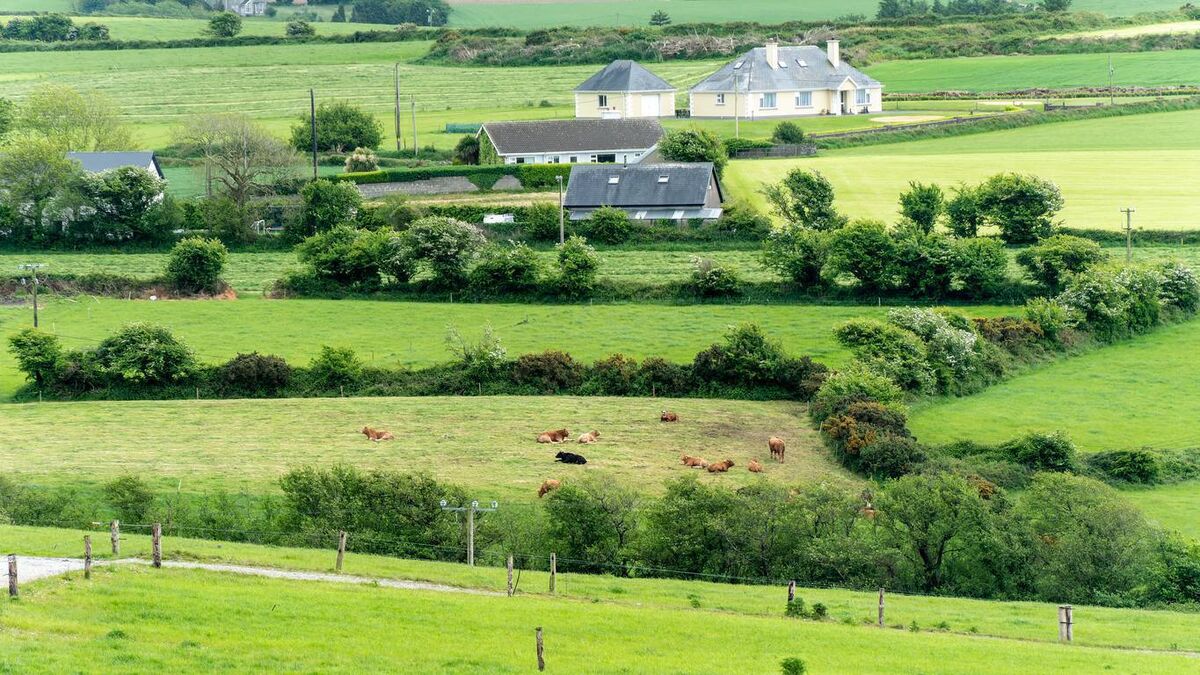
Accessible and affordable, Fitzsimons’ designs flew up around the country resulting in a proliferation of one-off houses across the landscape. By the end of the decade, over 10,000 of these bungalows were being built across the country each year, all in a rather haphazard fashion.
Not everybody was happy with . The recently deceased Frank McDonald, ’ sometimes acerbic environment correspondent, was a particular critic and famously referred to the scattergun development of one-off generic houses that bore little relationship to where they were situated in the country as “Bungalow Blitz”.
There are undoubtedly issues with so much scattered development: the reliance on the car for transport, servicing such houses with broadband and even post, the proliferation of septic tanks (most of which fail inspections), the aesthetics of generic houses, road safety, and so on.
As a result, housing in rural Ireland is an often-contentious issue with much criticism of the environmental, social and economic impact of its dispersed-settlement pattern, but supporters claim that such housing is the lifeblood of rural Ireland.
But for Fitzsimons, it enabled households, especially rural working-class households, to build their own house at a cost they could afford in relation to their means. also filled a gap in the market for houses in which few designers were interested at the time having, according to the man himself, "abandoned rural Ireland".
The Land League and the Irish Land Commission changed the face of rural Ireland, but they were large State agencies. No one man changed the face of rural Ireland as much as Jack Fitzsimons, ably abetted by his wife, Anne.
So much so that copies of are today regarded as cultural artifacts and are preserved in collections in the National Museum of Ireland.
- Lorcan Sirr is senior lecturer in housing at the Technological University Dublin and author of , now available in all good bookshops.


CONNECT WITH US TODAY



Be the first to know the latest news and updates