Book Interview: Adrian Duncan explains how Bungalow Bliss helped move Ireland to another level
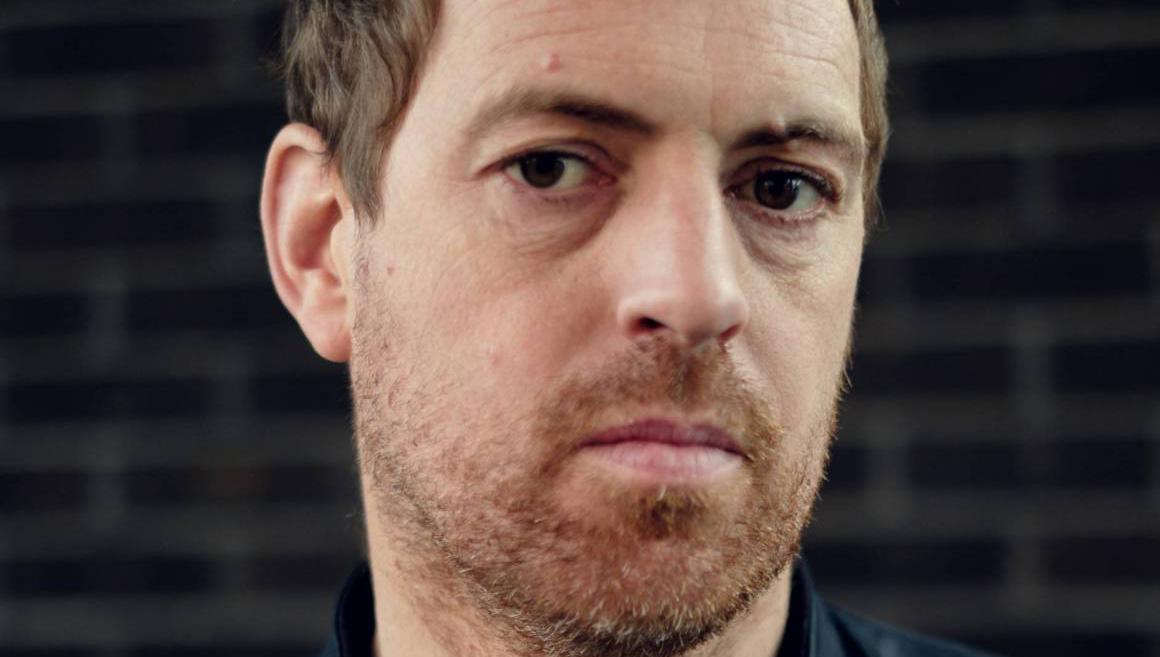
Adrian Duncan had a mid-career shift from engineer to writer, but all his work is grounded in the unlikely poetry of construction projects. Picture: Finn Richards
- Little Republics: The Story of Bungalow Bliss
- Adrian Duncan
- Lilliput Press, €15

Adrian Duncan's pivot from engineer to writer is an early digression in our chat. Little Republics, his terrific non-fiction book on the bungalow bliss phenomenon, takes a temporary back seat.
“Around 2005 I was still working as a design engineer but I’d been in the industry about 10 years and at that stage I was feeling less and less connected to the work.
“I wasn’t getting as much of a buzz out of it so I decided to go back to college — a fine art course in Dun Laoghaire, painting and sculpting and so on. At the same time I took a creative writing course in the Irish Writers Centre.
“I was single, no kids, and could do anything I wanted, so I decided to leave the engineering and give it a go. And within a year or so all of engineering had stopped in Ireland anyway with the crash, so I ploughed on with the writing and the art.”
Having spent years “planning everything out and making sure nothing went wrong”, which is second nature to an engineer, Duncan embraced the freedom of not sketching out plans for his work — books such as Midfield Dynamo (2021), A Sabbatical in Leipzig (2020) and Love Notes from a German Building Site (2019).
“This new way of thinking — of being in the world, without sounding pretentious — I found completely addictive and kept at it.
“When I started looking at the world in a different way I also found myself looking at the landscape differently — in Longford, where I’d grown up, and then that landscape, and the houses I knew, all became extremely interesting.
“From around 2010 I was working on this project, about bungalow bliss, as it became more and more interesting to me.”
Hence Little Republics (the title comes from the works of John McGahern). Not all readers may be aware of its inspiration, the original Bungalow Bliss.
A simple book of house designs written by Jack Fitzsimons, it became the epitome of a sleeper hit. Over 30 years it sold quarter of a million copies as rural Ireland embraced the bungalow.
Duncan brings a poet-engineer’s eye to those houses but also fleshes out the fascinating socio-economic background, the circumstances which gave rise to the bungalow boom.
He also blindsides the reader early on with a vignette from Fitzsimons’ own life that could itself have come from a McGahern story.
Fitzsimons recalled a childhood task, being sent to bring his father lunch one day as the latter was building a house. He told young Jack he’d remember that day when he, the father, was dead and gone. The little boy stopped at a bridge on the way home and wept.
“When he told me that story I found it very moving. A beautiful, evocative story — and it also helped me understand his emotional connection to the project he was undertaking.”
There were other factors at play when Fitzsimons’ book began to circulate in the early seventies. Its appearance coincided neatly with the first cohort of teenagers enjoying free secondary education, for instance.
“I don’t know how aware Jack was of that upskilling in Irish society because it was happening right then and there, but the CSO figures and other statistics of the time tell us a lot.
“They show that in the late sixties about one-quarter of kids over 14 years of age had left education, but by the late seventies that number was down to less than one-eighth, so the number had halved.
“The RTCs (regional technical colleges) were also built in the late sixties so by the early seventies, all through rural Ireland, there was third-level education of a particular kind.
“Look at any of the RTC brochures from that time you can see the types of skills they produced — technical skills, so reading diagrams and understanding machinery was easier for far more people than had been the case. Interpreting house designs and building from those designs was therefore easier as well.
“During the fifties there would have been building inspectors in rural Ireland helping farmers with the basics of building barn extensions and so on, and a lot of those inspectors were later brought into technical schools to teach the basics of buildings.
“So that meant more people who could build, and when Jack’s book came out those people were able to build. They needed builders for certain things — they wouldn’t have owned a digger for foundations, for instance — but blocklaying, plastering, putting up the roof?
“Those were skills a lot of people had — relatively suddenly.”
Curiously, the bungalow phenomenon reached back to an ancient era of communal aid — and also sparked a modern backlash.
The communal aid first: “When the bungalows began to be built the community could pitch in.
“If you had a particular building skill, then perhaps you knew someone from the area or from school who had another skill and you could help each other out when building your respective houses.
“That’s why I wrote about ‘meitheal’, the old Irish method of working together as a community. It just happened in this instance to be with modern construction materials.”
The backlash?
Some of the bien-pensants’ criticism of bungalow bliss hasn’t aged well.
Take the broadsheet contributor of the eighties bemoaning bungalow-fixated westerners, saying they “had no right to destroy a Dubliner’s beautiful Connemara”, an unexpectedly tongue in cheek comment — “I don’t think much of it was tongue in cheek at all,” laughs Duncan.
“I think it was genuine annoyance. As it went on you could see that there were people enjoying the controversy as entertainment, maybe, but certainly the early shots across the bows — I don’t think those were ironic at all.
“The big thing was that the houses were new in the seventies, and still new in the eighties, and the point I make is that people were talking to the land who had never previously spoken to the land. By that I mean the bungalows appearing on the land, and the newness of that.
“Interestingly, modern architecture students — people under 25, say — have grown up in an Ireland where the bungalow has just been there, just another part of our housing stock. They’re either not aware of any snobbery about the bungalow or they don’t care about it.
“In their courses the bungalow is presented as a challenge — can you improve this or change it? — but it’s an architectural challenge, not a problem.”
In an Ireland where accommodation is such a hot-button topic, there’s something unimaginable about an Ireland where you could build a one-off house cheaply. Are those days gone forever?
“The planning laws of the sixties shifted greatly from the planning laws of the late thirties, Rules were put in place and those rules were tightened in the early 2000s again in terms of rural building. So the idea of just getting a plot of land and putting a bungalow on it became far more difficult.
“Is it a thing of the past? Because of the rationalisation of the planning laws, which are tighter than they were in the seventies, and in the numbers we saw in its heyday - probably.”

Cancel anytime