Residents lose latest challenge to decision allowing Garvaghy Road parade
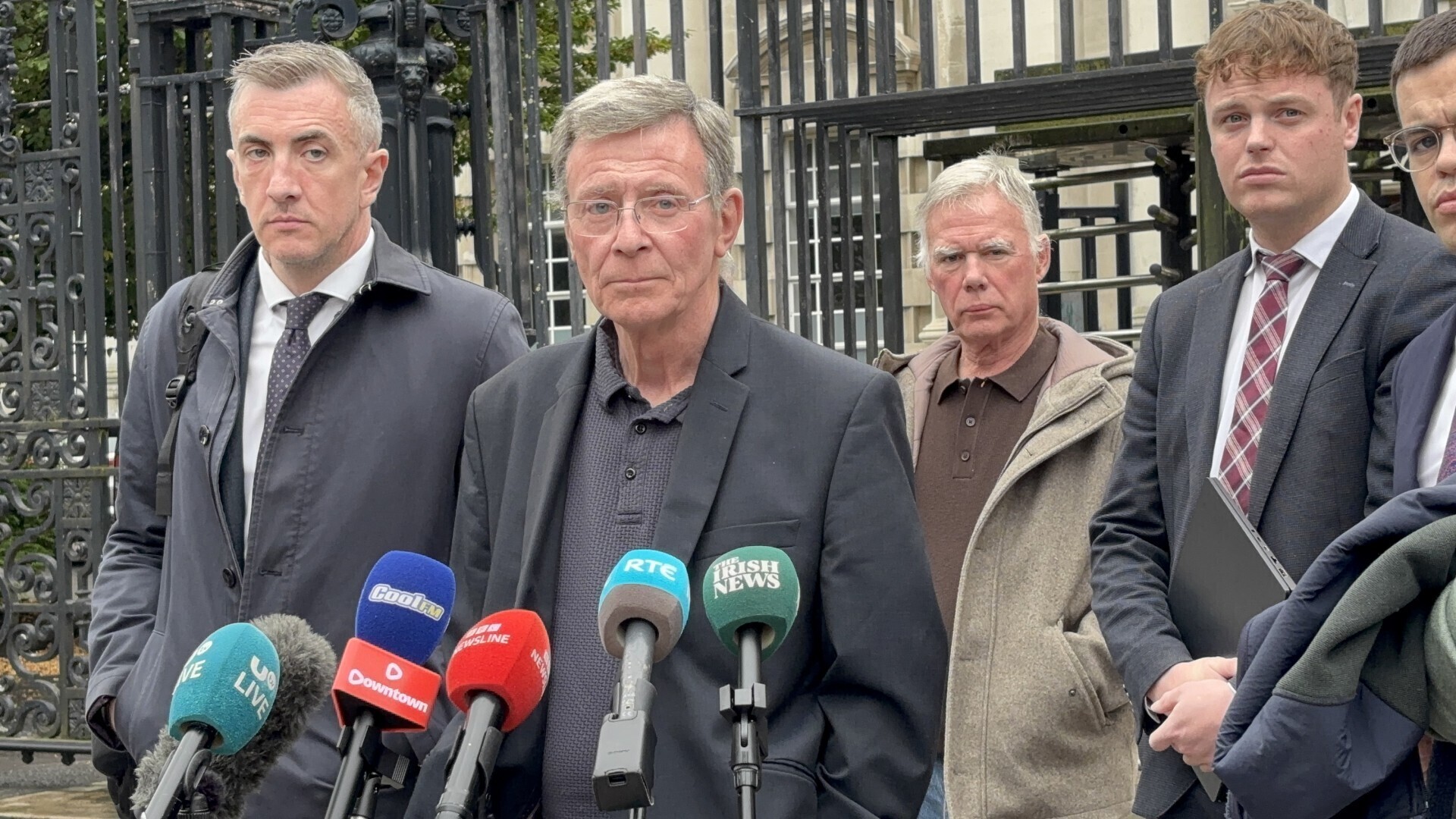
Breandán Mac Cionnaith of the Garvaghy Road Residents Coalition, accompanied by his legal team from Phoenix Law in Belfast, speaks outside the Court of Appeal in Belfast after their latest legal challenge to the decision by the Parades Commission to allow the Drumcree Orange Order parade along the Garvaghy Road for the first time in almost 30 years, was dismissed. Picture: Rebecca Black/PA
Residents opposed to a contentious Orange Order parade route in Portadown have lost their latest bid to challenge the decision to allow it.
Residents of the predominantly nationalist Garvaghy Road in the Armagh town applied for a judicial review of the decision by the Parades Commission to allow the parade along the road for the first time in almost 30 years.
The commission made the ruling two weeks ago with a number of significant conditions, including limiting numbers and starting earlier.
An application by the residents for a judicial review of the commission’s decision was rejected by the High Court.
On Monday, Chief Justice Siobhan Keegan upheld that decision, holding that the challenge did not have a reasonable chance of success.
Speaking outside court loyalist activist Jamie Bryson hailed the decision as “seismic”.
However, residents spokesperson Breandán Mac Cionnaith said it is “academic” with the parade route having been banned by Northern Ireland secretary of state Chris Bryant on Friday night.
Three judges, including Chief Justice Keegan, heard the latest legal challenge last week.
Delivering their judgment on Monday afternoon, Chief Justice Keegan said they heard the case and arguments before the decision to ban the parade route by Mr Bryant, and judged on the legal merits of that case.
In the case heard last Monday, the Court of Appeal in Belfast heard that the commission failed to “properly weigh” what police told it about the potential for disorder if the Drumcree parade was given the go-ahead.
Read More
Denise Kiley, for the residents, contended the commissioners had reached an “irrational conclusion” in permitting the parade along the Troubles flashpoint for the first time in 28 years.
It was also argued that the commission “materially misdirected itself” on the police assessment of the potential for disorder around the event, and that the commission had not given an “accurate representation of the evidence” received from the PSNI in its decision.
However, Tony McGleenan, representing the commission, said the suggestion it had made a legal error “doesn’t bear scrutiny”.
Reading the judgment, Chief Justice Keegan dismissed all the grounds of appeal made on behalf of the residents, saying the judges were satisfied the judge rejecting the judicial review was correct.
“We find that this application for leave to appeal has no reasonable prospect of success,” she said.
She concluded telling the court that the judgment was made on the application of the law, and not on the decision to allow the parade.
“This outcome is as a result of the application of the law,” she said.
“We make no judgment on the merits in the decision itself as that is not our function.”
Speaking outside court Mr Mac Connaith said it was “fairly academic given that the secretary of state has already banned the march in question”.
He said: “The ban is in place, that’s what we sought, we’ve prevented the march, and we’ll be back again to prevent future marches.”
Separately, the Orange Order is pursuing a judicial review of Mr Bryant's decision to block the parade, with a hearing timetable set by the High Court on Monday.


CONNECT WITH US TODAY



Be the first to know the latest news and updates