Ireland risks losing its moral clarity over Aughinish debacle
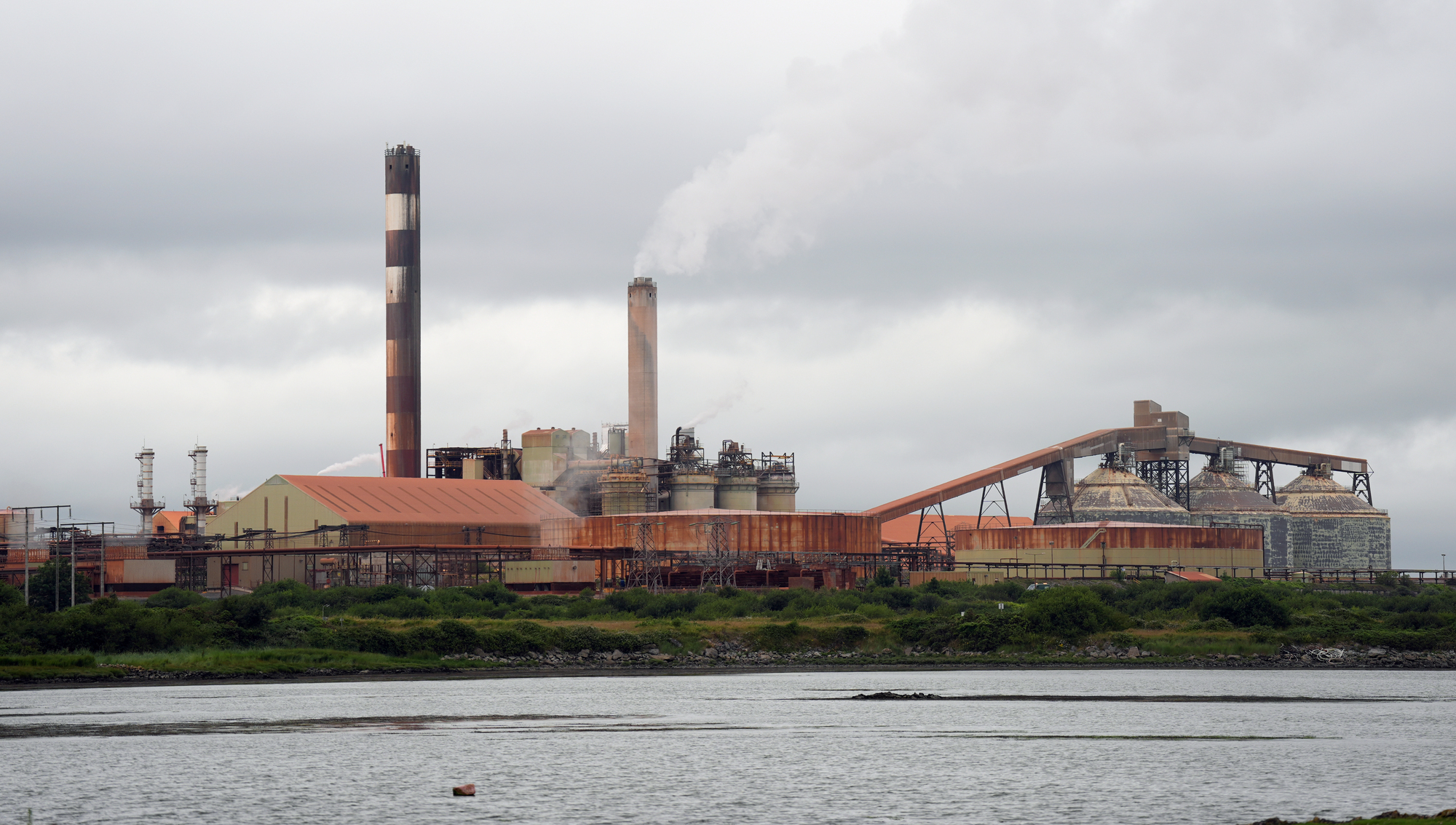
Europe It needs roughly two million tonnes of alumina a year, and Aughinish has supplied them with only about 0.3 million tonnes so far this year, according to figures from The Economist. File photo
In the coming weeks the European Union begins negotiating its next package of sanctions against Russia. Several member states want it to ban alumina exports to Russia.
The largest European source of that alumina sits at Aughinish Alumina. And Ireland, which holds the rotating presidency of the Council of the EU and will chair the meetings where the package is agreed, has spent the summer resisting its inclusion.
This should not be a hard call for Ireland. Its moral clarity in things foreign and domestic should be a guide post.
I have spent my career researching how businesses can support peace in conflict zones and crises. The short answer, more often than not, is by standing with the vulnerable party.
That research would have been difficult to do almost anywhere other than Ireland. I spent most of 2025 at Cork University Business School which helped support my latest project, travelling to Ukraine and interviewing dozens of senior executives who were trying to use their companies to resist a larger, imperial neighbour.
Read More
Before that, it was Queen’s University Belfast that, through my PhD studies, supported the first, earlier round of interviews which began before Russia’s full-scale invasion in 2022. More often than not, I got in the door because of my Irish institutional affiliations.
The executives I met knew where Ireland stood and the moral clarity that it represented. That is the asset at stake in conversations over whether a company owned by Rusal, the Russian metals group founded by Oleg Deripaska, who has been under EU sanctions since 2022, should be sanctioned.
Swedish authorities froze €5.1m in Rusal-linked accounts just this past July, finding that Deripaska still effectively controls about 70% of Rusal. Consider the facts without considering the location a moment.
In the first half of this year a factory shipped 422,474 tonnes of alumina to Russia, worth €119.5 million, according to trade data reported by . Russia now takes 49% of the factory’s exports, up from 43% last year.
An investigation published in March by and OCCRP traced that alumina to Siberia, then to a Moscow trader who supplies more than 100 Russian defence companies.
Ukraine’s sanctions commissioner, Vladyslav Vlasiuk, put it bluntly: “It is clear to us that this alumina from Ireland is being used in Russian missiles. There is no other explanation.” Would sanctions even be a question for Ireland if the factory wasn’t sitting in the Shannon estuary?
The lack of clarity from the company, which denies any wrongdoing, and the Government’s own inquiry, is not at all surprising. The Department of Enterprise could not verify where the alumina ends up because internal Russian trade data has gone dark since the full-scale invasion.
It could not then independently verify the company’s assurance that its exports serve civilian uses. Of course it couldn’t. And it won’t ever be able to.
That is how the Russian strategy is designed: to obfuscate and confuse facts and moral clarity until the opposition wavers, doubting itself and twisting itself in knots over what to do. They then point to that very equivocation to undermine opposition morale and claim victim status. Ireland is willingly falling into a trap designed to feed the Russian war machine.
The Taoiseach has called sanctions on the plant “self-defeating”, on the principle that sanctions should not hurt Europe more than they hurt Russia. The principle makes sense in another context; just not in this one.
Europe imports most of its aluminium. It needs roughly two million tonnes of alumina a year, and Aughinish has supplied them with only about 0.3 million tonnes so far this year, according to figures from . Four other European refineries export little or nothing to Russia.
Russia, by contrast, counted Ireland as its third-largest alumina supplier in 2024, behind China and Indonesia. Russia needs Irish alumina, but Aughinish can supply others without missing a beat.
Meanwhile, Russia is only going to get more dependent on Aughinish. Rusal is reported to be mothballing four loss-making alumina refineries inside Russia, which would make its Siberian smelters rely even more heavily on Co Limerick.
In August, Ukraine sanctioned four of the Siberian smelters, including Krasnoyarsk, which took around 500,000 tonnes of Aughinish alumina in 2024.
What I suspect the Taoiseach is really talking about are the 1,000 or so employees of the plant, as many again whose jobs support the plant across the Mid-West, and its surplus electricity that powers some 200,000 homes.
None of those people chose their owner. All of them will deal with the consequences of any sanctions. And he’s right to be concerned about them.
Germany faced a version of Ireland’s problem in 2022.
How it handled things provides a viable path for Ireland now: Germany placed Rosneft’s German subsidiary, including the Schwedt refinery that supplies Berlin, under state trusteeship.
The refinery kept running but separated from Kremlin control.
This arrangement has also lasted.
What began as a six-month emergency order has been renewed and moved onto longer-term legal footing, with the European Commission's approval.
Rosneft has fought it in the courts, but Schwedt still supplies Berlin and Brandenburg and supports those who depend on it for jobs in the EU.
Ireland need not invent a new way of doing things to address the problem.
It could easily borrow one that has already tested.
Ireland has never needed to be right on every question to be trusted globally. It has instead needed to be morally consistent. On Palestine, on Sudan, and elsewhere, people have known where Ireland stood: with the smaller party, the occupied, the besieged.
That clarity and consistency gives a small country without a large army or arms industry a voice on conflicts around the globe well beyond its size.
Its reputation was well-earned because Ireland knew what it was to resist a larger imperial neighbour, to be the oppressed, and to refuse to treat that resistance as negotiable when it was inconvenient.
The Taoiseach said in July that the Government might explore “other approaches” to keep Irish alumina out of Russia. The German approach is a path forward that maintains Ireland’s moral legitimacy on the world stage while squaring it with economic reality.
An export ban paired with a forced sale or trusteeship would protect Irish jobs and the Irish grid while cutting off supplies that end up in Russian missiles and drones that kill Ukrainian civilians.
If Irish principles hold only when they cost nothing, they become political positions like any other government’s: priced, weighed, and traded. Every future Irish stand on Gaza, on Sudan, on the next war, will come with an asterisk.
Ireland has moral clarity they will say except when it is inconvenient. Clarity with an exception clause is not clarity.
The Government has a few weeks, and the chair, to decide. Right or wrong, the world has always known where Ireland stands.
It would be a sad day for Ireland to trade that for one refinery’s Russian customers, and a sad one for those of us who love the country and what it stands for.
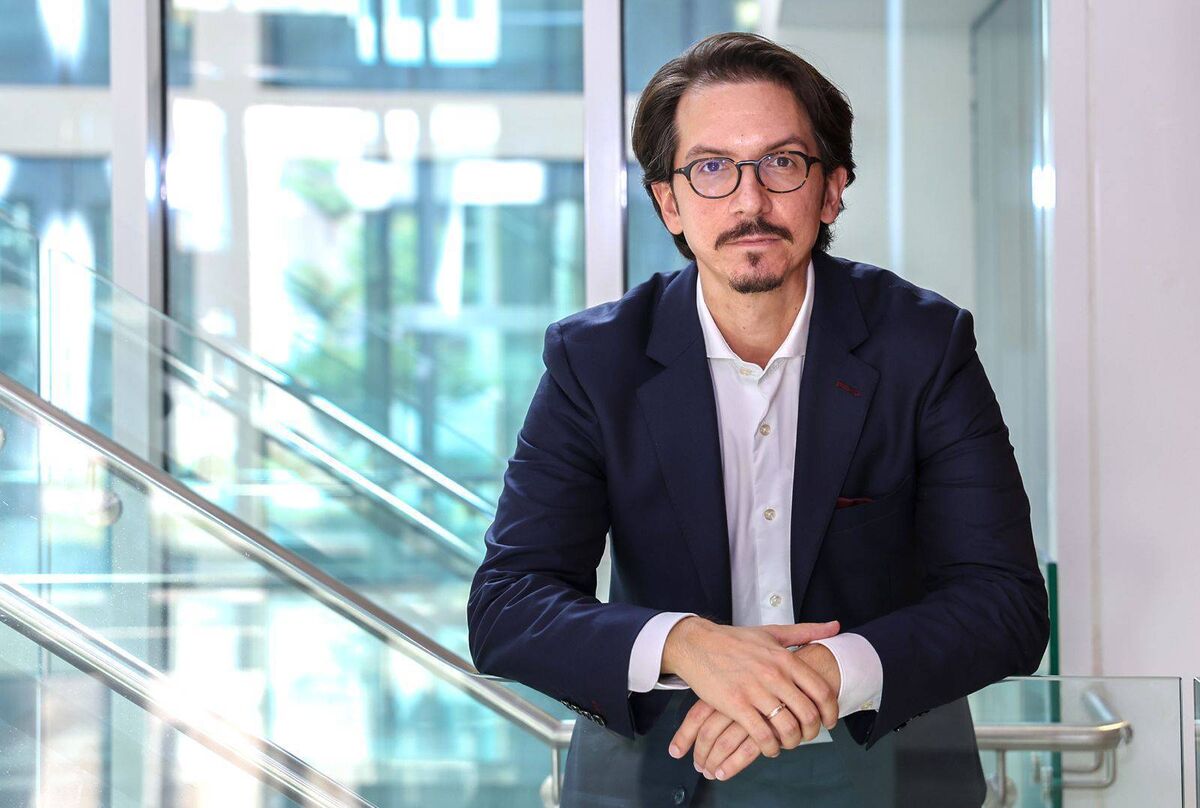
- John E. Katsos is professor of Management, Strategy and Entrepreneurship at American University of Sharjah and principal at Pantote LLC, a geopolitical risk consulting firm. He completed his PhD at Queen’s University Belfast and spent his sabbatical in 2025 at Cork University Business School.


CONNECT WITH US TODAY



Be the first to know the latest news and updates