The next race for competitiveness will be won at sea
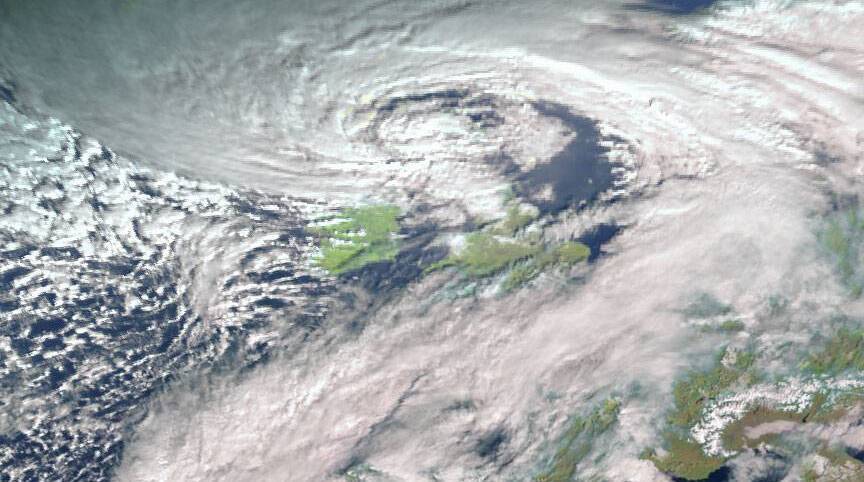
When Storm Éowyn struck in January 2025, the Irish Marine Data Buoy Observation Network helped support emergency response efforts to protect lives and property. This shows that Ireland already has strong foundations in the knowledge-based blue economy. File picture: Met Éireann
In 2025, the European Union adopted a landmark policy for the ocean: the EU Ocean Pact.
The pact sets out an ambitious vision to restore ocean health, strengthen maritime security, support coastal communities and unlock sustainable economic opportunities at sea. Delivering on that vision will depend on one critical asset: a strong and well-resourced marine knowledge system.
Taking place on October 8 to 9, the Atlantic Summit Galway 2026 comes at a pivotal moment. As an associated event of Ireland's presidency of the Council of the European Union, it will bring together researchers, policymakers, industry and communities to help shape Europe's future ocean agenda.
The timing is significant. Across Europe, policymakers are seeking new sources of competitiveness, resilience and sustainable growth. As pressures on energy systems, supply chains, food security and climate adaptation grow, attention is turning to the ocean as a strategic resource and driver of future prosperity.
For Ireland, this presents a significant opportunity. Decades of investment in ocean observation, marine research and innovation, combined with a strong track record of Atlantic and European collaboration, have created capabilities that are increasingly central to Europe's ocean ambitions.
By building on these strengths, Ireland can help drive implementation of the Ocean Pact while positioning itself at the forefront of an emerging knowledge-based blue economy.
Competitiveness in the ocean economy will increasingly be driven by knowledge. Ocean intelligence, from forecasting services and seabed mapping to environmental monitoring and marine data platforms, reduces investment risk, supports ocean economy sectors, drives innovation and enables sustainable ocean management and planning.
The countries that develop expertise in these areas today will be best placed to attract investment, create high-value jobs and shape future markets.
Ireland already has strong foundations. The Irish Marine Data Buoy Observation Network, operated by the Marine Institute, collects hourly ocean and weather observations that support forecasting, climate monitoring, fisheries management and maritime operations across Ireland and Europe.
When Storm Éowyn struck in January 2025, these systems provided near real-time information on wave heights and wind speeds, supporting emergency response efforts and helping protect lives and property.
Over the past two decades, the State has also invested in understanding its vast marine territory through INFOMAR, the national seabed mapping programme jointly managed by Geological Survey Ireland and the Marine Institute.
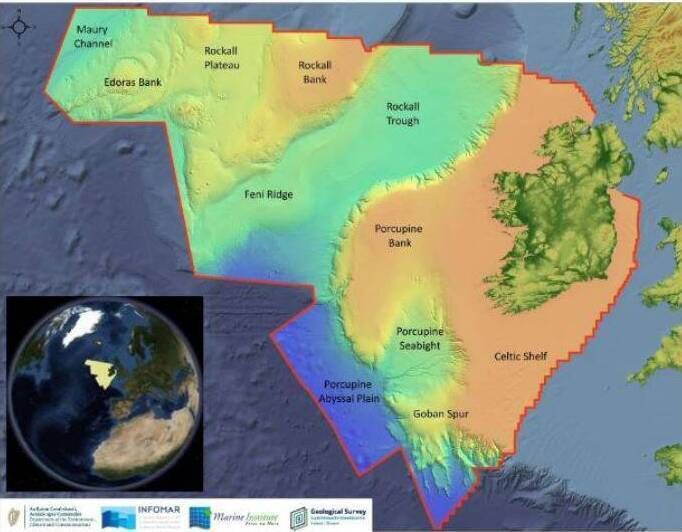
As a result, Ireland now possesses one of the world's most comprehensive high-resolution seabed datasets. This information provides an essential foundation for offshore renewable energy development, marine spatial planning, fisheries management, protection of critical infrastructure and biodiversity conservation.
Alongside the Marine Institute's research vessels, observation networks and leadership in European research initiatives, these investments have created a nationally significant ocean knowledge capability.
They also place Ireland at the heart of emerging European initiatives such as Ocean Eye, announced by European Commission president Ursula von der Leyen. Combining ocean observation, marine data and forecasting, Ocean Eye will strengthen ocean intelligence for Europe's sustainability, security and competitiveness.
Yet infrastructure alone is not enough. The implementation of the EU Ocean Pact will require governments, regulators, researchers, industry and coastal communities to work together across jurisdictions and sea basins. Success will depend not only on gathering knowledge but on translating it into policy, investment and action.
Ireland is well positioned to play that role. Through decades of participation in Atlantic and European research partnerships, Ireland has built a reputation as a trusted collaborator. It is also one of the few European countries with a dedicated marine research and innovation strategy, Ocean Knowledge 2030, providing a long-term framework for aligning science, policy and economic development.

The economic potential is already evident. In 2024, Ireland's ocean economy, spanning 13 sectors, generated a combined turnover of €8.4 billion and supported almost 50,000 jobs. The EU Ocean Pact now provides a framework to scale that success while meeting sustainability and climate objectives.
Crucially, the future ocean economy will be data-driven and knowledge-intensive. That requires sustained commitment. Observation networks, research vessels, seabed mapping programmes, digital infrastructure and scientific expertise cannot be developed and maintained without long-term investment and stable funding.
If Europe is serious about enhancing competitiveness, resilience and security, then marine knowledge systems must be recognised as strategic infrastructure, every bit as important as energy, transport and communications networks.
For Ireland, this is about recognising the strategic value of our maritime domain and ensuring that ocean knowledge informs how we manage our resources, protect our environment and pursue future economic opportunities.
If the next race for competitiveness is to be won at sea, then marine research, innovation and ocean knowledge must move from the margins of policy discussions to the centre.
Investing in these capabilities will not only create economic opportunity; it will strengthen Ireland's influence, resilience and capacity to address some of the most pressing environmental, economic and security challenges of our time.
- Niall McDonough is director of Policy, Innovation and Research Services at the Marine Institute
Read More


CONNECT WITH US TODAY



Be the first to know the latest news and updates