Ciara Reilly: More money for education is good, but large classes impact everyone
A rise in primary capitation and Deis Plus is very welcome, but the omission of class sizes and the pupil-teacher ratio is an enormous missed opportunity
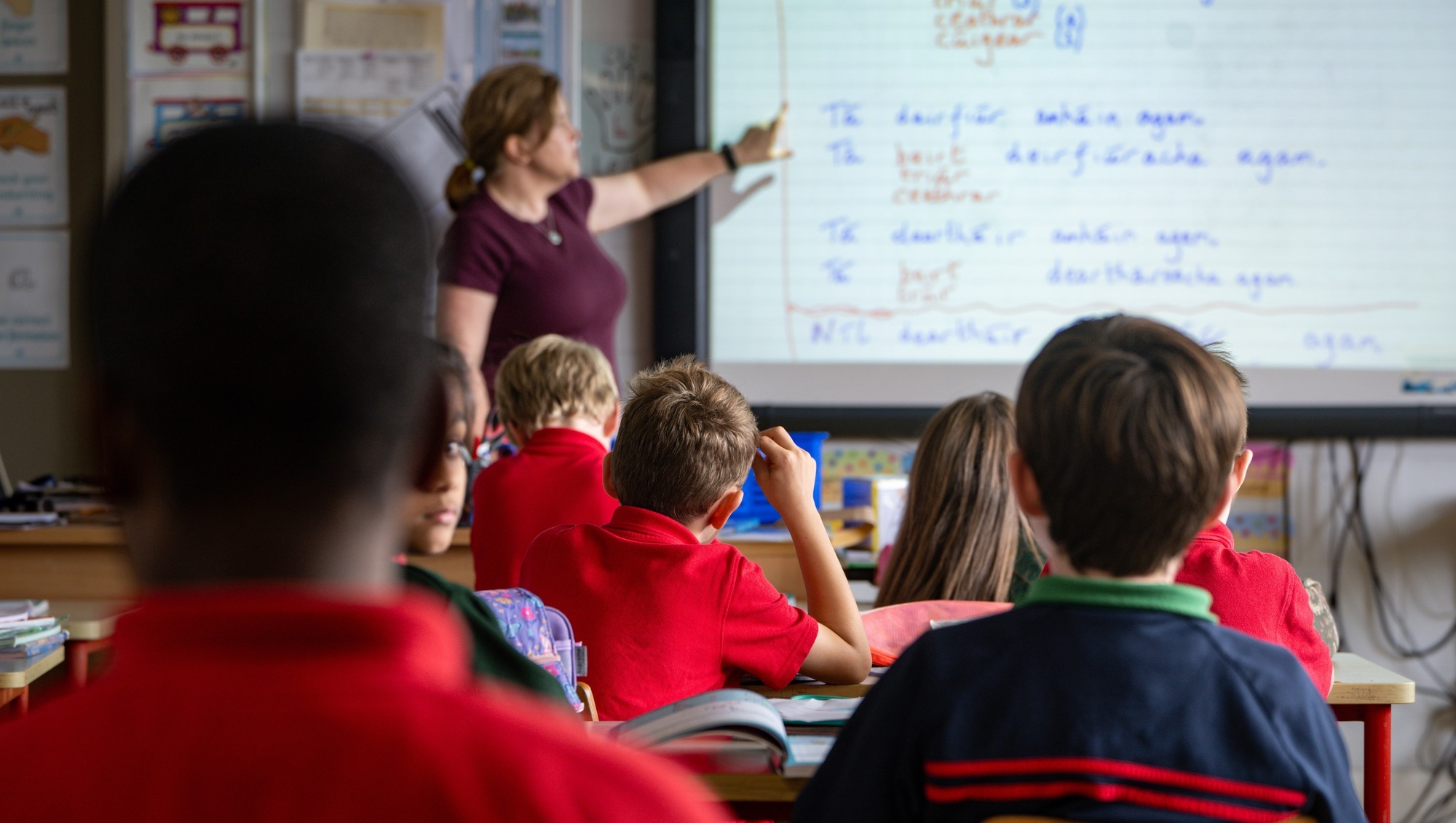
‘If Government is serious about supporting more children with additional needs to flourish in mainstream education, it must recognise that class size is central to inclusion’. Picture: Chani Anderson

‘If Government is serious about supporting more children with additional needs to flourish in mainstream education, it must recognise that class size is central to inclusion’. Picture: Chani Anderson

Budget 2027 comes with the usual Budget Day experience: Being completely bamboozled by huge numbers.

Billions here, millions there, thousands of additional posts, places and hours. The figures sound, and are, enormous. But what do those numbers mean when they move from a pamphlet to a classroom, a school bus, a respite service, a therapy room, or a kitchen table? I read Budget 2027 from two perspectives — as a primary teacher and as the parent of an autistic, disabled child — and there is plenty here that I genuinely welcome.

Education receives €14.4bn. Perhaps this is the year when we need to change how we understand figures like that. Ireland has belatedly learned that the Department of Education’s financial problem has not been one of overspending, rather of underresourcing, and failing to get allocated money out the door.

We should abandon any instinctive reluctance to rising education spending. I want us to be unapologetic in spending more on teachers, smaller classes, special education, school
buildings and supports. This isn’t some regrettable cost to the exchequer that must be contained; it is an investment by the State in its own future and should be seen as a major positive — provided, crucially, that the money is actually spent and spent well.

Primary capitation rises by €68 per pupil to €342, a 25% increase. Deis Plus gets additional funding, and 100 more home school community liaison coordinators are added.

Special education gets a €56m
increase, with 2,339 additional SNAs and 1,353 additional teachers promised for 2027. School transport gets another €33m.

On disability, there are 489 additional residential care packages; 1,500 new day-service places; 191,000 additional respite, home support and personal-assistance hours; and another 930 disability-service staff.

These are all significant announcements. Schools desperately need increased capitation. More teachers and SNAs are needed. Families need respite. Disabled adults need day services, personal assistance and residential options. I welcome investment where investment is needed.

But budgets should not ultimately be judged by what is announced on a
Tuesday afternoon in October. They should be judged by what changes afterwards. How is the money spent and managed? Who is it intended to reach, and does it get to them? Does money make structures work better, or leak in a creaking system?

An allocation is not an outcome. Public money must be applied intelligently, managed properly and followed all the way through to delivery.

One glaring omission from the education announcements has genuinely devastated me: class size and the pupil teacher ratio. I cannot understand how we can keep having national conversations about inclusion, additional educational needs, teacher workload, behaviour, wellbeing, literacy, disadvantage, and educational outcomes without confronting the number of children we routinely place in front of one primary teacher. Budget 2027 makes no meaningful move on class size and, for me, that is an enormous missed opportunity.

The budget talks about ensuring every student reaches their full potential and creating an education system inclusive of all students. Great.

Ciara’s daughter Doireann, who has additional needs.

But inclusion is not achieved by a sentence in a ministerial speech. Inclusion happens at 10.25am on a wet Wednesday when one child needs help regulating, another needs individual teaching, another is struggling socially, another needs a sensory break, another has significant communication needs, and every other child still deserves their teacher. That’s where policy meets reality — that’s inclusion in practice — and it’s driven fundamentally by how many children are in the room.

If Government is serious about supporting more children with additional needs to flourish in mainstream education, it must recognise that class size is central to inclusion.

Smaller classes create capacity, giving teachers time to notice, adapt, intervene early, differentiate, communicate with families and actually teach. We keep expanding what we expect the mainstream classroom to do while refusing to confront one of its most basic conditions. Increasing SNAs, though welcome, doesn’t compensate for an oversized class. An SNA isn’t a substitute teacher, therapist or psychologist.

Likewise, the additional 1,353 special education teachers are welcome. But students exist in classrooms, not an abstract spreadsheet.

They experience it when a vacancy cannot be filled, when a special
education teacher is pulled to cover an absent colleague, and when one mainstream teacher is trying to meet a range of needs that no individual teacher, however skilled or committed, could reasonably meet alone.

School transport is another perfect example of conflating “expenditure” and “outcome”. An additional €33m will support transporting 180,000 children to and from school every day. Of course school transport must be funded, but it must also be scrutinised: Why do some children travel so far in the first place?

This is particularly acute for disabled children, put in taxis every morning to travel down motorways simply because there is no appropriate placement in their own community. Transport is an essential sticking plaster for a deeper failure, illustrating that how we spend matters just as much as how much.

We need to view disability through that same lens. Increases in respite, in home support, in personal assistance hours and residential packages are welcome to the families who desperately need them. But we must also recognise how “public” disability services are provided by a fragmented patchwork of non-State entities — and how HSE recruitment restrictions may leave newly qualified healthcare professionals unable to find work.

Think of the absurdity of that: how Ireland simultaneously has enormous unmet need, graduates available to meet it, and a de facto recruitment ban that stops the gaps being filled. In that environment, increased funding alone feels pretty meagre.

Announcing services is not the same as providing them. Funding hours means little if nobody is available to deliver them.

More money and more staff is, sometimes, the answer. But we also need to ask whether the architecture receiving that money actually works. Who is accountable? Where does the money go? What was actually delivered? What changed for the person waiting at the end of all of it?

There is plenty of good in this budget, but the test starts now. Can schools recruit the teachers being promised? Will those teachers reduce pressure in classrooms? Will children access appropriate education closer to home? Can families get respite before they reach crisis? Can healthcare graduates get jobs in a system that desperately needs them? And can we finally accept that genuine inclusion requires investment in the mainstream classroom too, including having fewer children in it? That omission is the part of this budget I find hardest to accept.

Budgets tell us what a government is prepared to spend. They do not tell us what a government has achieved. For that, we have to follow the money beyond budget day, through departments, agencies, and providers, and eventually to the classroom, therapy room, respite service, school bus, and family home, where it is supposed to make a difference.

  • Ciara Reilly is a teacher and parent.

x

More in this section

Revoiced

Newsletter

Had a busy week? Sign up for some of the best reads from the week gone by. Selected just for you.

Cookie Policy Privacy Policy Brand Safety FAQ Help Contact Us Terms and Conditions

© Examiner Echo Group Limited