Gazan students’ visas must be granted before it is too late
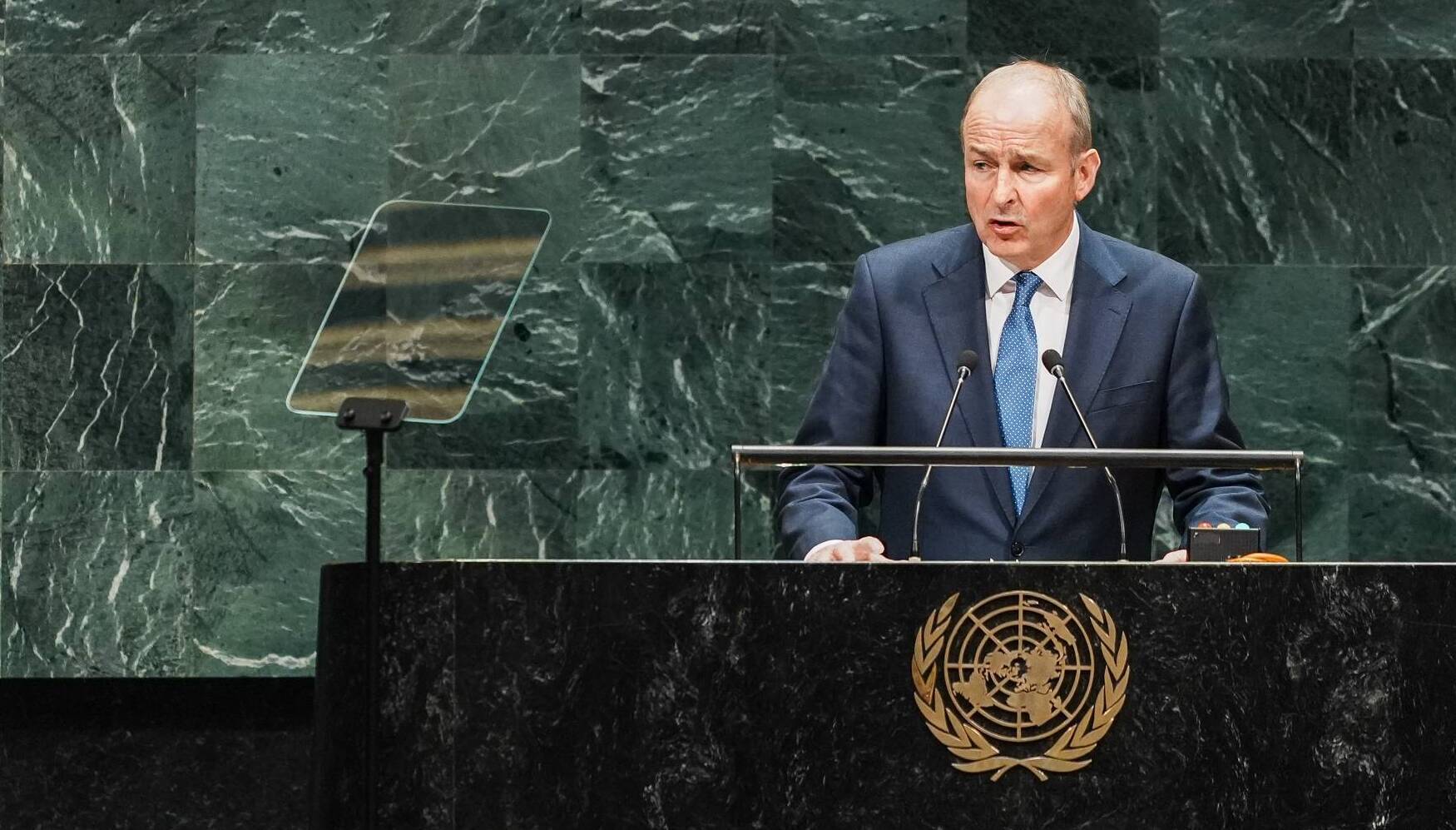
Taoiseach Micheál Martin told the United Nations General Assembly on September 24 that when the 'full truth' of what happened in Gaza is revealed 'it will shame the world'. Picture: Ryan Murphy/Getty
Today, the High Court will begin hearing the minister for justice’s defence against judicial review challenges brought by four Gazan students who were refused visas despite having university places and scholarship funding to come to Ireland.
We are calling on the Taoiseach and minister for foreign affairs to intervene with minister Jim O’Callaghan immediately, to ensure that the decisions on the applications of all affected students are re-made properly and in time for evacuation to occur.
If students are to be included in the next internationally organised evacuation from Gaza in late October, their visas need to be granted before October 15.
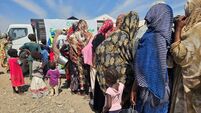
We understand that there are approximately 115 Gazan students whose visa applications have been denied.
Last year’s arrangements by the Department of Foreign Affairs to evacuate students from Gaza who had received university and private donor support to continue their education were a source of widespread pride throughout Ireland.
We have been privileged to teach and get to know these students: They have contributed immensely to our universities and communities while performing very strongly in their studies.
Whereas 13% of long-stay study visa applications from Palestine were refused last year, this year’s refusal rate has skyrocketed to a shocking 83%.
The difference seems to be that the minister for justice has taken over the decision-making, although the Department of Foreign Affairs still sends the correspondence.
This refusal of student visas en masse, when assurances regarding paperwork had been given and evacuation arrangements had been commenced by the Department of Foreign Affairs, makes a mockery of the Taoiseach’s speech to the UN General Assembly last month and the efforts of the Department of Foreign Affairs.
We therefore call on the Micheál Martin and Helen McEntee to bring the minister for justice to the table, and to resolve this appalling injustice for all students concerned before the October 15 deadline to secure evacuation.
Read More
We also call on all university administrations to keep the students’ places and funding open for them, for this academic year and where necessary for the academic year commencing September 2027, while they appeal.
As a state party to the 1948 Genocide Convention, Ireland is obliged to “employ all means reasonably available” to prevent genocide so far as possible, according to the International Court of Justice.
While the International Court of Justice has not yet issued its final determination in the case of South Africa v Israel, the UN human rights council-appointed independent international commission of inquiry on the occupied Palestinian territory including East Jerusalem and Israel found in its report published on September 16, 2025, that “the state of Israel bears responsibility for the failure to prevent genocide, the commission of genocide, and the failure to punish genocide against the Palestinians in the Gaza strip”.
The international commission’s 2025 report summarises the evidence of Israel “deliberately inflicting on the group conditions of life calculated to bring about its physical destruction in whole or in part” — which is an act of genocide according to Article II of the 1948 Genocide Convention.
As evidence of this genocidal act, the commission points to, among other things, Israel’s destruction of structures and land essential to Palestinians including Israel’s destruction of Gaza’s education system.
In an earlier report focusing on attacks against educational facilities and religious and cultural sites, the international commission noted that Israel’s targeting, destruction, and damaging of higher education facilities in Gaza had affected approximately 87,000 university students.
More than 57 university buildings had been completely destroyed as of March 25, 2025, and more than 190 university academic staff were reported killed.
The commission observed: “The destruction of the education system in Gaza is expected to harm Palestinians for generations to come, with consequent challenges in economic development, work and social abilities.”
Read More
It continued: “The extensive physical destruction of Gaza, the dismantling of its education system, and attacks on cultural and religious sites in the occupied Palestinian territory generally not only affect Palestinians at present but also jeopardise the future of the Palestinian people, including their right to self-determination.”
The systematic destruction of Gaza’s third-level education sector is therefore a constitutive aspect of Israel’s genocide against the Palestinians in the Gaza Strip.
This has been recognised also by the United Nations special rapporteur on the situation of human rights in the Palestinian territories occupied since 1967, and by many leading international law scholars. The term “scholasticide” has been used widely to describe the systematic destruction.
In summary, to the extent of its reasonable ability, as a matter of preventing genocide pursuant to its obligations under the 1948 Genocide Convention, Ireland must act to protect the educational opportunity of Gaza’s population.
Last year’s experience shows that Ireland is capable of supporting young Gazans to continue their higher education. It is indefensible for us not to continue to do so.
- This piece was compiled by: , higher education strategic project lead and sanctuary chair, South East Technological University; , lecturer in global citizenship education in the Froebel department of primary and early childhood education, Maynooth University; , chair, Academia for Palestine; , chair of the board, Sadaka — The Ireland Palestine Alliance; , senior lecturer in human rights, Irish Centre for Human Rights, University of Galway; , established professor and director of the Irish Centre for Human Rights, school of law, University of Galway; , lecturer in international law, Irish Centre for Human Rights, University of Galway; , lecturer in sociology, school of sociology, University College Dublin; , associate professor, department of geography, Maynooth University; , Maynooth University.


CONNECT WITH US TODAY



Be the first to know the latest news and updates