Mick Clifford: Drumcree shows the road back to the dark days in the North is a short one
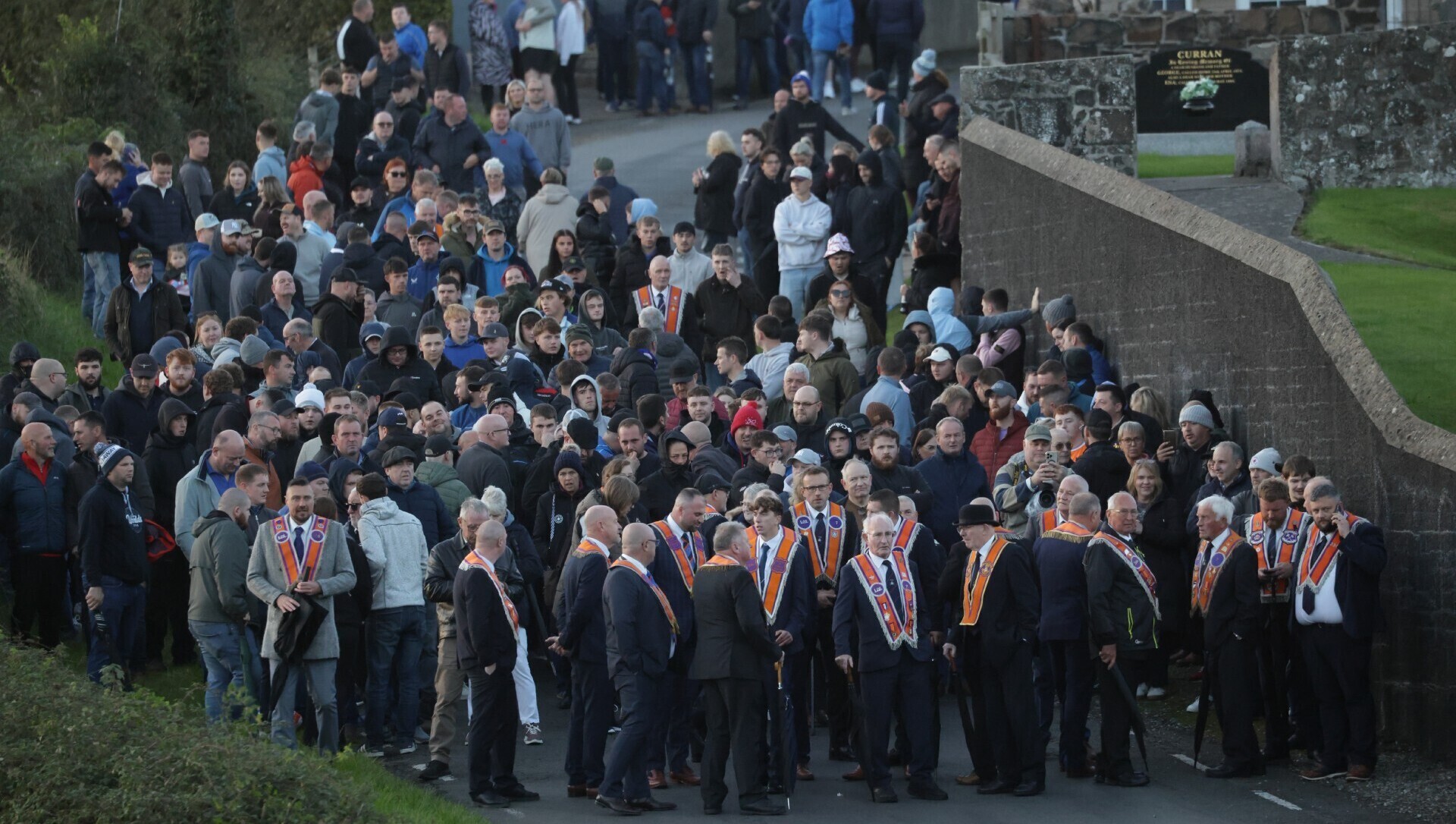
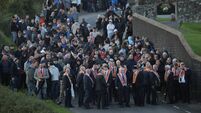
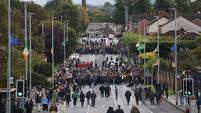
Loyalists and orange men face the PSNI outside Drumcree Church on Sunday. For many in the nationalist community it is always difficult to get past the feeling that the marches are just about asserting superiority, keeping the Taigs down in their place. Photo: Peter Morrison/PA
Outside Grand Central station in Belfast, a line of black taxis stood ready to gobble fares. I hopped into the first. The driver, a man with a big bald head, glanced in the rear view mirror.
“Europa hotel please,” I said. He nodded, gunned the engine and we were off. Once we pulled into traffic, the driver regarded the mirror once again. “See with your accent,” he said. “I’d keep my mouth shut today if I was you.”
Welcome to Belfast on July 12, 1994.
I was on placement in newspaper in Dublin and somebody happened across the bright idea that our readership should have a taste of the twelfth through the eyes of the new lad, fresh and green to the trade.
The Europa was closed and the streets were eerily quiet. And in the distance the rumble of a drum was gathering steam and heading our way.
That was my first taste of the twelfth. Everybody who wasn’t interested in or participating in the parade stayed out of town. Pretty soon it arrived where I was located and it was easy to see why.
The spectacle was loud, musical, colourful and there was plenty of laughing and children being hoisted high to catch it all. It was also, through these eyes, unmistakably intimidating.
There was the beat on the lambeg drum, an echo back through history, all the way to 1795 and the origins of a body set up to assert Protestant ascendancy on the island of Ireland.
That ambition was squeezed yet intensified with the establishment of the free state in the south. Thereafter it was all about asserting complete superiority and control over the north east of the island governed by a Protestant parliament for a Protestant people.
At least, that’s how the minority tradition in the north understood it, usually with good reason.
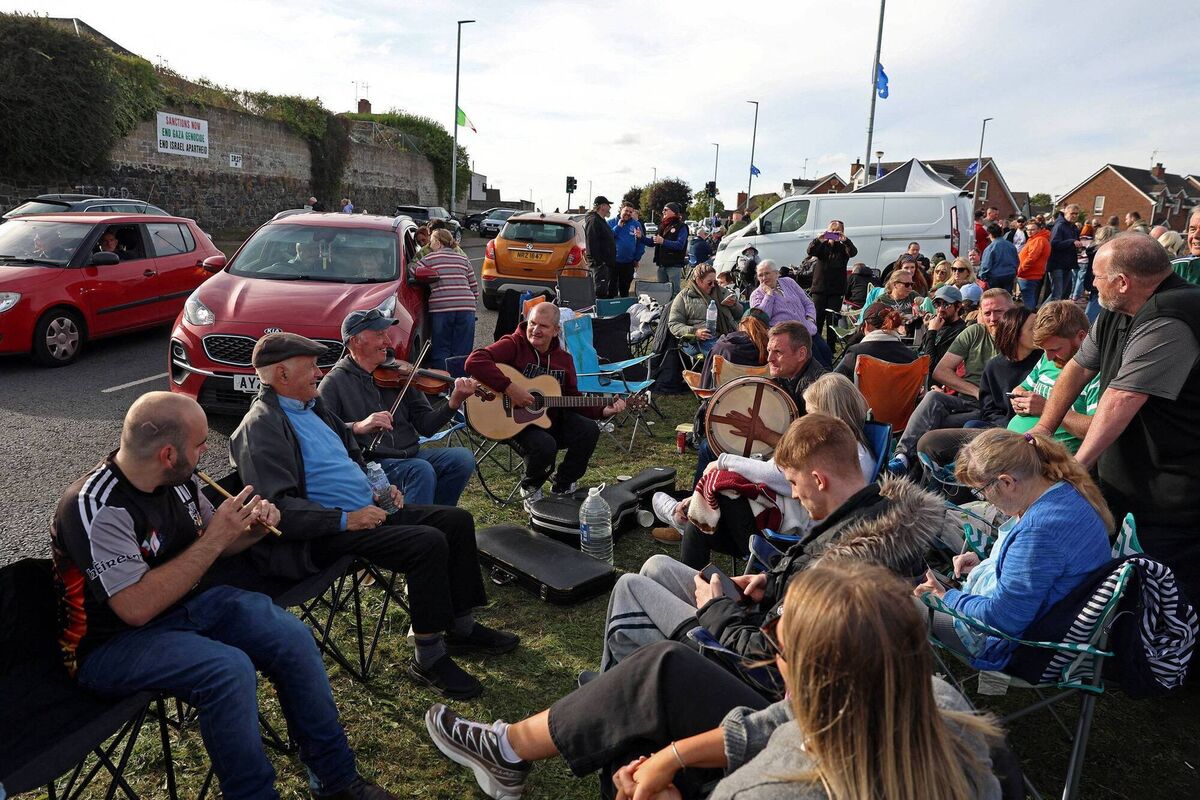
Many members of the order view their club very differently. For them, it is merely a gathering of like minds to celebrate history and culture, including the wearing of the bowler hats and sashes.
It resembles in some ways an outfit lifted from the pages of Harry Potter with its worshipful master and deputy masters functioning as chair and vice chair of lodges, the basic unit of the organisation. Publicly, the order claims that it is not sectarian and nominally at least is open to Catholics to join.
"Orangeism does not foster resentment or intolerance,” the order states. “Condemnation of religious ideology is directed against church doctrine and not against individual adherents or members."
The order was grievously impacted by the Troubles with over 330 members murdered, mostly by the Provisional IRA.
For many in the nationalist community it was always difficult to get past the feeling that the marches were just about asserting superiority, keeping the Taigs down in their place.
Nowhere was that more felt than in the town of Portadown, Co Armagh, where around 70% of the population are from the Protestant tradition.
The year after I covered the parade in Belfast, all of the resentment, anger, sense of siege and assertions of rights formed a toxic brew that led to conflict, violence and murder centred on the Co Armagh town.
Since the 19th century the local order had marched from the church of Drumcree outside the town back home through the Garvaghy Road on the Sunday prior to the twelfth.
This area had grown into a nationalist enclave over the preceding decades. They had enough of what they saw as coat trailing through their community.
They blocked the march and it didn’t pass. David Trimble and Ian Paisley got involved and a compromise was reached.
The two men walked with arms raised, holding hands in the air as they passed, asserting their triumphalism, inflaming the local residents.
It has been asserted elsewhere that the stand he took that day was a central reason why David Trimble was elected leader of the UUP two months later.
He went on to have a crucial role in fashioning the Good Friday Agreement in 1998.
Would history have been different if he hadn’t displayed the triumphalism beloved of some of the order that he did on Garvaghy Road?
The three years that followed 1995 saw peace come dropping slowly towards the agreement. Yet every July, Portadown was a depressing reminder of how far had yet to be travelled. History and a complete absence of trust on either side ensured that confrontation, violence and the intervention of the police was a constant.
The order was particularly aggrieved that the spokesperson for the Garvaghy residents, Brendan MacCionnaith, was a former IRA man. He had served three years in prison for his role in blowing up the premises of another unionist institution in Portadown, the Royal British Legion.
Then there was local hardman loyalist Billy Wright. He made his own contribution to the tensions by attempting to spread terror. On July 6, 1996, Catholic taxi driver Michael McGoldrick was lured to his death and shot five times. A court subsequently heard that a gunman had committed the murder as a birthday present to Wright.
It was also alleged that the LVF leader himself had planned to kidnap three Catholic priests and murder them if the Drumcree stand-off was not resolved in the Orange Order’s favour. Wright was murdered in prison in 1997.
The nadir of the hatred and anger generated came in 1998 on July 12. As the tensions from Portadown spilled across the north, a petrol bomb was thrown into the home of the Quinn family in Ballymoney, Co Antrim.
Three young brothers died in the attack, while their mother and her partner managed to escape. A fourth child survived because he was staying with his grandmother that night.
The depth of that tragedy brought some to their senses, but it was a terrible indictment that it took the murder of innocent children to stop the madness. A parades commission was formed and from then until this year no parade went through the Garvaghy Road.
Now all has changed. The green shoots of a peace process as it was in the mid-nineties flowered briefly, but many fear that it may be withering just when this ugly flashpoint from the past is resurrected.
The two main political entities, Sinn Féin and the DUP, are both uncomfortable with the current dispensation and, in the tradition of northern politics, may each use the current impasse for their own respective ends.
The renewed tension and stand-offs do give rise to one question among many about where this island may be headed. The heightened talk of a border poll is all around, but what does it mean?
Much has changed from the dark days of routine killing, but some things appear to have, beneath the surface, stayed the same.
Anyone who suggests that a brand new day for the whole island is just around the corner is simply not tuned in.

CONNECT WITH US TODAY



Be the first to know the latest news and updates