Defence and competitiveness must be at the core of European budget
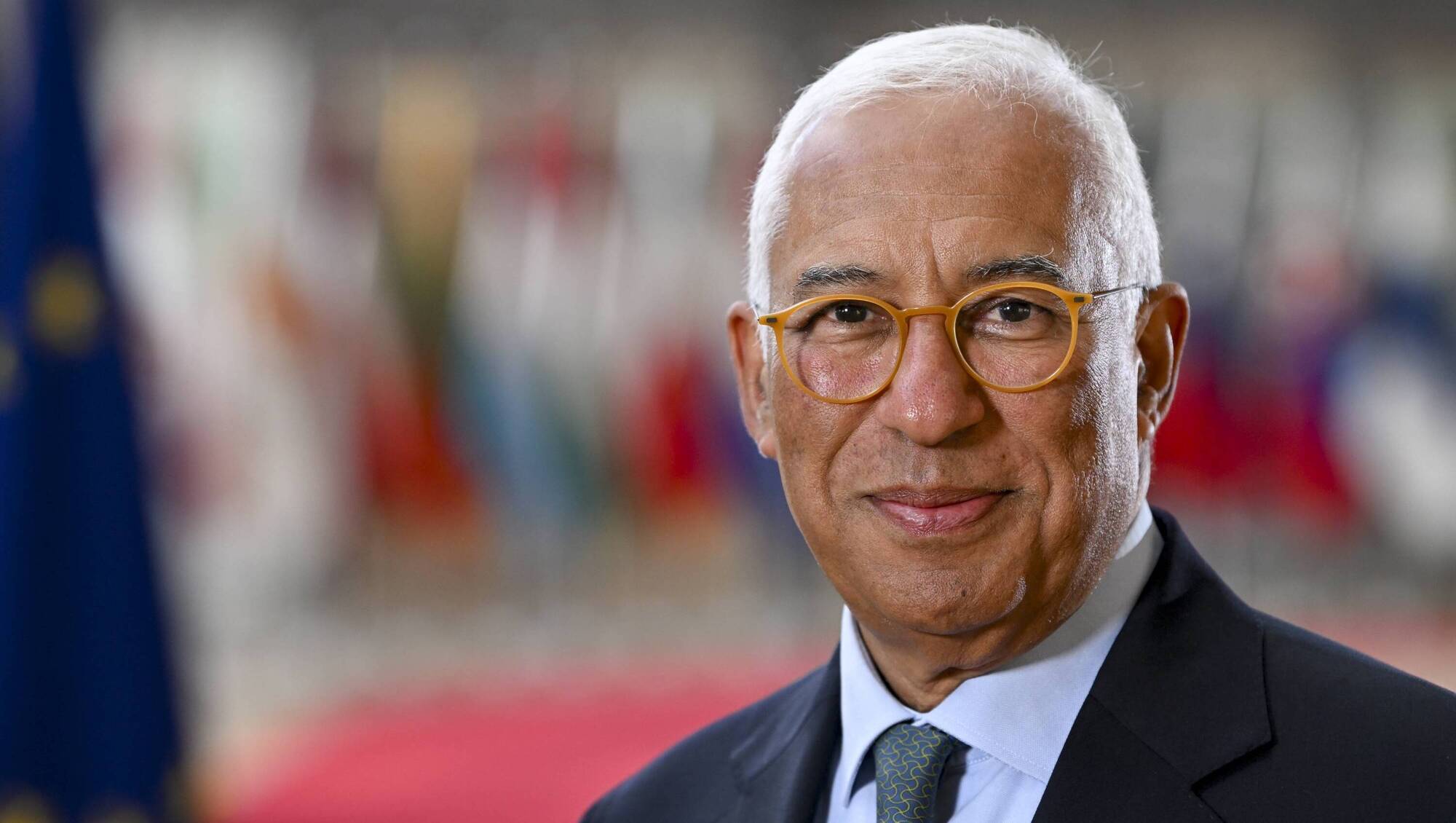
Antonio Costa.
Once I was elected president of the European Council, I decided to visit each member state every year, to meet bilaterally with each European leader.
These exchanges are first and foremost an opportunity to listen: to remain closely attuned to the concerns, priorities, and expectations of the members of the European Council, and of the citizens they represent. They also allow me to share my perspective on the challenges and opportunities ahead for our union.
These visits take place at the beginning of the political season, provide a unique 360-degree view of the state of our union and help to ensure that the work of the European Council remains firmly anchored in the realities, priorities, and aspirations across Europe.
One of the defining features of European integration is that its most tangible benefits often go unnoticed precisely because they have become part of our everyday lives. We cross borders with ease. We share a single currency from Lisbon to Helsinki and from Dublin to Athens. We benefit from common standards that protect our environment, our health, and our quality of life.
We support one another in responding to natural disasters (as we have done during this summer’s devastating forest fires), public health emergencies, and other common challenges. And when we travel across Europe, we stay connected with family and friends without giving a second thought to mobile roaming charges. What has become ordinary in our daily lives is, in fact, the result of decades of a shared European endeavour.
This provides a strong foundation on which to continue to build Europe. In today’s geopolitical reality, a stronger, more resilient, and more autonomous Europe is more important than ever.
That is why we are building the Europe of defence: To strengthen our ability to deter threats, protect our citizens and, ultimately, restore peace on our continent. A peace that has been shattered by Russia’s ongoing aggression against Ukraine.
The EU has set itself the objective of decisively ramping up Europe’s defence readiness by 2030 by strengthening the European defence industry, reducing strategic dependencies, and jointly developing priority military capabilities. What is crucial is that Europe’s necessary rearmament is pursued collaboratively, avoiding duplication and waste and, above all, ensuring that this historic effort strengthens the collective security and defence of Europe as a whole.
Building Europe’s strategic autonomy also requires a more competitive economy. That is why the European Union is making it easier to do business by cutting red tape, mobilising private investment to help businesses scale up and innovate, completing the single market, strengthening supply chains and diversifying trade relations, while ensuring access to critical raw materials and to affordable, clean, and home-grown energy sources.
In all these areas, the ‘One Europe, One Market’ agenda agreed by the European Council sets out concrete objectives to be delivered from now until the end of 2027. Beyond the geopolitical imperative, this is ultimately about making life more affordable for citizens, creating the conditions for more high-quality jobs, and improving the resilience of Europe’s social market economy.
Defence and competitiveness, together with EU enlargement and our ongoing support for Ukraine, will be high on the agenda as I meet the European leaders during this year’s tour of capitals.
But among the key decisions before us this year, one stands above all others: Reaching, by the end of the year, an agreement on the EU’s next multiannual financial framework — our long-term budget for 2028-2034.
Why must that agreement be reached before the end of 2026? Because we will then need about a year to put in place the necessary legislative and administrative framework — in Brussels and in the member states — to ensure the uninterrupted implementation of the next EU budget. This is simply sound planning. Otherwise, we risk disrupting funding for farmers, businesses, students, researchers, and innovators.
For decades, the EU budget has supported sustainable and inclusive growth across our continent through investments in agriculture, our regions, research, and the green and digital transitions. It will continue to do so. At the same time, the budget must also reflect Europe’s evolving priorities, including defence, security, and competitiveness.
Like national budgets, the EU budget must deliver on its priorities within the limits of finite resources. Most of it is financed through member states’ national contributions. We need to keep those contributions within reasonable limits. That is why a balanced and ambitious package of new common resources will be an essential part of an overall agreement.
I have been encouraged by the constructive spirit of discussions among leaders on the multiannual budget so far. I am confident that, in the end, we will find the right balance for our union, our citizens, and our future. Because it is our shared responsibility to do so.


CONNECT WITH US TODAY



Be the first to know the latest news and updates