Public sector strikes likely as unions and Government cannot agree on agenda for talks
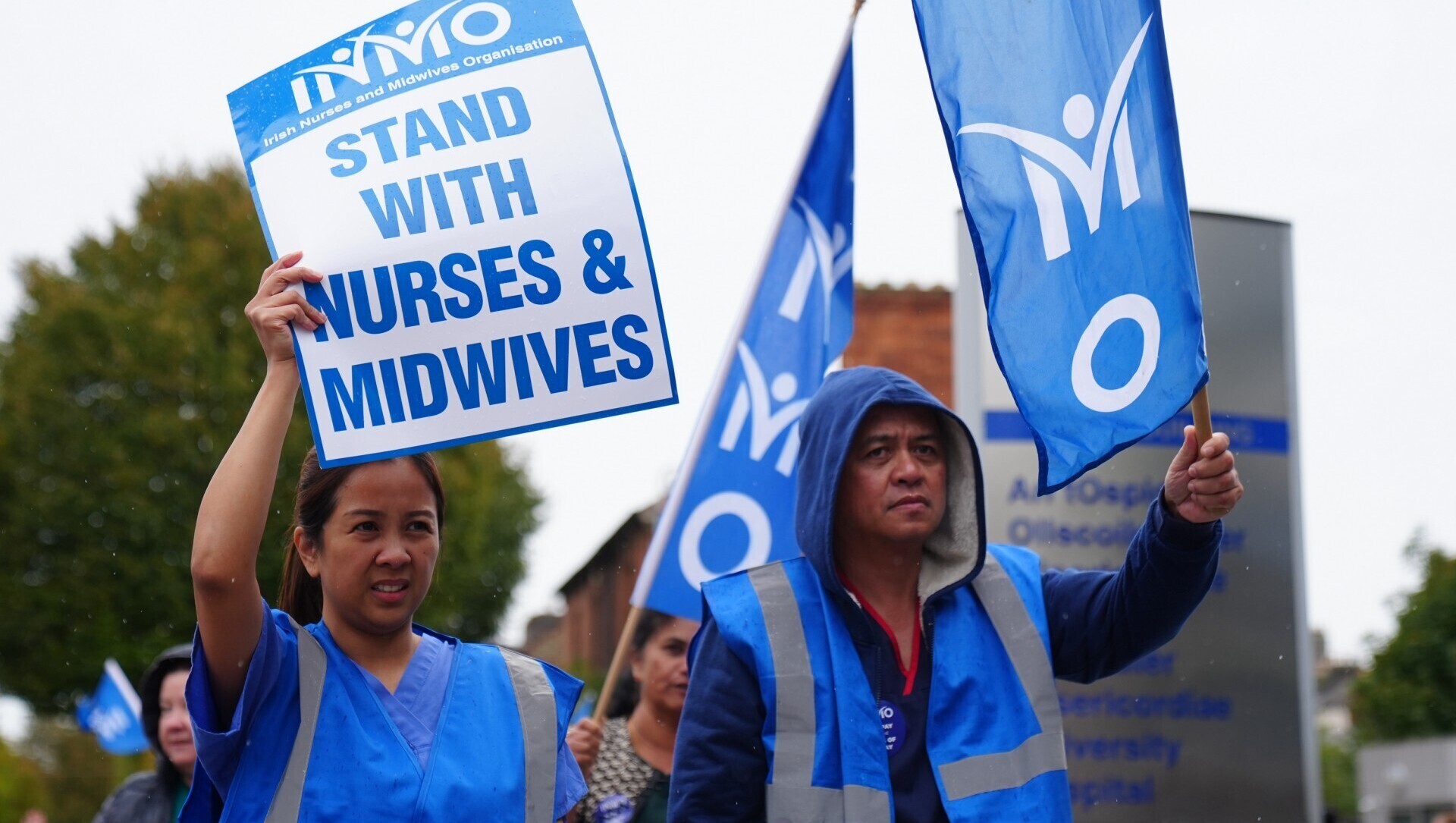
Members of the Irish Nurses and Midwives Organisation protest outside Mater Hospital, Dublin, today. Picture: Brian Lawless/PA
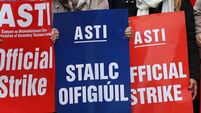
Wide swathes of the public sector appear set to down their tools on October 14 and October 21, in protest at the impasse over the new public service pay deal between Government and unions.
The protests are likely to put significant strain on the State’s medical and educational facilities, while also bearing the potential to derail key diplomatic meetings of Ireland’s EU presidency.
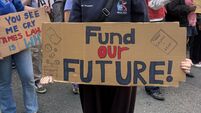
The strikes are set to encompass more than 100,000 public sector workers, who are demanding a new public pay deal that keeps pace with spiralling rates of inflation.
The Irish Congress of Trade Unions (ICTU) has claimed that a previous public pay deal that expired in June 2026 fell 5% below the rate of inflation.
Public expenditure minister Jack Chambers earmarked €1.2bn of Budget 27 towards reaching a new deal.
Ahead of the budget’s unveiling, Mr Chambers urged the protesting unions to engage in “constructive negotiations” with Government. He has previously said department officials remain open to advancing negotiations through talks or via the Workplace Relations Commission.
Unions have declined the advances, and said the underlying structures behind the agenda of public pay talks need to change. Negotiations on changes to pay traditionally involved a trade-off with workplace reform and improvements in productivity.
However, unions are now demanding that pay increases be the first agenda item in order to open negotiations.
The 19 unions wrapped under the ICTU's public services committee have all begun or plan to begin industrial action before all-out strikes on October 14.
Members of INTO (Irish Nurses and Teachers Union) will not work any non-contractual hours, and children dropped off to school before official school opening times will be left unattended.
Members of the Irish Nurses and Midwives Organisation (INMO) are refusing to take on any work that is seen as unnecessary in aiding patients' health.
Taoiseach Micheál Martin said he is “baffled” by the lack of movement on the negotiations.
“What no one can expect us to do is to accept unilateral preconditions before discussions, or to give up our right to table proposals,” he said in the Dáíl.
“Any dispute on this basis serves no positive purpose and simply delays negotiations which we have shown, time and again, that we always approach in good faith.”
Members of the public service committee have conducted talks over recent weeks with no plans to veer from action. Other unions outside of the public services committee, such as the Irish Dental Association, have also begun plans for strike action.
Alongside the provision of educational and health services, there are also concerns over diplomatic engagements.
It is unclear how an international AI summit meeting in Dublin — initially planned to be a cornerstone of Ireland’s EU presidency — will progress without appropriate administrative arrangements.
Picket lines for teachers are expected to exceed 20,000 second-level teachers.
Further strikes are scheduled to take place on October 21.


CONNECT WITH US TODAY



Be the first to know the latest news and updates