10 things we’ve learned from cycling 24,000km around the world
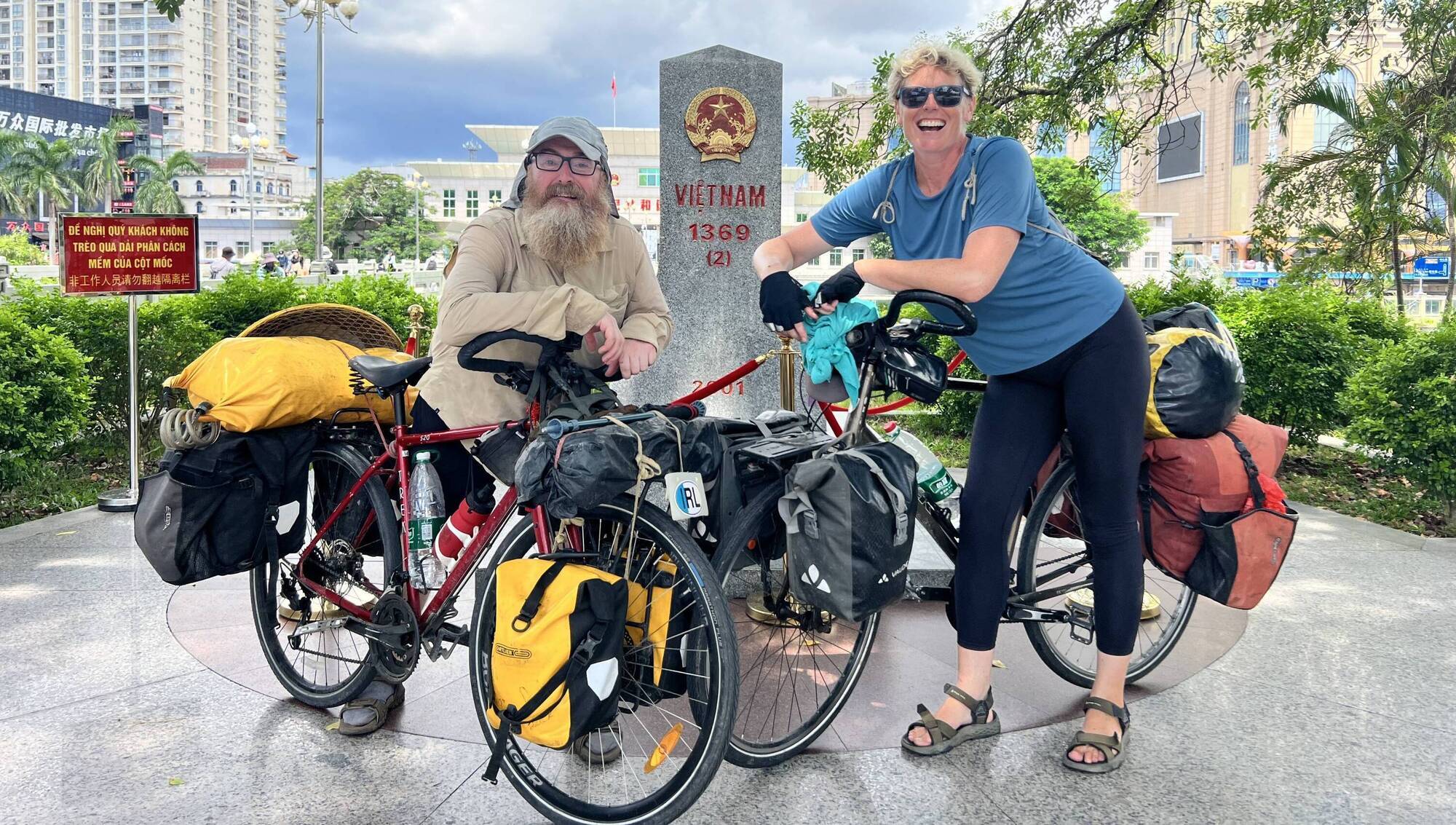
Mark and Ellie crossing the Vietnam border.
“If I kept doing this I’d reach India,”Dervla Murphy once said to herself while cycling up a hill near her home in Lismore, Co Waterford.
Murphy put that epiphany into practice, not only cycling all the way to India from Ireland, but also writing her first book, , about the journey and propelling herself into the ranks of Ireland’s most intrepid and best-loved travel writers.
There’s something so simple and empowering about Murphy’s realisation: Sit on a bike, turn the pedals, keep repeating, and eventually you’ll reach your destination.
All you need is a bicycle, enough food to fuel your own body, and the will to do it, and you really can go anywhere you want.
Read More
CLIMATE & SUSTAINABILITY HUB
For the past 15 months, my partner Mark and I have been using pedal power to cycle around the world.
We’ve cycled through Europe, Turkey, Central Asia, China, Southeast Asia, Japan, and now the US — over 24,500km in 24 countries so far, since we set off from Tramore on February 1, 2025.
We weren’t particularly fit when we started, in fact we had done almost no training, apart from one cycle with our fully laden bikes to test them.
When we left, we calculated that even if we only did 50km per day, we’d be able to cycle all the way around the world in under two years.
We’ve gone much faster than that: In Vietnam, we stopped cycling and volunteered in a café and language centre for six weeks, just to slow down so we wouldn’t hit North America in freezing January. Instead, we arrived across the border from British Columbia into Seattle in time for a snowy St Patrick’s festival.
I’m not going to pretend it’s always easy. There are days when you don’t want to cycle. There are days when the constant uncertainty of not knowing where you’re going to sleep that night wears you down. There are days when you miss your loved ones.
But travel by bike is its own immersive reward. You meet people, see sights, and pass through places that you never would have if you were zooming by in a car or jetting in for a carefully scheduled week’s holiday.
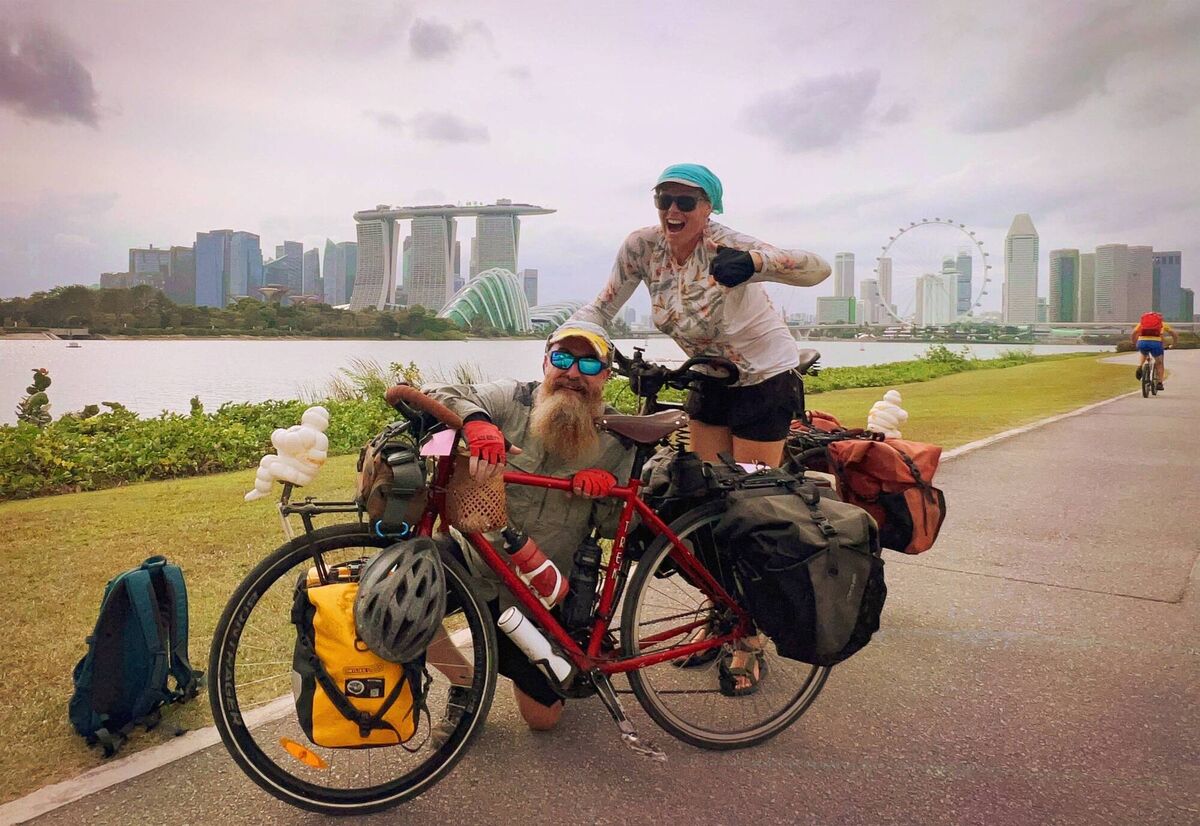
Lots of people told me I needed a new bike before we set off to cycle around the world, but I’m cycling my trusty 17-year-old Trek hybrid and it has held up so far.
Mark has a slightly better Trek 520 that he bought through the cycle-to-work scheme a few years ago.
We have some essential gear that we wouldn’t be without. Our Ortlieb pannier bags carry all our belongings and have stayed fully waterproof. We have good all-season down sleeping bags and a Hilleberg tent which is amazing, and has been necessary when camping at temperatures down to minus-6C.
But it’s easy to overpack, and it’s easy to over-complicate things. We have very few gadgets: The things that are enduringly useful are normally simple and multifunctional.
Read More
For reasons probably not even known to themselves, some dogs have a hatred of cyclists lodged deep in their psyches.
Many touring cyclists have horror stories to share about being chased and attacked by dogs. We had heard it was in Turkey that we’d really have to watch out.
The Turkish breed known as kangals are particularly fierce and we’ve seen them wearing collars studded with spikes or razors to protect their necks when they protect flocks of sheep from wolves and bears.
I’m more nervous about dogs than Mark is, and as a result, they’re more likely to go for me than him.
I had read that they don’t like having water flicked in their faces, so I went one further and started adding chilli powder to a small squeezy bottle that I kept within easy reach, and that would normally slow them down.
Our route through Central Asia was part of the ancient Silk Road. The history and architecture of cities like Khiva, Bukhara, and Samarkand on this route are phenomenal.
But you have to cycle through deserts to get to them.
Some of the most challenging times of our journey so far were crossing the Ustyurt and Kyzylkum deserts in Kazakhstan and neighbouring Uzbekistan in June 2025.
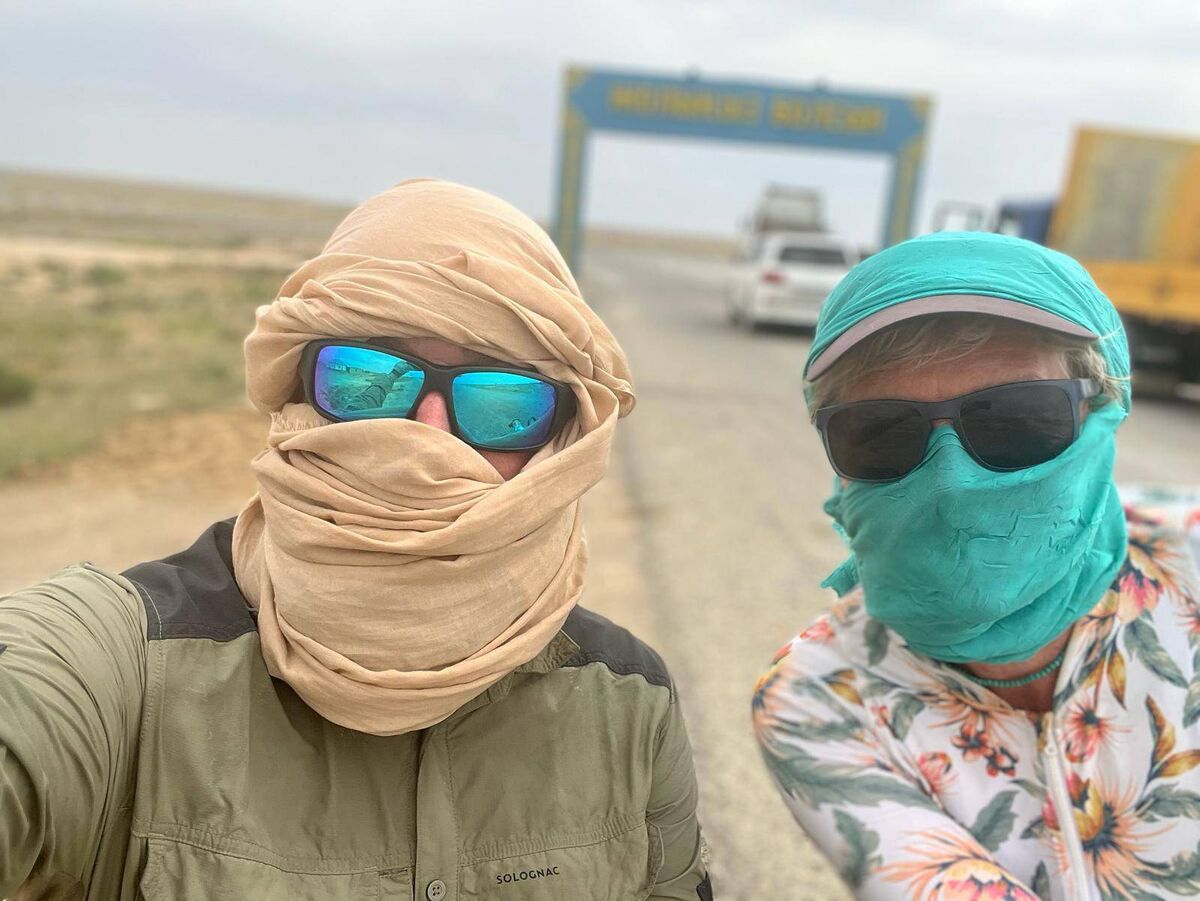
With temperatures reaching 45C and very little shelter on this route, we carried eight litres of water each on our bikes, set off at dawn every day, and tried to find shelter or pitch tent in time for the hottest part of the day.
Dust inhalation and heat exhaustion are real concerns in the desert, so we mimicked the locals we met on their mopeds and covered our entire heads in scarves, including our noses and mouths.
When you’re cycling an average of 80km to 120km per day, you need a lot of fuel.
You have to protect yourself from a dose of Delhi belly at the same time — cycling with an upset stomach is hell.
So you need food cooked hot in front of you, but apart from that, in most parts of the world, you have to take what you can get. There really isn’t room for picky eating.
We cycled over 2,000km along the Turkish coast of the Black Sea and fell in love with the cuisine there. In Vietnam, pho (beef broth with rice noodles and veg) was a delicious and hydrating staple.
In China, pork-based noodle soup for breakfast often comes with slices of pig intestine. In Kazakhstan, we tried camel milk products including fudge and fermented milk. In Indonesia, Mark loved the fragrant but lethal sambal chilli sauces, but they burned the mouth off me.
Probably our most challenging staple was the greasy mutton pies known as somsa in Uzbekistan. Grisly, stodgy, but cooked fresh in roadside tandyr ovens everywhere you go.
The difference between a good day on the bike and a bad day is all in the mind.
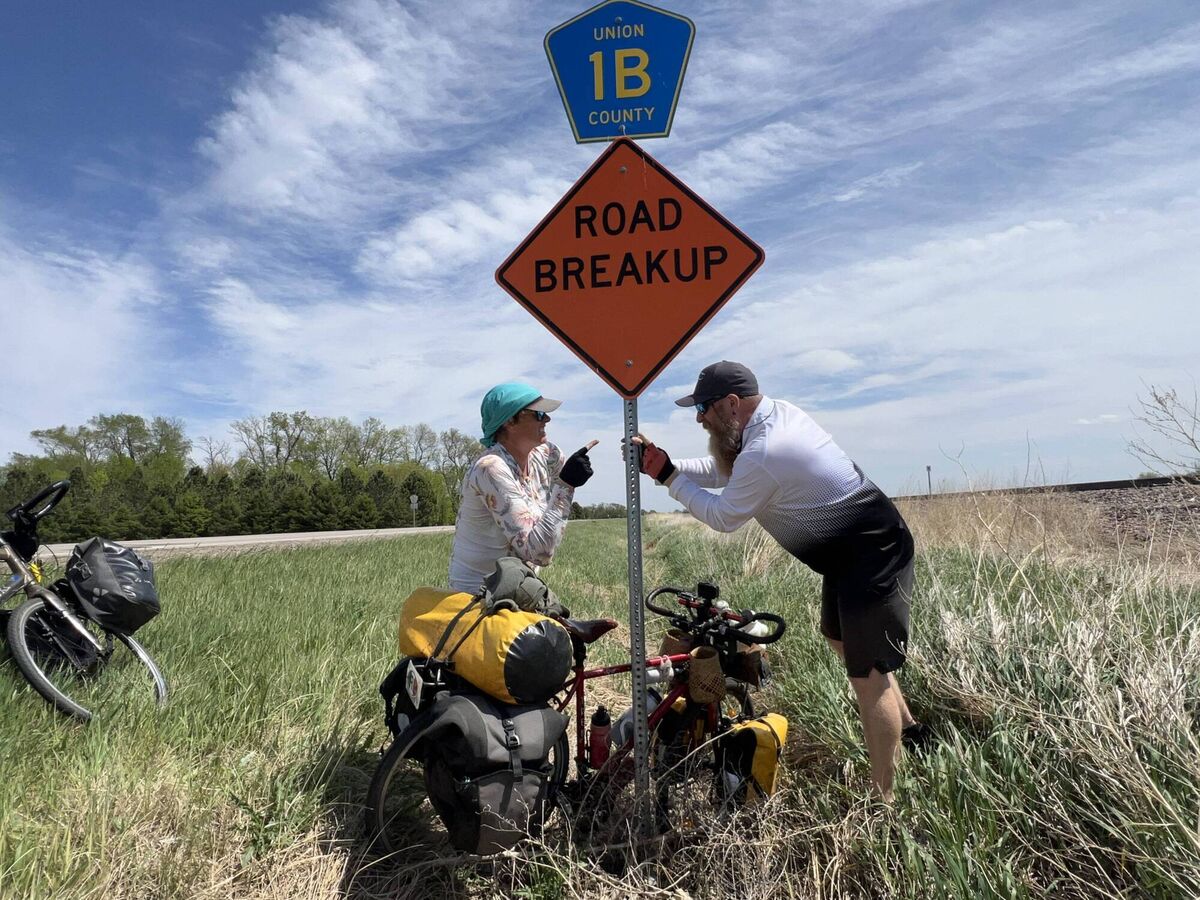
Mark and I have an imaginary dial called a home-ometer. It starts at zero, which means 'happy to keep cycling forever', and a 10 would mean actually throwing your bike in a ditch and sticking out the thumb to hitch to the nearest airport and go home.
Recently, we were cycling through North Dakota on a freezing cold day with a strong headwind, and Mark was struggling to keep positive. We had a long way left to go to the town we were aiming for and he felt like we weren’t making any progress.
“Where are you on the home-ometer?” I called to him above the howling wind. “Oh, about seven!” He called back. Seven is pretty bad. I know, because a couple of days later it was my turn, and I was at about a seven too.
Luckily, neither of us has reached a 10 yet.
In Romania, we naively tried to camp in a forest outside the city of Targu Mureș that showed all the signs that bears were present, including scratched tree stumps and piles of poo.
To be fair, Mark didn’t think it was a good place to camp but I told him I thought it was too close to human habitation for bears.
We had settled down to sleep when we started hearing grunting, barking noises coming from not just one, but both sides of our tent. We later learned that it could have been two young bears behaving aggressively with each other.
We had to pack down our entire camp and push our bikes through the pitch black forest and out onto a road, where we cycled 17km into the city and found a room in a former communist apartment block. It was grim, but at least it had no bears.
We always take at least one rest day off from cycling each week. It’s really important, because exhaustion can lead to injury or burnout.
But one rest day can very easily fill up with work. We normally wash our bikes, make repairs to gear, do laundry, and stock up on food supplies. If we’re in a big enough town, we might also visit a bike shop or run other errands.
When all that is done, sometimes it doesn’t feel like you’ve had a rest at all. Both Mark and I have had occasions where we’ve called it and asked for another rest day; the first time I did this was in Budapest. I just knew I couldn’t get back on the bike the next day.
Sometimes it takes an extra day to break the “cycle, sleep, rinse, repeat” by doing some sightseeing on foot, or just catching up on sleep. Then you’re happy to get back on the bike again.
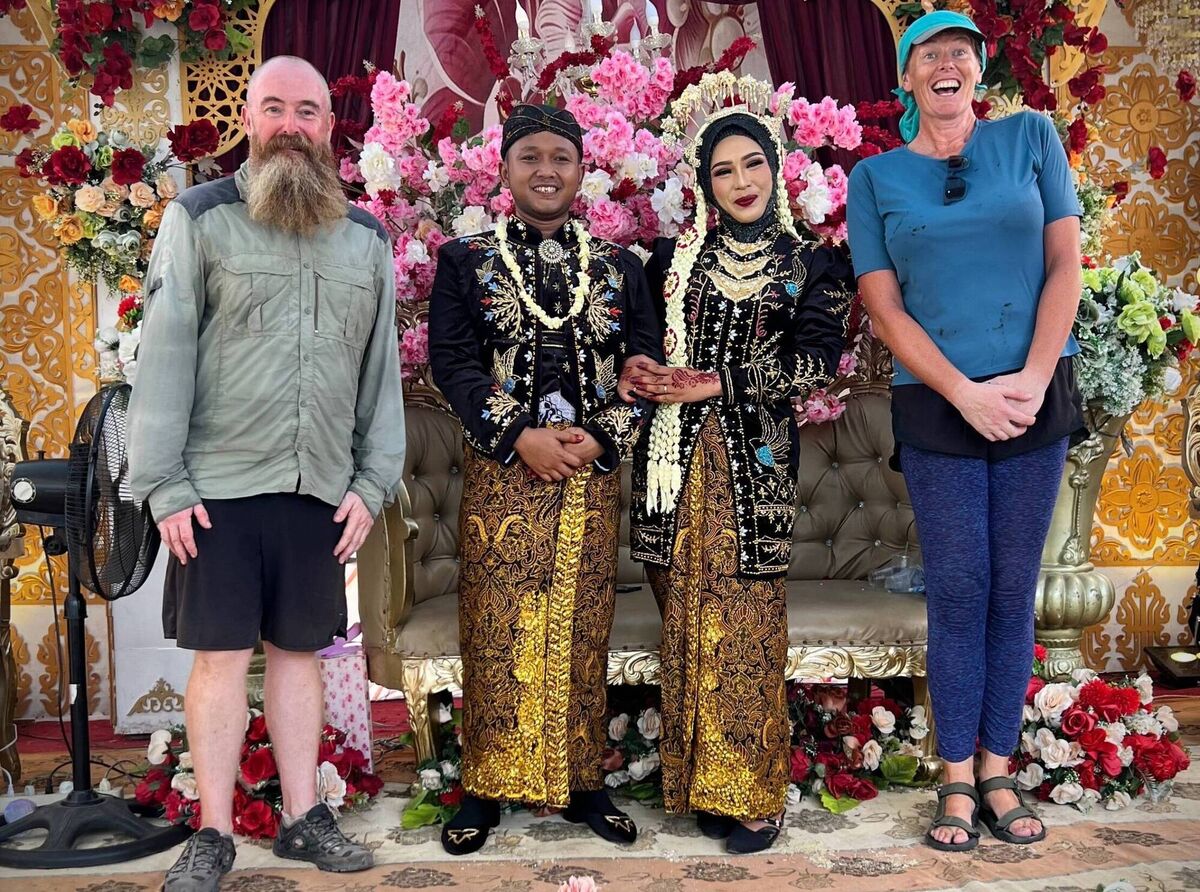
We had crossed the equator on the island of Sumatra, Indonesia, and were cycling back towards the town of Dumai to catch a ferry to Singapore. Passing one village, we got caught up in a queue of parking cars.
A lady pounced on us, and ushered us in some gates, to where a traditional ethnic Malay wedding was under way. Malay weddings are Muslim and so there was no drink involved, but the craic was mighty all the same.
A hoarde of hilarious aunties plied us with plates of fiery curry and rice. They laughed uproariously at our attempts to scoop the food with our fingers, the traditional way of eating in Indonesia.
The karaoke was in full swing and for one scary moment it looked like we were going to have to take part, but instead we were ushered onto a dais where the bride and groom, immaculately attired, presided over their party.
We found ourselves, sweaty and bedraggled, posing with the happy couple, in front of about 200 laughing guests.
We hope we haven’t made it into the couple’s wedding photo album, but it’s certainly a memory that will live with us forever.
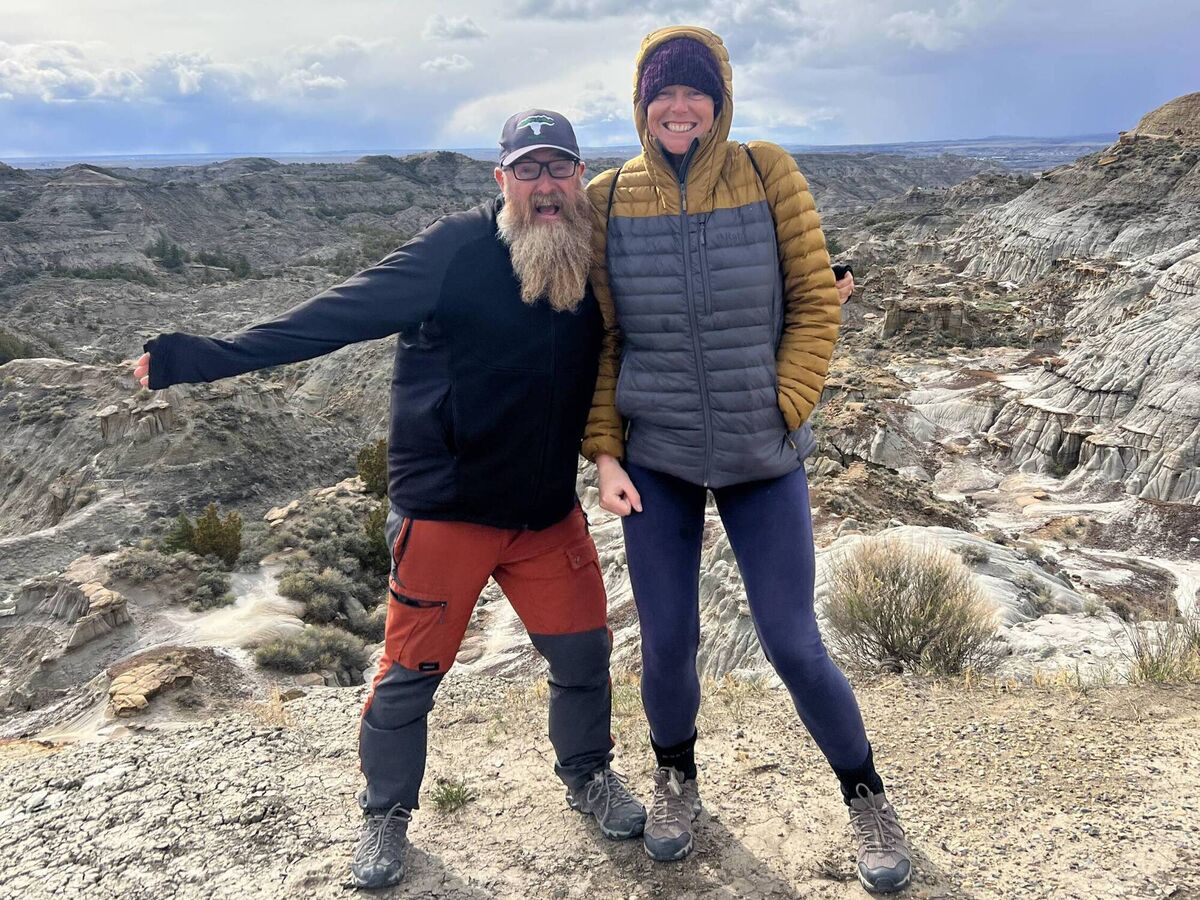
From truckers in the desert pulling in to hand us bottles of ice water to families opening their homes to us, this incredible journey would have been, if not impossible, then much more difficult and dangerous without the amazing people who have helped us along the way.
A few days ago, we got chatting to our waiter in a cafe near Des Moines, Iowa. He was a keen cyclist and delighted to hear about our adventure. When we went to pay our bill, not was there no charge for our lunch, but the chefs had made us some sandwiches to take with us for later.
In Japan, an old lady pulled in off the road and gave us some boxed snacks that were clearly her own. In Kazakhstan, a family spontaneously invited us to stay in their house, and let us sleep in the room with aircon while they moved into a different room. These examples are a drop in the ocean.
It’s far too easy to see the world in terms of divisions and catastrophes, but everywhere we’ve been, the vast majority of people have been friendly, curious and very, very kind.
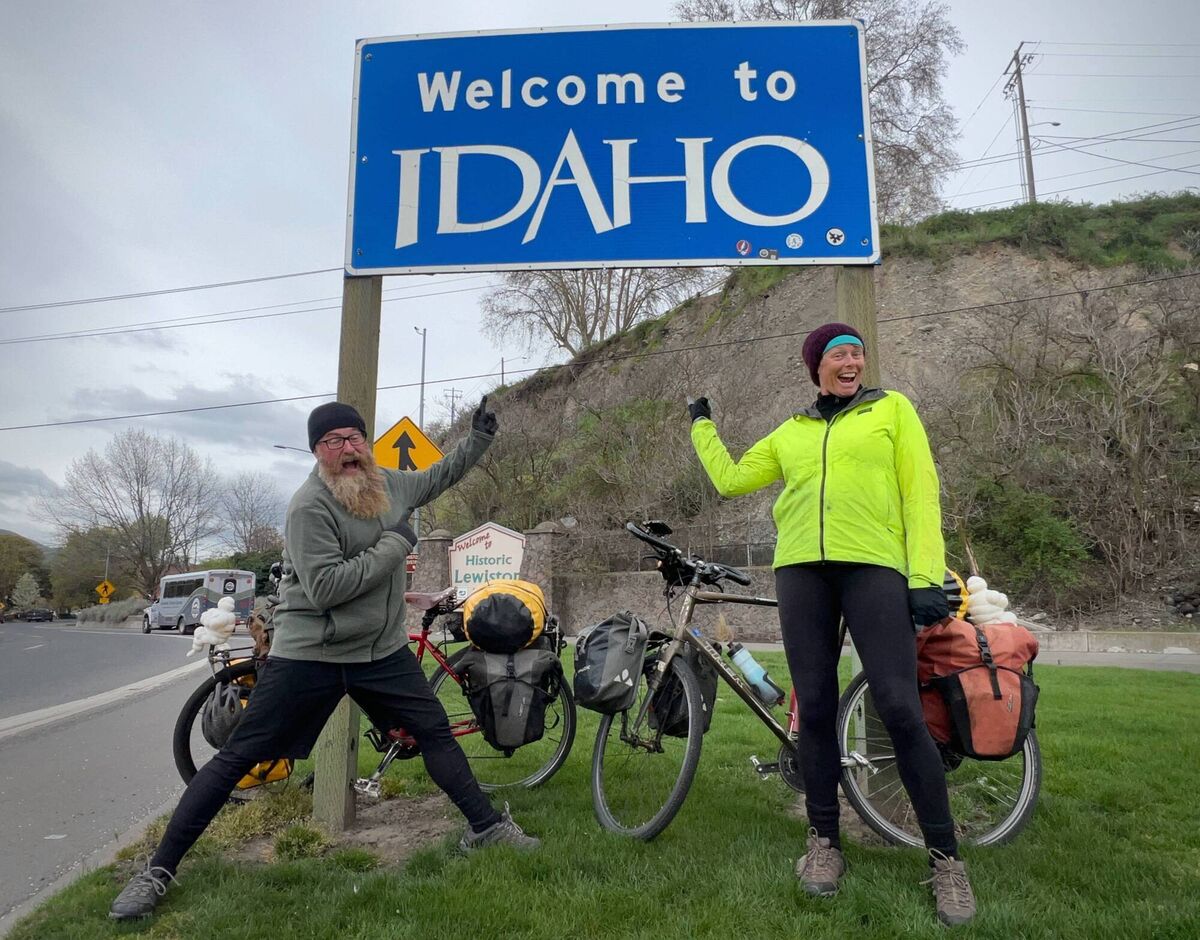
A lot of people might be surprised to hear it, but cycling in the US is one of our biggest challenges of this journey.
The car-dependent infrastructure, the big distances between facilities, cities with crime problems, and the cost of food and accommodation were just some of the worries we had before we arrived, and there’s an element of truth to all of them.
But for all the challenges, it’s been eye-opening and rewarding. We’ve met as much kindness here as we have anywhere else in the world, from people on both sides of the yawning political divide.
We’re meeting a lot of people of Irish descent and as we move east towards New York and Boston, we know this will happen more and more. America celebrates 250 years of independence this year, and there’s no better time to explore this huge country.
CONNECT WITH US TODAY



Be the first to know the latest news and updates