Pubs are often the heart of rural communities — why is the Government making it so hard to run them?
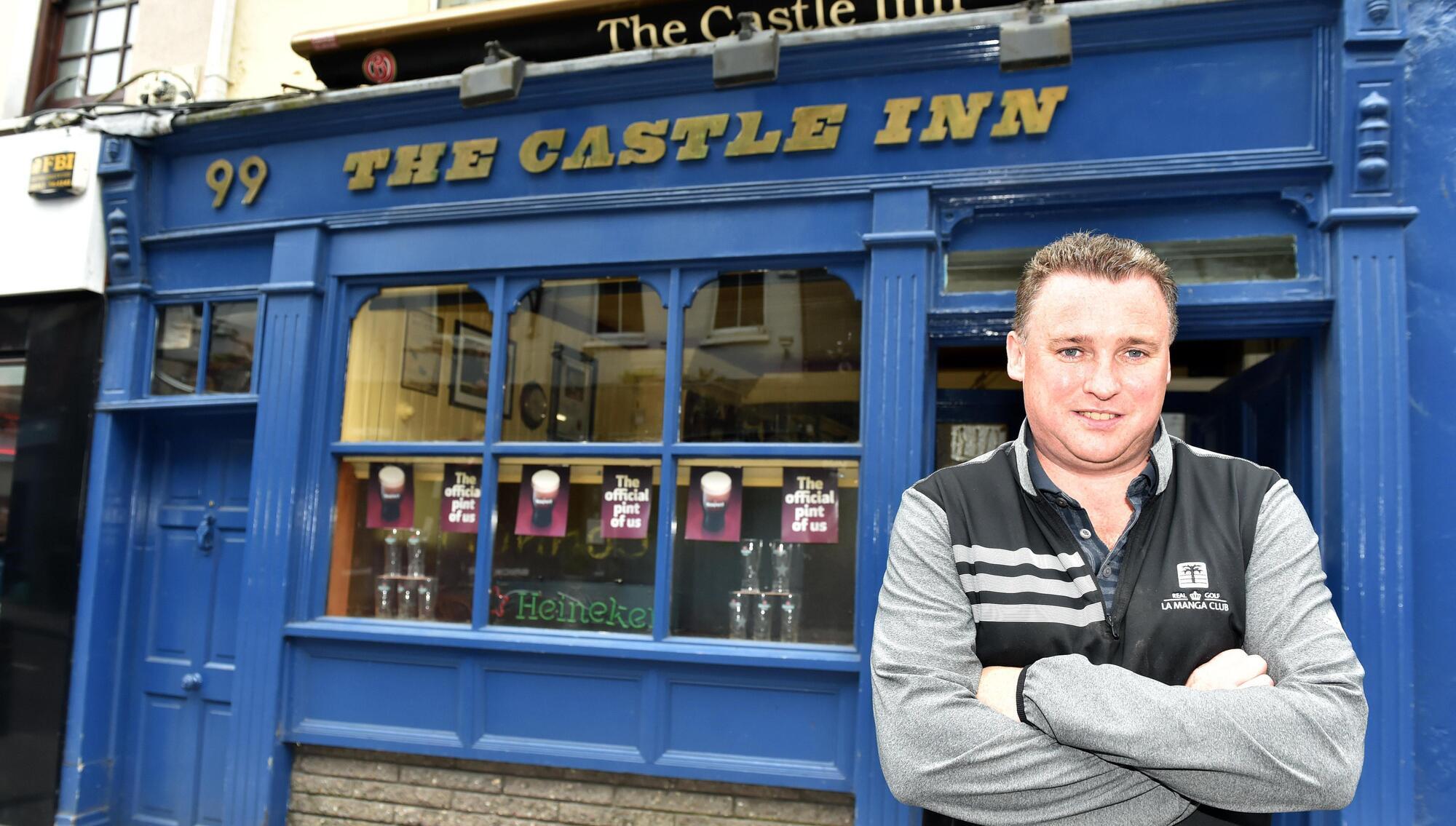
Michael O'Donovan of the Castle Inn, 99 South Main Street, Cork City. Picture: Eddie O'Hare
Before we talk about tax, wages or the price of a pint, we should start with the people behind the bar.
The staff who work in Ireland's pubs are the heart of our trade. They welcome regulars by name, create safe spaces for communities to gather, work unsociable hours, and are often the difference between an ordinary pub and one people keep coming back to.
As publicans, we want to pay our staff well, retain them, and recognise the value they bring every single day.
But when Government mandates wage increases that significantly outpace inflation without providing corresponding support for small businesses, particularly traditional pubs that don't benefit from the recently reintroduced 9% VAT rate, it creates consequences that are impossible to ignore.
For many publicans, the cost of above-inflation increases in minimum wage (which have driven knock-on increases across other pay grades) has become one of the fastest-growing operating costs. Over the past five years, average wage costs have increased by about 40%, alongside electricity increases of approximately 70% and a 40% increase in water charges.
Those pressures show little sign of easing. With media reports now suggesting a further above-inflation increase in the minimum wage, alongside speculation of possible increases in alcohol excise in Budget 2027, many publicans fear additional Government-imposed cost increases will trigger an avalanche of pub closures across rural Ireland.
Do we increase the price of a pint, even further than our suppliers have done so previously? Do we reduce opening hours? Do we cut staff hours? Or do we close altogether?
Read More
None of these options benefit customers, employees or communities.
Too often, public debate assumes any increase in the price of a pint is simply a commercial decision made by publicans. In reality, much of it reflects rising costs that originate elsewhere. If Government policies increase the cost of employing people, keeping the lights and the fridges on, insurance on the premises, and paying hefty rates and utility bills, those costs will eventually appear somewhere else.
That is why the conversation shouldn't simply be about wages. It should be about balance.
Government has already recognised hospitality businesses needed support by restoring the 9% VAT rate for food services. That decision is welcome. But it leaves behind a large part of Ireland's pub sector. About two-thirds of rural pubs do not serve hot food and therefore, receive no benefit at all from that measure.
These are the pubs that define rural Ireland.
They sponsor local sports clubs. They host charity fundraisers. They provide meeting places, music sessions, retirement gatherings, funerals and celebrations. During storms and power outages they frequently become informal community centres where neighbours gather, phones are charged and information is shared. They are far more than licensed businesses.
Yet they continue to disappear.
More than 2,200 pubs have closed since 2005, with closures now running at about 128 every year.
Governments elsewhere are already recognising the need to support the pub sector. In the UK, prime minister Andy Burnham recently announced a further 20% reduction in business rates for pubs, describing the measure as "a first step" in supporting an industry that sits at the heart of communities.
That is why the Vintners' Federation of Ireland has proposed an on-trade sustainability scheme.
It is a targeted tax credit linked to verified purchases of draught beer and cider. It would apply to pubs whether they serve food or not, be capped to focus support on smaller premises, and could either offset tax liabilities or be paid where necessary. The estimated annual cost is €75m.
Importantly, it recognises something Government already accepts in other sectors.
Ireland already uses refundable tax credits to support industries ranging from film production to gaming. If tax credits are considered an appropriate way to protect sectors that deliver economic and cultural value, why shouldn't similar thinking apply to pubs that underpin the social infrastructure of thousands of communities?
This is not about asking Government to freeze wages or abandon workers. Publicans understand better than most that good staff deserve good pay.
If that balance isn't found, there are only two likely outcomes.
The first is that the price of a pint continues to rise.
The second is that more pubs close.
Neither outcome serves the public interest.
Budget 2027 offers an opportunity to avoid both.
Supporting Ireland's pubs is about recognising they remain significant rural employers, tourism assets, community spaces and places where social connections are built every day.
If Government wants to preserve those benefits while ensuring workers benefit from a real living wage, it needs policies that support both.
- Michael O'Donovan runs The Castle Inn in Cork City and is the President of the Vintners' Association of Ireland
CONNECT WITH US TODAY



Be the first to know the latest news and updates