Jennifer Horgan: We need to look at arts vouchers for teens through an equality lens
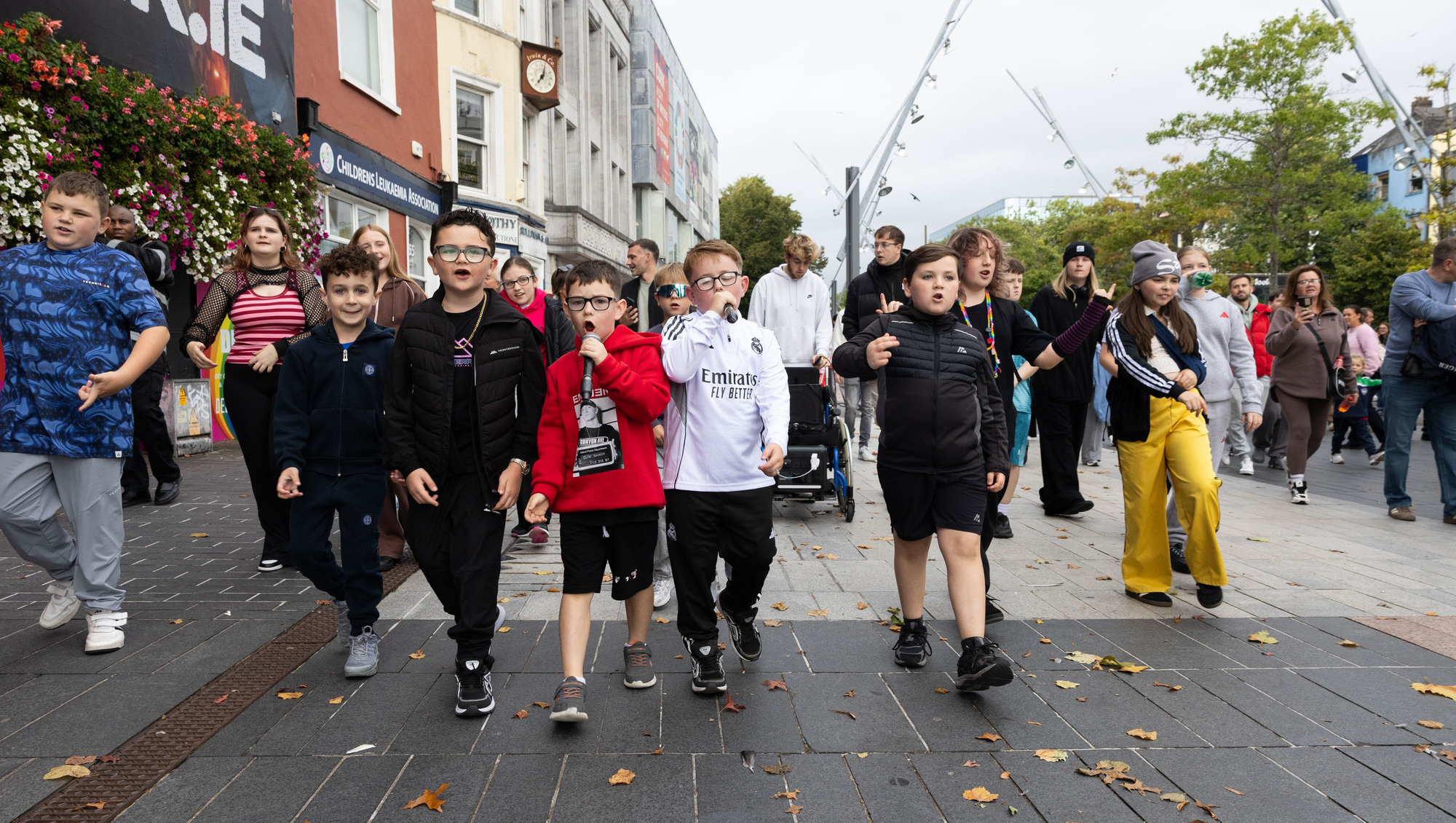
The Kabin Crew Juniors performing at the Rap A Mile event on Grand Parade for Culture Night in Cork City: The Government could put the millions into long-term initiatives and creative hubs like the Kabin in Knocknaheeny, a musical home for dozens of teenagers on Cork’s northside. Pictures: Darragh Kane

I appreciate the Government’s proposal to offer €100 vouchers to teenagers so they can access the arts. I just wish it could be more meaningful, more reflective of reality.
The measure, encouraging teenagers to visit theatres and cinemas, must be looked at through an equality lens. Why? Because to do otherwise is to ignore the reality of teenagers’ lives.
You see, while it is a parent’s job to do what is best for their child, it is the State’s job to do what is best for every child.
To put it plainly, little Johnny in Christians or in Blackrock College does not need a voucher to go to the cinema for a few weeks on the trot, but little Johnny attending a Deis school might need a great deal more than that.
He might need the State to cover transport costs to get there.
He might need the State to pay the cost of babysitting for his little brother.
A recent report published by the Joint Committee on Children and Equality on Child Poverty and Deprivation reveals a growing number of children experience the highest levels of poverty and deprivation of any age group in Ireland.
The rate of children at risk of poverty rose to 16.9% in 2025, with certain groups of children disproportionately impacted, including those living in lone-parent households, households affected by disability, and larger families with low incomes.
Few people acknowledge the impact of this deprivation when they dismiss young people, misbehaving young men in particular. It’s easier to call them scumbags and thugs. Against evidence and academic research, the kneejerk reaction to their criminality is to punish, punish more, punish for longer. We are Victorian in our mindset, which is fitting when you consider that for many teenagers, life is Dickensian.
In this context, in reality, a voucher for all teenagers is ill-conceived. This also relates directly to what we know about engagement with the arts. An Arts Council study in collaboration with the ESRI found household income often emerges as a barrier to participation in cultural activities after school.
It also found girls were more likely to read than boys, regardless of their socio-economic background. In addition, girls as young as five paint, draw, enjoy music or dance more than their male peers.
Teenagers may also need the Government to accommodate their artistic interests, not offer a paternalistic list of what culture should look like, and where they should go to find it.
The same ESRI study emphasises the importance of arts policy recognising the mosaic of ways in which children and young people express themselves and interact with the world of culture.
This should provoke further thought: do theatres, live music venues, and cinemas truly sum up the creativity of all teenagers? What if a teenager likes to paint or draw? This is the main creative outlet for many teenagers I meet. Might they not benefit from a voucher for art supplies?
Another teenager might like a quiet space to write poetry. Might they not benefit from a voucher allowing them to subscribe to a literary journal?
A teenager might like to create music. Might they not benefit from a voucher towards an instrument or for new strings or piano books?
A teenager may enjoy the storytelling aspect of Dungeons and Dragons. Might they not benefit from buying new games to play with their peers?
Spain acknowledges this diversity and offers young people more flexibility when it comes to spending their culture-card money; why can’t we? France allows young people to use the card to access workshops and art exhibitions; why can’t we?
Perhaps it is because we want to stimulate economic growth first and foremost, not young people. It is also worth noting our vouchers will offer far less money than those in Spain, France and Italy. Why so? Is it because our commitment to young people runs a little shallow?
It all smacks of a Government wanting to look to be doing something positive and generous. Similar to the hot meals initiative, it is all style and no substance, or at least not enough substance, not for many.
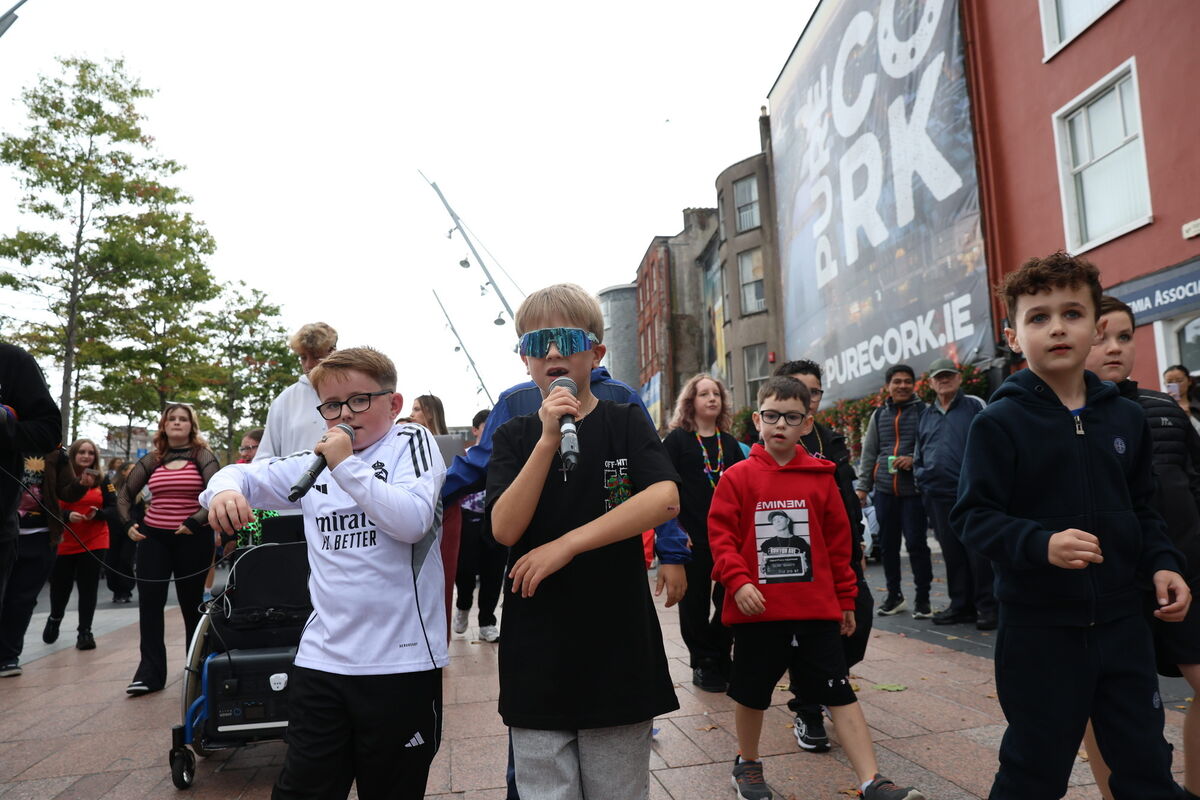
What might the Government do instead? They could give young people more creative spaces to inhabit in villages, towns and cities. They could meaningfully respond to the reality of inequality between teenagers.
It could put the millions into long-term initiatives and creative hubs like the Kabin in Knocknaheeny, a musical home for dozens of teenagers on Cork’s northside.
A comment made earlier this year by the creative director of the Kabin, Garry McCarthy, sums up why places like the Kabin hit the right mark, and why throwaway vouchers for all teenagers, sadly, won’t.
“If there’s any rule at the Kabin, it’s ‘use your time creatively’,” he said.
Creative time is something all teenagers deserve. One of the primary roles of the State must be to re-balance the impact of inequality and provide it.
This is why we need to target particular young people. It is why we have, and need, dedicated teachers in outstanding State schools. It is why we need committed policy makers and ethical politicians. The job of these neutral actors, these (ideally) virtuous professionals is to provide balance where there is none.
This is why we have Deis schools, community hubs and outreach centres in poorer parts of our country. In these areas, and for children without homes, or fleeing countries, not a penny of investment is wasted.
This is especially true of pennies spent on the arts, because the creative arts preserve human dignity; they offer teenagers the space to express, process and distil their life experiences, without heavy-handedness, without talk of trauma, wellbeing, addiction, and mental health.
The link between income and access to the arts is evidenced across every stage and screen. Research in the UK finds only 8% of artists come from working-class backgrounds. I doubt it is all that different here. Cillian Murphy, Shane MacGowan, Hozier, Bono, Bob Geldof, Anne Enright, Andrew Scott… So many of our most revered artists, even the rebels and the ragers, were born into middle-class families.
We need to address that fact with far more consideration if we are serious about young people engaging with the arts.
Certainly, we should aspire towards giving all teenagers a financial boost, once inequalities have been lessened and access to the arts is straightforward.
That is not our reality, not yet.
CONNECT WITH US TODAY



Be the first to know the latest news and updates