Irish Examiner view: Technology removes need for full autopsy
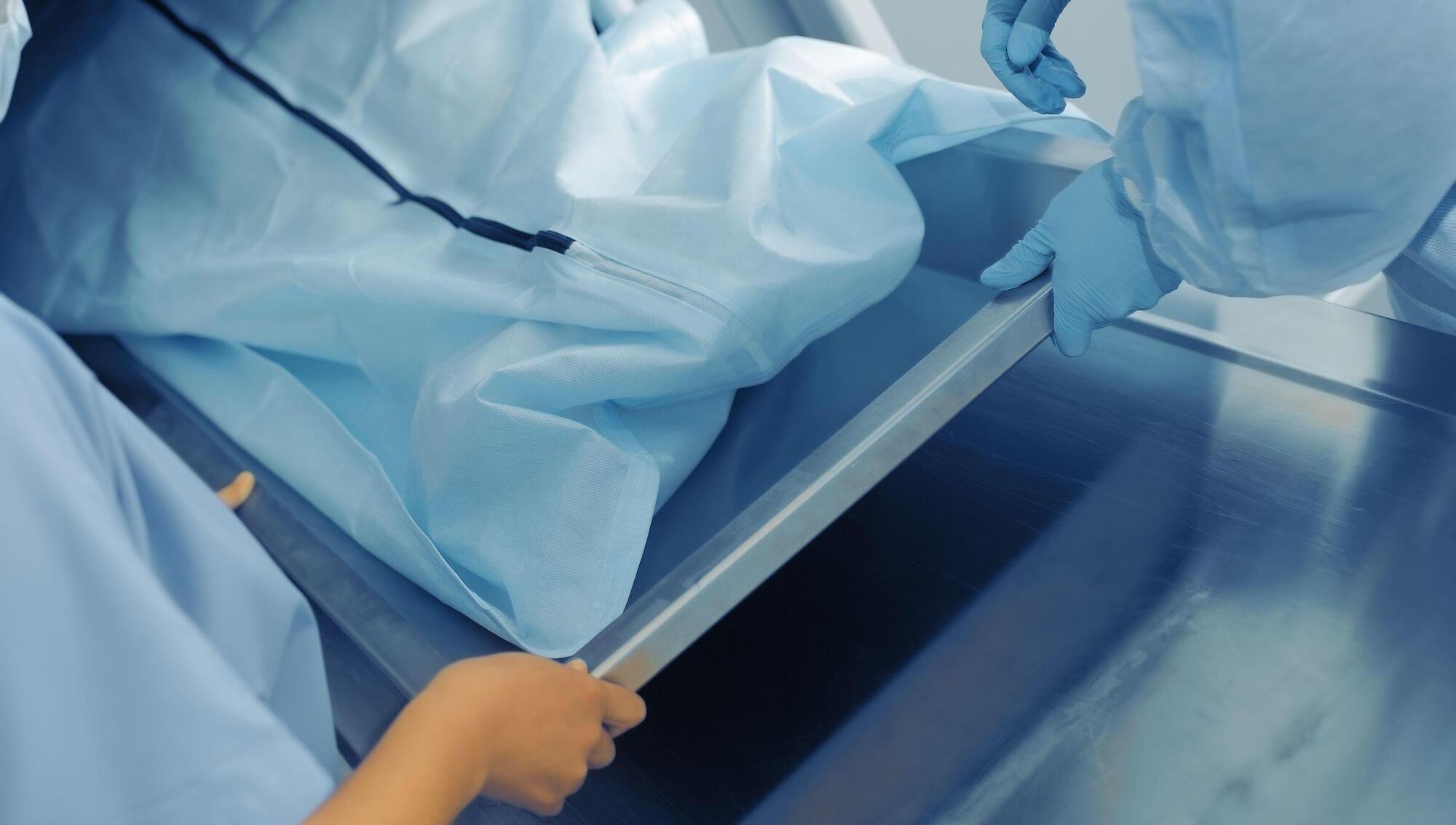
Irish post-mortem services have deteriorated greatly in recent years, partially due to the increasing need, recruiting issues, poor working conditions, and a simple lack of motivation within the system
A virtopsy procedure allows medics to pierce through skin, bones, and soft tissue to pick up on intrinsic details without the use of a scalpel.

A virtopsy procedure allows medics to pierce through skin, bones, and soft tissue to pick up on intrinsic details without the use of a scalpel.

The Irish Examiner has written editorials in recent days about how a rich country like ours still manages to fail certain sectors. This includes the education system failing to


resource schools to cater for students with special needs and, just last Saturday, the health system not taking proper
responsibility for our many nursing home residents.

In today’s newspaper we reveal how Ireland is now in danger of neglecting another sector of Irish society: The dead.

For months now, there has been a realisation that delays in autopsies are adding greatly to the pain of the families of those who have died in unexplained or other circumstances that require answers.

We know the HSE is struggling to recruit pathologists as well as struggling not to shutter hospital post-mortem facilities, and we need to come up with creative solutions to these pressing problems.

Technology is one way of doing so, it has emerged. For some time now, several other countries have been carrying out virtual autopsies — or “virtopsies” — and using CT (computed tomography) scanning, MRIs, or other virtual screening technologies to transition away from traditional dissection work.

A virtopsy procedure allows medics to pierce through skin, bones, and soft tissue to pick up on intrinsic details without the use of a scalpel.

Irish post-mortem services have deteriorated greatly in recent years, partially due to the increasing need, recruiting issues, poor working conditions, and a simple lack of motivation within the system.

The combination of these circumstances means that some Irish families are now forced to wait for anything up to 18 months for closure on loved ones’ deaths.

Patently, this is an unacceptable situation and one that needs immediate attention. If the adoption of modern technologies allows us to give those families the closure they need, then they should be embraced as a matter of urgency.

The Irish Coroner’s Service now carries out some 6,000 autopsies annually here, some 2,500 of which necessitate a further hearing in a Coroner’s Court.

If we can follow the example of cities such as Toronto, Zurich, or Melbourne and use MRIs and CT scans to determine the cause of death in some of these cases, then the need for full autopsies can be obviated.

That, in turn, can reduce the workload on pathologists and economise a system that, historically, requires digging through the finer details to get answers.

Virtopsies are not a silver bullet for an ailing post-mortem service, but rather a very helpful filtration system.

They provide both speed of processing as well as respect for the unfortunate deceased. They also provide solace for those whose religion condemns invasive autopsies.

Invariably, a good idea such as this is more than the sum of its parts and, in this particular instance, not only allows succour for families of the deceased, greater respect for the deceased themselves, but takes much pressure off the system itself. Seems like an obvious win-win.

Heatwaves are a lesson for climate deniers

The unseasonal heat afflicting large tracts of the northern hemisphere in recent weeks must surely be giving climate change deniers pause for thought.

Many of the events celebrating America’s 250th anniversary of independence had to be cancelled or postponed due to the extreme heat, Tour de France organisers considered cancelling stages because of it, hydration periods had to be introduced to all World Cup games, and wildfires raged across vast areas of Europe.

The world is, as Sean O’Casey might have had it, “in a state of chassis”.

That people across Europe are now actively reassessing their holiday plans, not to mention dashing to purchase air conditioning units in France, tells us that what we are experiencing is not at all normal.

Although we here in Ireland have yet to experience some of the extremes seen elsewhere — the one week we did have a bout of hot weather nearly stalled the country completely — there can be little doubt we need to pay more heed to the whole climate change debate.

The coming week could see us again reach “heatwave” status, according to Met Éireann, with the potential for water usage restrictions and a need to pay special attention to those such as the elderly.

But the bigger picture is that the heat domes afflicting pretty much everywhere north of the equator indicate clearly that the Earth is in a period of extreme weather change, and action needs to be taken to educate people fully as to why this is happening.

While climate deniers cling desperately to their tired tropes, their arguments clearly make no sense. Sadly, the fact that some of them occupy high office in various parts of the globe makes that process all the more difficult.

Altar beliefs

Pope Leo XIV has drawn admiration from across the globe since assuming the papacy, showing himself willing to call out issues such as racism, attitudes to immigration, warmongering, and genocide when he feels it is necessary.

However, a potential schism within the Catholic Church is drawing unwelcome publicity for the Vatican after the Pope excommunicated the members of a breakaway sect which decided to consecrate its own bishops.

The Society of St Pius X (SSPX) yesterday celebrated a Latin Mass at the former Our Lady of the Rosary Church in Shanakiel, as it normally does.

Some 100 congregants attend Mass in Shanakiel every week, and they soon could find themselves in Rome’s crosshairs if they continue to refuse to accept Catholic Church
primacy in all matters episcopal.

Your home for the latest news, views, sports and business reporting from Cork.

More in this section

Revoiced

Newsletter

Had a busy week? Sign up for some of the best reads from the week gone by. Selected just for you.

Cookie Policy Privacy Policy Brand Safety FAQ Help Contact Us Terms and Conditions

© Examiner Echo Group Limited