Ireland’s EU presidency could cost €400m. Is the influence gained worth the price?
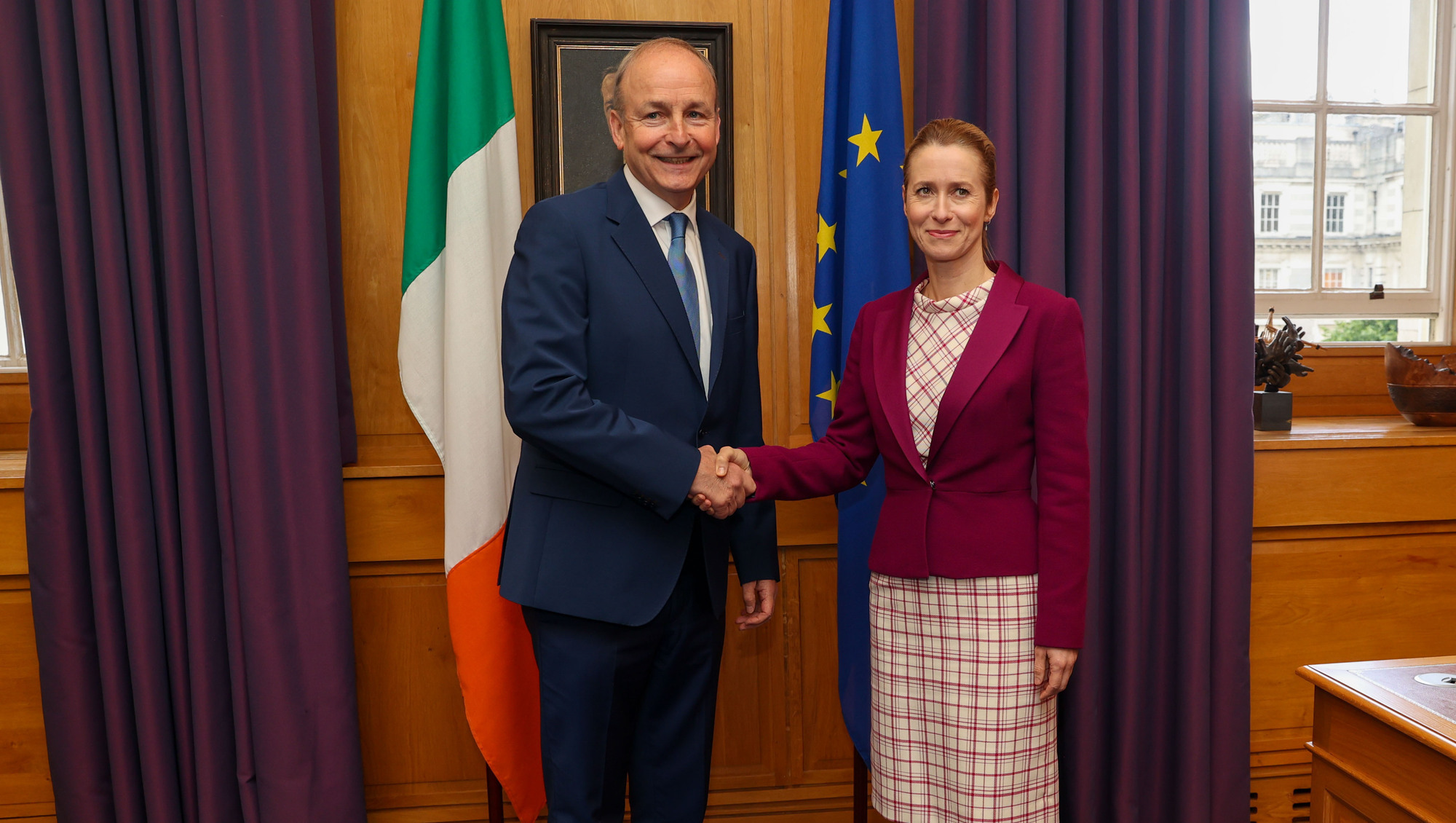
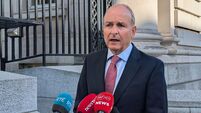
Taoiseach Micheál Martin meeting European Commission vice-president Kaja Kallas in Government Buildings on Tuesday.
In January 2013, Ireland was still living in the shadow of the crash. The bailout had not long ended. Public spending was under scrutiny. Ministers spoke the language of caution and restraint. When Ireland assumed the rotating presidency of the Council of the European Union that year, the Government was so conscious of optics that delegates were famously served tap water at official events.
The final bill came in at just over €50m.
Thirteen years later, Ireland is preparing to take the presidency again. This time, the cost is expected to exceed €293m, with some estimates suggesting the final figure could approach €400m once Garda security operations, infrastructure works, and other associated costs are included.
At a time when the State is struggling to build houses, expand public transport, and reduce hospital waiting lists, the obvious question is whether six months of European meetings can possibly justify such a price tag. Yet the more interesting question may be why the cost of running a presidency has risen so dramatically in the first place. The answer says less about Ireland than it does about Europe.
In 2013, Ireland chaired an EU that was emerging from the financial crisis. In 2026, it will chair a Union confronting war on its borders, rising geopolitical tensions, economic competition from the US and China, cybersecurity threats, energy vulnerabilities, and the biggest enlargement project in a generation.
The presidency is more expensive because Europe itself has become a far more complicated place to govern. For most citizens, the presidency remains one of the least understood responsibilities undertaken by the State.
Read More
The popular image is of ministers arriving at summits, posing for photographs, and attending state dinners. The reality is considerably less glamorous.
For six months, Irish ministers and officials will chair hundreds of meetings, negotiations, and working groups. Every major legislative proposal moving through the Council of the European Union will pass through Irish hands. Officials become mediators, negotiators, and brokers, tasked with finding agreement among 27 member states whose interests often diverge sharply.
"The most important work is the quiet work that happens behind the scenes," says Professor John O'Brennan of Maynooth University.
Success is rarely measured by dramatic announcements. More often, it is measured by whether officials can narrow gaps between countries that disagree over agriculture, technology regulation, trade, migration or defence.
It is painstaking work, but it is also where influence is exercised.
That influence matters because Ireland's presidency arrives at a moment when Europe is making decisions that will shape the next decade.
Among the most significant discussions due to begin during Ireland's term are negotiations around the next multiannual financial framework — the seven-year EU budget that will run beyond 2027.
That budget determines the future of agricultural supports, regional development funding, research programmes, and industrial investment. For Ireland, those discussions are hardly academic.
The Common Agricultural Policy remains one of the most important channels of European funding into rural Ireland. Research funding has become increasingly valuable to Irish universities and technology sectors. Regional funds continue to underpin infrastructure and development projects throughout the country.
Neil Willoughby, Ibec's director of EU and international affairs, believes the presidency offers Ireland a rare opportunity to help shape those conversations from the outset.
For six months, he argues, Irish officials will effectively occupy the chair of Europe's negotiating table.
That does not mean Ireland gets everything it wants. Presidencies are expected to act as honest brokers rather than national advocates. But it does mean Irish priorities have a better chance of remaining visible as debates evolve.
For business groups, another major focus will be competitiveness. Mario Draghi's landmark report on Europe's economic future warned that the bloc risks falling behind the US and China unless it becomes more productive, innovative, and investment-friendly. The report has quickly become one of the defining reference points in Brussels.
Ireland's presidency will fall during the period when many of those recommendations are being debated.
Willoughby argues that this presents an opportunity to push for reforms that improve Europe's ability to attract investment, reduce unnecessary regulatory burdens, and strengthen economic resilience.
Whether those ambitions can be realised within six months is another question.
O'Brennan is sceptical that dramatic breakthroughs are likely.
The presidency, he notes, is often misunderstood as a period during which countries can transform Europe. In reality, progress is incremental. Most major initiatives take years to negotiate and implement.
"The presidency has been slightly blown up before it has even begun," he says.
Its real value lies not in producing grand bargains but in ensuring important discussions continue moving forward.
Yet it may not be economics that ultimately defines Ireland's six months in the chair.
Security and defence increasingly dominate the European agenda. Russia's invasion of Ukraine has transformed how European governments think about resilience, infrastructure, cyber-security, and strategic autonomy. Concerns that once belonged to defence ministries now extend into economic policy, transport planning and energy systems.
Ireland's presidency will take place against that backdrop.
O'Brennan believes there is a strong possibility that Ireland could face attempts at disruption or provocation during the term.
"The Russians see Ireland as one of the softer underbellies of European security," he argues.
Whether those threats take the form of cyberattacks, disinformation campaigns, or other forms of interference remains impossible to predict. What is certain is that protecting visiting ministers, officials, and institutions has become significantly more complicated than it was in 2013.
This security environment helps explain why so much of the presidency budget is now devoted to Garda operations, cybersecurity capabilities, and infrastructure protection.
The irony is that issues once viewed as separate from economic policy are now increasingly intertwined with it.
Business groups speak as readily about cyber resilience, energy security, and supply chain protection as they do about taxation or regulation.
What governments once considered security spending is increasingly viewed as economic spending too.
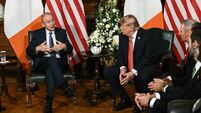
There is another challenge looming over Ireland's presidency. For the first time in decades, Europe finds itself navigating a more unpredictable relationship with the US.
Trade disputes, technology regulation and industrial policy have all become sources of friction. Ireland's position is particularly delicate given the importance of American investment to the domestic economy and the concentration of major technology companies here.
Should tensions between Brussels and Washington escalate during the presidency, Ireland could find itself in an uncomfortable position — committed to European decision-making while remaining economically intertwined with many of the firms most affected by those decisions.
No previous Irish presidency has operated under quite these conditions. All of which raises the question of whether the expenditure is justified.
The figure itself sounds enormous — €400m is gargantuan by any measure.
Yet context matters. Ireland has been one of the principal beneficiaries of European integration since joining the European Economic Community in 1973. Direct funding alone has amounted to tens of billions of euro. The benefits derived from membership of the single market are larger still.
Measured against annual Government spending, the cost of the presidency remains relatively modest. Measured against the influence it affords during a pivotal moment in European politics, many argue it is a bargain.
Small states, after all, do not often find themselves at the centre of global decision-making. For six months next year, Ireland will. The contrast with 2013 is striking. Then, the presidency was largely about demonstrating competence after economic catastrophe. Ireland wanted to show that it remained a functioning, credible European state. The challenge in 2026 is different.
Europe is entering an era defined by security concerns, geopolitical competition, and economic uncertainty. Decisions taken over the coming years will shape everything from defence co-operation to energy policy, industrial strategy, and future EU enlargement.
Ireland cannot determine those outcomes on its own.
But for six months, it will have a seat at the head of the table. Whether that proves worth €400m is ultimately a political judgment. The stronger argument may be that moments like this are precisely why countries invest in diplomacy in the first place.
“The Cypriot presidency was a success,” says Willoughby, “but the challenges they faced in terms of the evolving crisis in the Middle East and their proximity to it were considerable.
“Ireland’s presidency is an opportunity to complete a lot of work that has already started this year. We are well equipped to do it.”
What will success look like? Some would argue a presidency devoid of external drama will signal a country mature enough to handle the security pressures of the presidential burden.
Others, appalled at the price tag, might hope for a presidency being landed under budget.
The latter seems unlikely.
As one Brussels insider noted, “It’s Ireland’s turn to take Europe out to dinner. Best not look at the bill as you’re paying.”

CONNECT WITH US TODAY



Be the first to know the latest news and updates