Sinéad Gibney: The FAI is hiding behind FIFA on Israel game
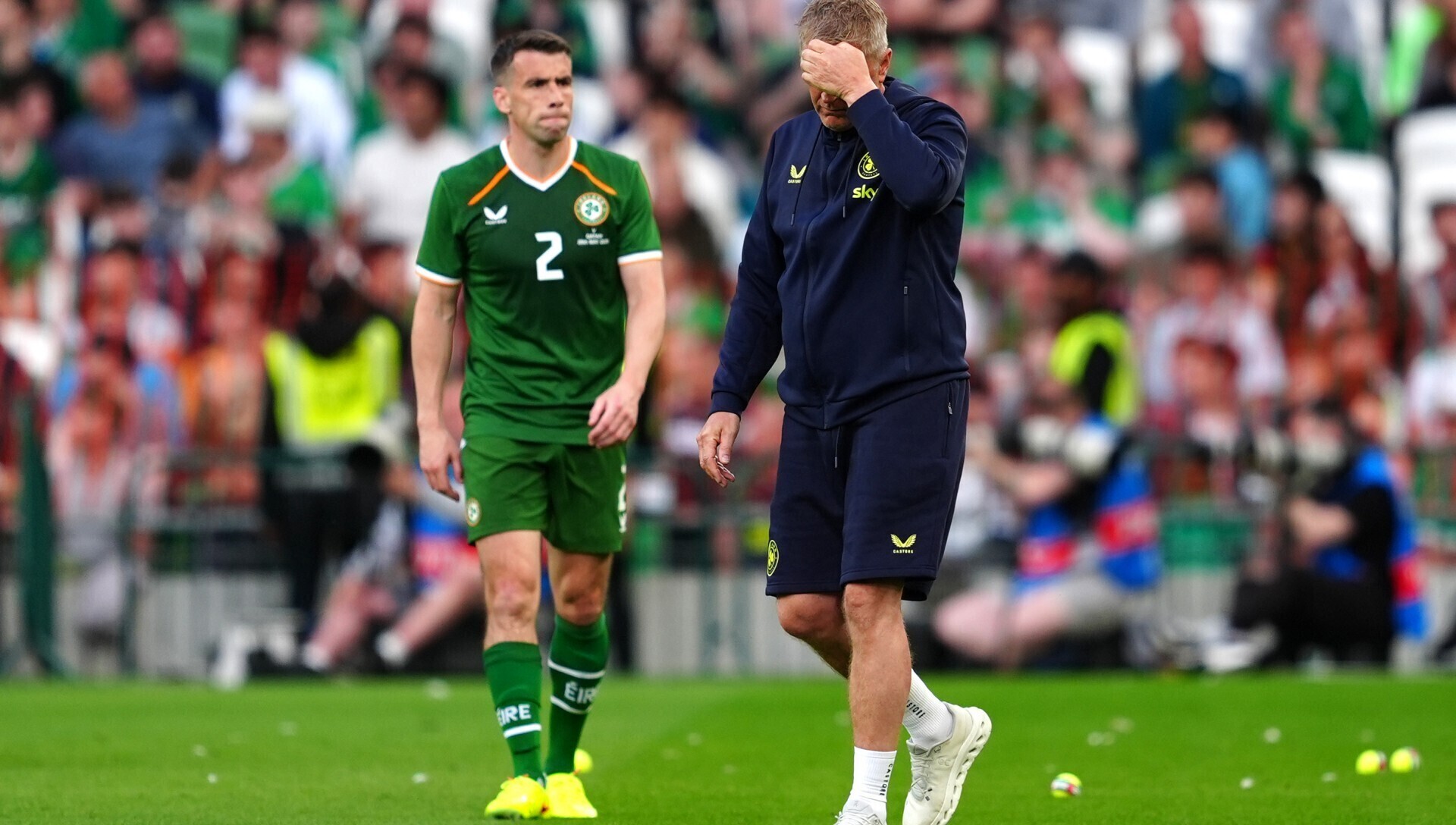
Seamus Coleman (left) and Heimir Hallgrimsson react as a volley of tennis balls are thrown on to the pitch during the friendly against Qatar at the Aviva in May. The Government needs to listen to the palpable anger from the public and from leaders in our sporting and footballing communities. Photo: Brian Lawless/PA
Initially, the organisation said it had “no choice” but to fulfil the fixture, and that the home game would be played in Dublin, with the away leg in a neutral venue. Yesterday, it was reported that the FAI will ask UEFA to switch the 'home' game to a neutral venue, possibly in Hungary.
This has placed our players in an incredibly difficult situation. Should the fixture proceed, they will have to make individual and collective decisions about whether or not to step onto that pitch. The sheer reality of what that would look like – an Irish team standing side by side with an Israeli outfit – has come sharply into focus.
The prospect of standing in line while the anthem is played - no matter what country that happens in - and the flag flown, of a genocidal regime is surely weighing heavily right now on the shoulders of Heimir Hallgrímsson’s men.
Israel is conducting a brutal, calculated exercise of ethnic cleansing in Palestine, the culmination of decades of building up an oppressive regime. The removal of Palestinian people from their land is by death or forced migration.
Cultural genocide is a part of this campaign. The systematic destruction of elements of cultural tradition can be seen again and again.
Israel has confiscated traditional Palestinian Tatreez embroidery works; it has targeted academic institutions; destroyed sports infrastructure; and killed dozens of players. Just this week, Israeli authorities detained a member of the Palestinian women’s football team.
What angers people most, what sickens them, is the impunity. For one state to behave in this way is abhorrent, but for the rest of the world to sit and watch without a meaningful response is complicity, spelling the end of any semblance of global order, particularly when we view the response to other aggressors like Russia in such stark contrast.
Israel has the right friends and influence to ensure an impotent European reaction to its crimes. And that includes Ireland.
In the face of such a weak response from governments the world over, the Boycott, Divestment and Sanctions (BDS) movement is crucial. This means an economic, cultural and, yes, sporting boycott.
A decision by Ireland not to take on Israel in the UEFA Nations League would be a watershed moment, just like it was a few years ago when Russia was excluded from FIFA and UEFA competitions after Sweden and Poland refused to play them.
The Government will have an opportunity to do the right thing when the Dáil debates a Social Democrats’ motion to Stop the Game on Wednesday.
Having stated during an Oireachtas committee meeting last week that they won’t personally attend the matches — but that they support the FAI’s position to go ahead with the fixture — it will be interesting to see how sports ministers Patrick O’Donovan and Charlie McConalogue will respond to our motion.
So far, regrettably, public opposition to the game going ahead doesn’t seem to have made a dent in their resolve. Week in, week out, we see fans in the stands at matches holding Palestine flags and calling for a boycott.
The Government needs to listen to the palpable anger from the public and from leaders in our sporting and footballing communities.
There are a range of options available to the Government:
- they could commit to covering any financial loss incurred by the FAI;
- they could ratify the UN Convention Against Apartheid in Sport;
- they could garner support from other scheduled or potential sporting opponents of Israel in this competition and elsewhere.
If the match was taking place in Dublin, the option of seeking to deny entry to Israeli players may have been available, although difficult to enforce, because Israel enjoys visa-free travel with Ireland. This is in stark contrast to the unfair treatment of Palestinian children who last year were refused visas by the Irish State to play Gaelic Football here. While the Tánaiste claimed this was for child safety reasons, we later learned that Department of Justice officials feared members of the delegation would attempt to outstay their visas.
We can’t expect national governing bodies in the sporting world to act unless they see governments take a stand first. The Irish Government repeatedly tells us it is a leader in its response to Palestine, but that line wore thin a long time ago.
Despite offering strong words of condemnation, the Government has failed to match this with action.
This genocide is bigger than football. Right now, the FAI is hiding behind FIFA’s decision, and the Government is hiding behind both.
It’s time for our political leaders to step up and Stop the Game.
- Sínead Gibney is a Social Democrats TD for Dublin Rathdown and is the party’s spokesperson on sport.

CONNECT WITH US TODAY



Be the first to know the latest news and updates