Homeless figures don't count all those without housing 

Our definition of homelessness leaves out many single adults who are sleeping in cars, couch-surfing or leaving prison or hospital without a home, writes Dermot Kavanagh of Cork Simon
Homeless figures don't count all those without housing 

The woman moving between the sofas of friends and family for the third month running does not appear in any official figure. File picture

Mark became homeless at 19 and ended up living in a broken-down car. He has epilepsy, and the lack of sleep meant he was constantly seizing. There were rats under the bonnet and mice in the roof space. 

He slept light, sitting up at every noise to see who was outside. Strangers bullied him, and one opened the door and tried to drag him out. In winter, he would wake to a sheet of ice on the inside of the windscreen, his blankets damp, sick more often than not. Two dogs kept him company. He thought, more than once, about ending it all.


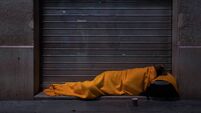
What Mark did not do, in all that time, was appear in any official homelessness statistics. He had not presented to a local authority. He was not in emergency accommodation, and was not sleeping on the streets. 

Though sleeping in a car falls within accepted understandings of rooflessness, he was never recorded by the systems that shape how Ireland measures, and responds to, homelessness.

And nobody knows how many others there are like him.

This week, Cork Simon publishes the first of two research reports by Joe Finnerty of UCC's School of Applied Social Studies. It is called Housing Counts, and it asks a question that sounds technical but is in fact deeply human: who are we counting as homeless in this country — and who are we leaving out?

The answer, the research finds, is that we are leaving out a great many people. In Cork Simon's 55-year experience, the group most consistently left out are single adults. People facing homelessness alone.

The reasons are national, not local. Ireland's official definition of homelessness is anchored in the Housing Act 1988, and has come to be interpreted narrowly. 

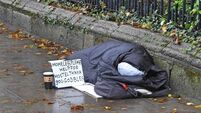
In practice, it is reflected in data that largely captures those in emergency accommodation and some who are sleeping rough. But the man living in a broken-down car may never be encountered during a street count. The woman moving between the sofas of friends and family for the third month running does not appear in any official figure. 

Nor does the person leaving prison or hospital with nowhere to go, who cycles back through a hostel, back through an A&E, back through a Garda station, never staying anywhere long enough to be recorded as homeless in any one place.

In several other European countries — Sweden, Norway and Switzerland among them — the picture captured is broader, extending to situations like sofa-surfing and involuntary sharing. Here, it is not. 

Local authorities the length and breadth of the country, in Cork and elsewhere, are working within a national framework that simply was not designed to see them.

Single adults, already representing about 85% of homeless households in emergency accommodation in the South West, are the clearest casualty of this gap. 

And yet they are also the group most likely to disappear from view before they ever reach those services. Visible only when they get to homeless services, invisible in the period when prevention might still have been possible. 

Our outreach and emergency teams meet these men and women every week. Some may appear on social housing waiting lists, but under a different measure where the severity of their housing exclusion is far less visible. The gap is not always an absence of data — sometimes it is a failure to see what the data is telling us.

This matters, and not only as a point of statistical accuracy. There is a simple line at the heart of Joe Finnerty's report that we keep coming back to: what is not named, defined and measured is not noticed. And what is not noticed does not get a policy response. 

Dermot Kavanagh: 'At Cork Simon, we believe in people. And we believe that people experiencing homelessness — particularly the men and women facing it alone, deserve to be seen.' Picture: Alison Miles /OSM 

A shelter system that is full cannot, by definition, register a rise in demand. A definition that excludes whole categories of need cannot reflect the true shape of that need. National decisions about funding, about prevention, about the design of services, are made on the basis of the numbers we have. If those numbers are partial, the response will be partial too. The people who fall outside the count fall outside the plan.

In Mark's case, what eventually changed things was not a system, but a neighbour. Someone noticed him in that car and picked up the phone to Cork Simon. Our outreach team went out, brought food and dry bedding, and stayed alongside him until he found somewhere safe and affordable to live. 

"I was lost for so long," he told us afterwards. "I was reaching out to all these people and everyone was telling me, 'we can't help you'." 

What made the difference, in his own words, was being seen. We cannot build a country's response to homelessness on the hope that someone, somewhere, will happen to look out a window at the right moment.

In Cork, the consequences of that gap are sharpening. Rents in the private rental sector keep climbing. The time people spend waiting on social housing lists remains far too long. The pressure on our emergency services keeps growing too. And the people walking through our doors are increasingly people the system did not see coming — because the system was not set up to see them.

The report does not stop at diagnosis. It offers a framework — drawing on the European ETHOS typology, on a five-stage model of homelessness prevention, and on a fresh look at how organisations actually count the people who come to them, that maps the full terrain of severe housing exclusion. 

It places what we currently measure inside what we could measure, and makes the gaps visible — not only in who we are failing to count, but in how we track successful exits from, and effective prevention of, homelessness. 

And it points towards something practical: the possibility of a Cork Observatory on Severe Housing Exclusion — a city-level home for housing data, modelled on initiatives in other European cities. 

A place where the full picture could be assembled, kept current, and made useful — not just for researchers, but for deciding where to place services, when to intervene earlier, and how to spend limited public money more effectively. A model that, if it works, could be of use well beyond Cork.

That work begins in earnest with phase 2 of this research, due in September, which will bring the framework to Cork's key organisational stakeholders — statutory bodies, NGOs, advocacy groups and service providers — to ask what's feasible, what's worth measuring, and what better data infrastructure might actually look like.

That is a Cork contribution to a national conversation, and it sits naturally with this city's identity as a Unesco Learning City and a UN Healthy City — and with Ireland's commitment, under the Lisbon Declaration, to end homelessness by 2030.

At Cork Simon, we believe in people. And we believe that people experiencing homelessness — particularly the men and women facing it alone, deserve to be seen. Seen by the services meant to support them. Seen by the policies meant to prevent their situation in the first place. Seen by the data on which both depend.

Better measurement will not, on its own, end homelessness. But without it, the people most in need of help will keep slipping through the gaps — unseen, uncounted and unsupported. Mark almost did. We can do better than that. The conversation about how starts here.

  • Dermot Kavanagh is chief executive of Cork Simon

x

More in this section

Revoiced

Newsletter

Had a busy week? Sign up for some of the best reads from the week gone by. Selected just for you.

Cookie Policy Privacy Policy Brand Safety FAQ Help Contact Us Terms and Conditions

© Examiner Echo Group Limited