Adi Roche: Forty years have passed but Irish commitment to Chornobyl remains
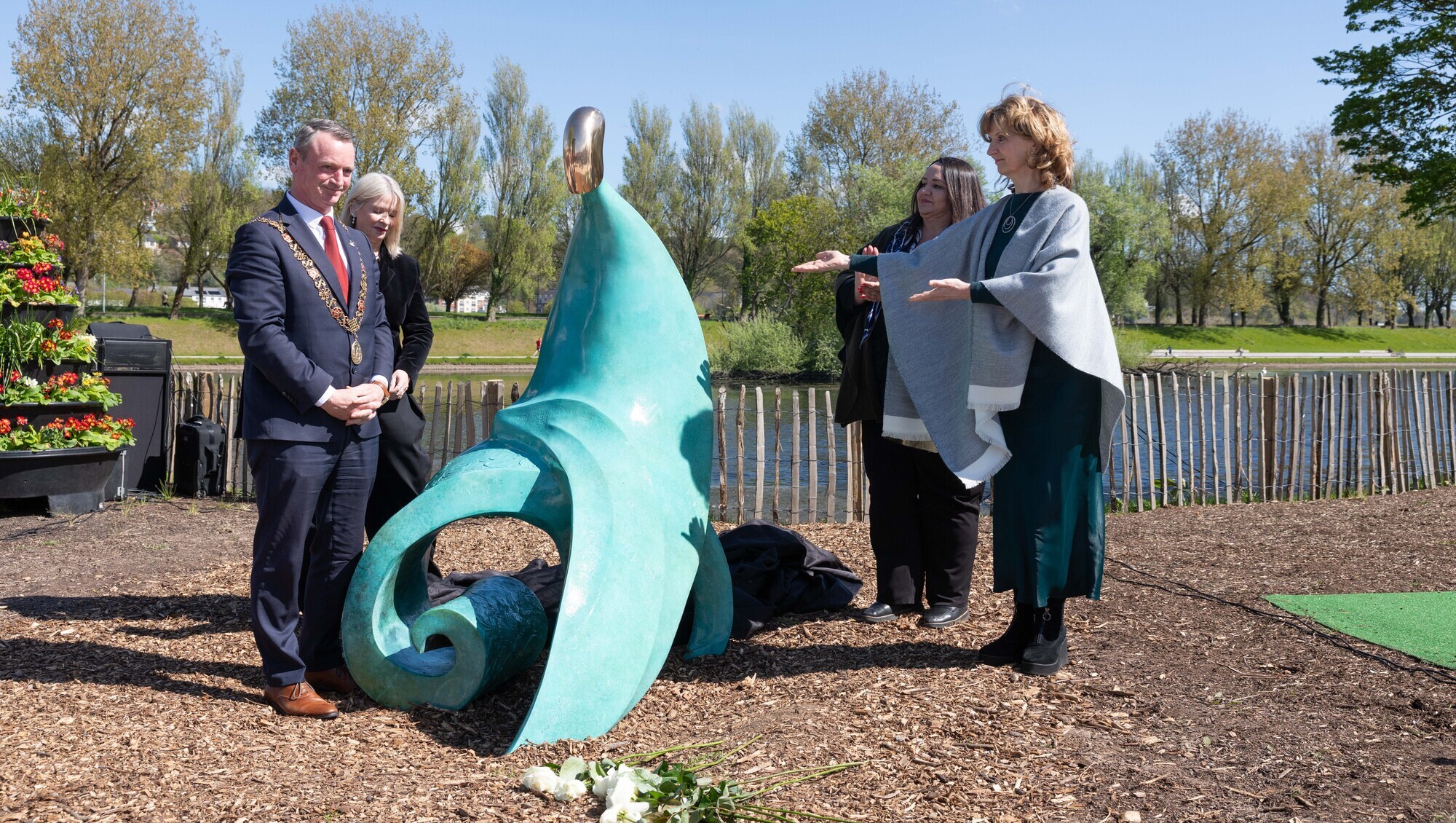
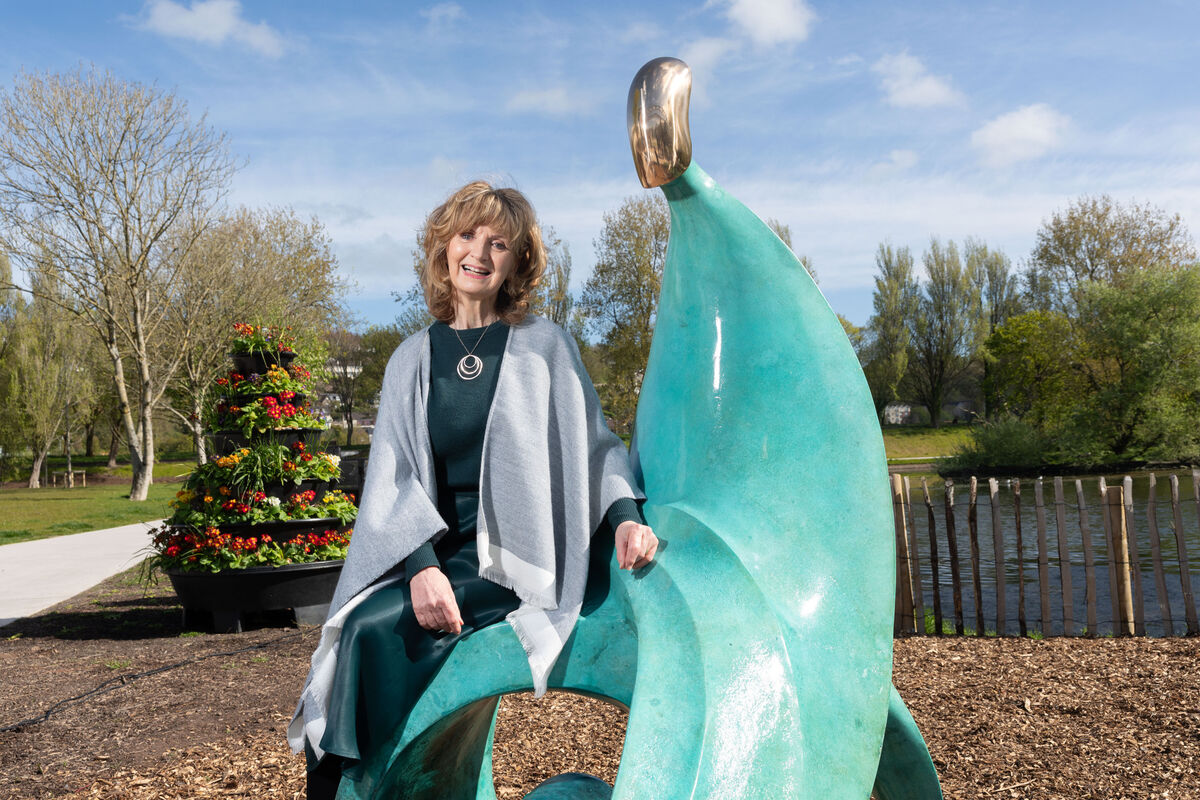
(Left to right) Lord mayor of Cork Cllr Fergal Dennehy, Valerie O'Sullivan, chief executive of Cork City Council, Gerasko Larysa, ambassador of Ukraine to Ireland and Adi Roche, Chernobyl Children International at the unveiling of the ‘Chornobyl Mother’ sculpture in Cork's Marina Park to mark the 40th Anniversary of the Chornobyl Nuclear Disaster. Photo: Darragh Kane
This year marks a sombre milestone that feels both a lifetime ago and as immediate as a heartbeat: the 40th anniversary of the Chornobyl nuclear disaster. At 1.23am on April 26, 1986, a silent, invisible enemy was unleashed. In a single moment, the world changed forever and for millions of people, life would never be the same again.
Chornobyl has become a symbol, a potent enduring metaphor for catastrophe, perhaps history. While much has been written, thousands of metres of film and photographs accrued, we may think we know everything: facts, numbers, names, but we still don’t have a full understanding of what it meant for humanity.
Read More
We continue to place Chornobyl into an already known understanding of catastrophes. But, this takes us in a wrong direction because our previous understanding and knowledge of disasters is inadequate when it comes to Chornobyl.
Chornobyl is a word we would all like to erase from our memory. Chornobyl is a permanent stain on human history, unlike war and its ravages, unlike hunger and disease, radioactive contamination will never leave the stricken regions with its worst outcomes manifesting themselves in the decades to come.
Forty years may have passed, but Chornobyl is not an event confined to history. It remains an unfolding, devastating tragedy whose consequences continue to deeply seep, silently and relentlessly, into the lives, the bodies, and the futures of generations.
Other disasters have long since moved on from the world’s radar, but Chornobyl has no such luxury. Its radioactive legacy lingers like a dark shadow stretching across Ukraine, Belarus, and western Russia, a stain that time alone cannot wash away.
Chornobyl’s story did not begin in 1986. For 800 years before that dreadful night, the land and its people lived side by side in a rhythm of survival and resilience. They survived famines, plagues, invasions, and bitter winters.
This anniversary reminds us of the vulnerability of all countries and of all humanity to profound, fundamental and sudden change, some of nature’s making, some of human making. It has brought hope, friendship and care into lives that have been traumatised by a man-made tragedy.
In many ways we can say that it has been redemptive… a true witness to the good and the decent, as the compassion and empathy that wells up in the human heart when confronted by unbearable sorrow in the life of a stranger.
As we stand at this 40‑year vantage point, while the smoke from the reactor and the ‘Exclusion Zone’ has long been extinguished, the ‘silent enemy’ that is radiation remains. And yet, through that neverending haze of tragedy, the work of Chernobyl Children International shines like a beacon of hope.
What began as a panicked, compassionate response to a humanitarian catastrophe has blossomed into one of the most significant chapters of Irish volunteerism in our nation’s history. We ventured where others feared to tread.
Why did Ireland, a small island at the edge of the Atlantic, become the principle lifeline for the victims of Chornobyl? Perhaps because our own story is carved from hunger, displacement, and exile from our history of hunger, displacement and exile. We recognise the innocent victim because we too have been the innocent victim.
It is an echo, a deep‑seated memory, that reverberates through our national consciousness. And so, Ireland spoke and acted with a moral authority rooted in lived experience: we refused to turn away then and we refuse to turn away now.
For four decades, thousands of Irish volunteers have travelled to the affected regions, bringing relief, compassion, medical care, and hope. Over €110 million in humanitarian aid and programmes has been delivered to the victims and survivors; a testament to a nation that consistently chooses the vulnerable over the convenient.
Every child welcomed into an Irish home, every heart surgery funded, every piece of humanitarian relief delivered form a humanitarian footprint as powerful and enduring as the radioactive footprint etched into the soil.
Sadly, as we mark this solemn 40th anniversary, the context of Chornobyl has tragically shifted once again. The war in Ukraine has dragged the ghost of Chornobyl back into global headlines.
The invasion in 2022 cut straight through the toxic radioactive ‘Chornobyl Exclusion Zone’, stirring radioactive dust and trauma alike. The “children of Chornobyl” are now also the “children of war”. They face a double tragedy … one born of a nuclear accident, the other of military aggression.
And still, the Irish spirit remains unbowed. Despite geopolitical chaos, despite logistical and physical obstacles, CCI continues to find ways to deliver aid, perform life‑saving surgeries, evacuate vulnerable children, and remind the world that 40 years does not mean “forgotten”. It means redoubling our promise, our commitment. We will not turn away.
This anniversary is not only a memorial to the worst nuclear catastrophe in human history; it is a celebration of a miraculous Irish intervention. We took a tragedy that happened thousands of miles away and made its people our own. We proved that while radiation may persist for centuries, because Chornobyl is forever, the half‑life of Irish kindness is infinite, is everlasting.
For Ireland, April 26 doesn’t just signal a distant tragedy; it sparked four decades of compassion, resilience, and radical kindness demonstrating the remarkable spirit of human solidarity.
And so today, we remember. We reflect. We re-commit. We re-dedicate. We will not turn away. Chornobyl is forever, and so too is our humanitarian footprint of love and support.
CONNECT WITH US TODAY



Be the first to know the latest news and updates