Seán Kelly: Viktor Orbán's loss is the EU's opportunity for a bold move on foreign policy
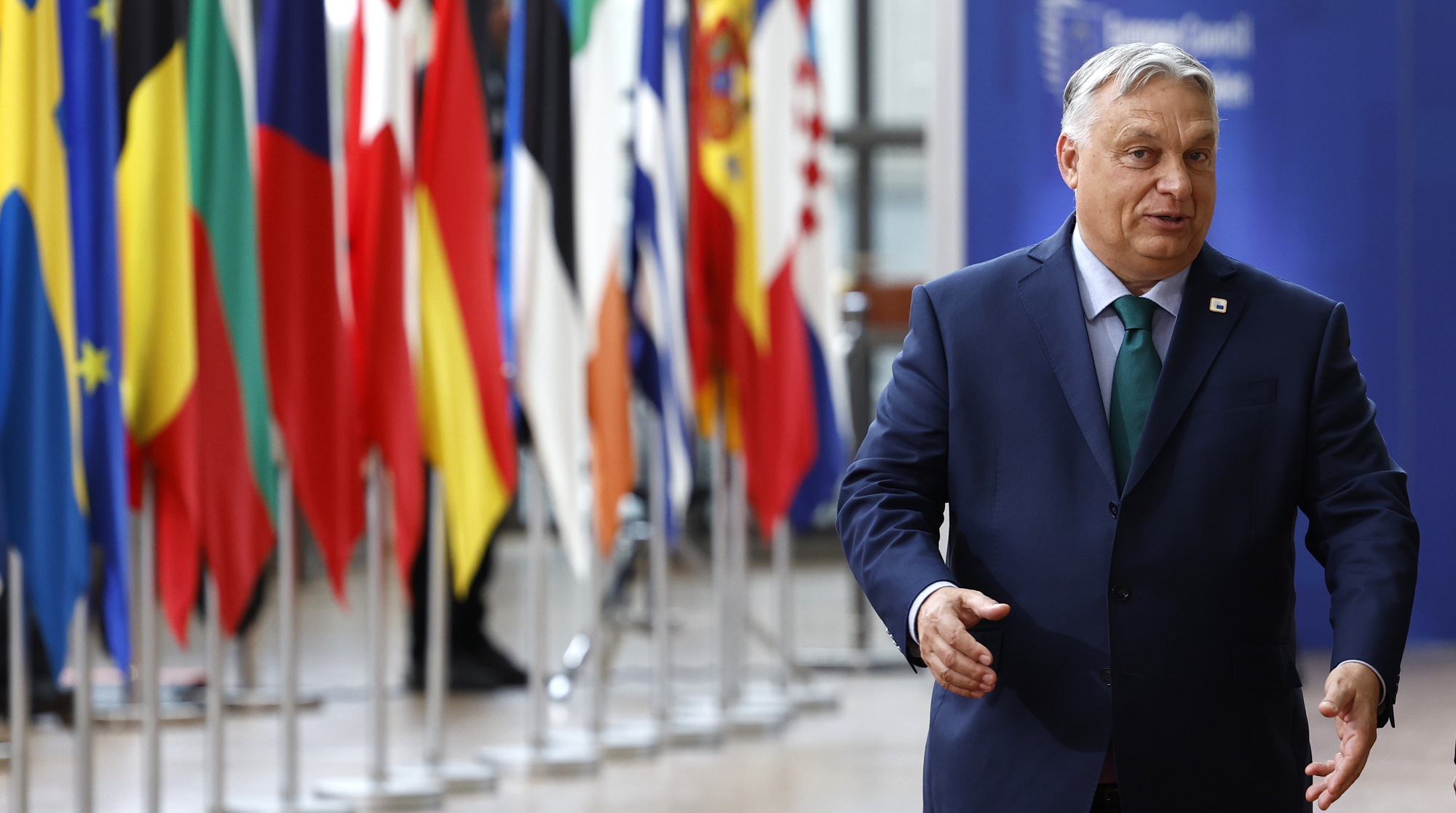
Viktor Orbán habitually blocked vital pieces of legislation in times of crisis in order to secure carve-outs, concessions and funding from the EU, often on entirely unrelated issues. Photo: AP/Geert Vanden Wijngaert
Viktor Orbán’s spectacular defeat in Sunday’s Hungarian election has been music to the ears of those of us who have been frustrated by his incessant, cynical and often morally reprehensible abuse of Hungary’s veto at the European Council.
As Hungarian prime pinister, Mr Orbán habitually blocked vital pieces of legislation in times of crisis in order to secure carve-outs, concessions and funding from the EU, often on entirely unrelated issues.
Despite the best efforts of the EU institutions, Orbán would then leverage this to strengthen his political power at home, bullying opposition politicians at home and abroad in the process.
We have known since the days of Chamberlain and Hitler that appeasement does not work with bullies. But what if the bully holds a veto over your policies? Take, for example, the negotiations over the EU’s €1.8 trillion budget and covid-19 recovery fund in 2020.
At the height of the pandemic, with tens of millions of Europeans unemployed, Orbán threatened to block emergency economic aid unless the EU abandoned proposals linking funding to respect for the rule of law; oversight designed precisely to prevent the sort of corruption and democratic backsliding he was presiding over in Hungary.
The autocratic and cynical tendencies were there long before that, and, combined with his bullying nature and his crackdown on the free press, were what led me to call for Orbán and his Fidesz party to be expelled from my group in the European Parliament, the EPP, in 2019, two years before they finally departed.
Yet Fidesz’ expulsion didn't solve the issue, and the EU was left with a catch-22: in order to remove unanimity or impose the sort of funding conditionality that could hold Orbán to account, the EU would somehow have to overcome his veto itself. So instead, he was often appeased.
Orbán’s defeat presents an opportunity that the EU cannot afford to miss if it is to become a relevant and effective actor in an increasingly tumultuous world.
The flouting of international law by major powers, the return of war to the European continent and the weaponisation of trade have all made it clear that individual countries cannot go it alone. We need a strong EU, capable of acting swiftly, decisively and in the interests of the vast majority of its member states.
That is why, as EU member states, we must seize this opportunity to move away from the requirement for unanimity at the European Council on matters relating to accession, sanctions, trade deal ratification, and aid.
A move to qualified majority voting (QMV), which requires 55% of member states representing 65% of the EU’s population, would remove the ability of a single government to hold the rest of the EU to ransom.
Such a move would require unanimous approval by member states, posing the question: are they willing to sacrifice their own veto power to be part of a stronger, more capable EU?
There will be pushback to this idea, both internationally and domestically. At home, some will say it would jeopardise Ireland’s neutrality. Yet my proposal is that unanimity be maintained on defence matters.
Ironically, preserving unanimity for defence would be for the same reason as to why we should remove Ireland’s triple lock: to maintain full control over our own defence policy.
The triple lock currently allows the governments of Russia, China, France, the UK and the US to veto the deployment of Irish defence forces internationally, for example, for the peacekeeping missions which form a core and proud part of our neutrality.
No foreign government, be that in the EU or on the UN Security Council, should have the same veto power over the deployment of Irish troops as Dáil Éireann.
Others, most likely from the Eurosceptic far right or far left extremes, will say that the EU cannot be trusted. The polls suggest that this is not the view of the overwhelming majority of Irish people.
The most recent Eurobarometer survey showed the Irish people to be the most positive about the EU, with 77% expressing optimism for its future. This same poll showed that 93% of Irish people want the EU to be more united, whilst only 10% have an overall negative view of the EU.
The same politicians who complain about EU inaction — for example on Gaza — would claim that a move to QMV would destroy Ireland’s autonomous foreign policy. In reality, it would enable and embolden it.
Though Ireland has been one of the strongest pro-Palestinian voices among EU member states, the requirement for unanimous agreement before sanctions can be imposed has meant that the EU was never likely to take meaningful economic action against Israel, while they carried out such atrocities in Gaza.
Our best chance of meaningfully influencing and ending conflicts, promoting peace, aiding development, and supporting a rules-based global order is by showing leadership on these matters within a better-functioning and united European Union.
We have a small window of opportunity, and we must act quickly if we are to make this change.
The French election in 2027, for example, presents a genuine risk of a far-right government assuming power in a major EU member state. Such a government would likely use its veto on critical issues even more frequently than Mr Orbán ever did.
Much has been made about Ireland's upcoming EU presidency and the opportunities it presents.
By being brave and proactive in putting this on the agenda and steering the debate towards adopting QMV on the aforementioned policy areas, we could position Ireland as a real leader on EU policy and transform the EU itself, making it the effective and decisive actor that we need it to be.
- Seán Kelly is the leader of Fine Gael in the European Parliament and MEP for Ireland South


CONNECT WITH US TODAY



Be the first to know the latest news and updates