Online abuse of politicians is a profitable business
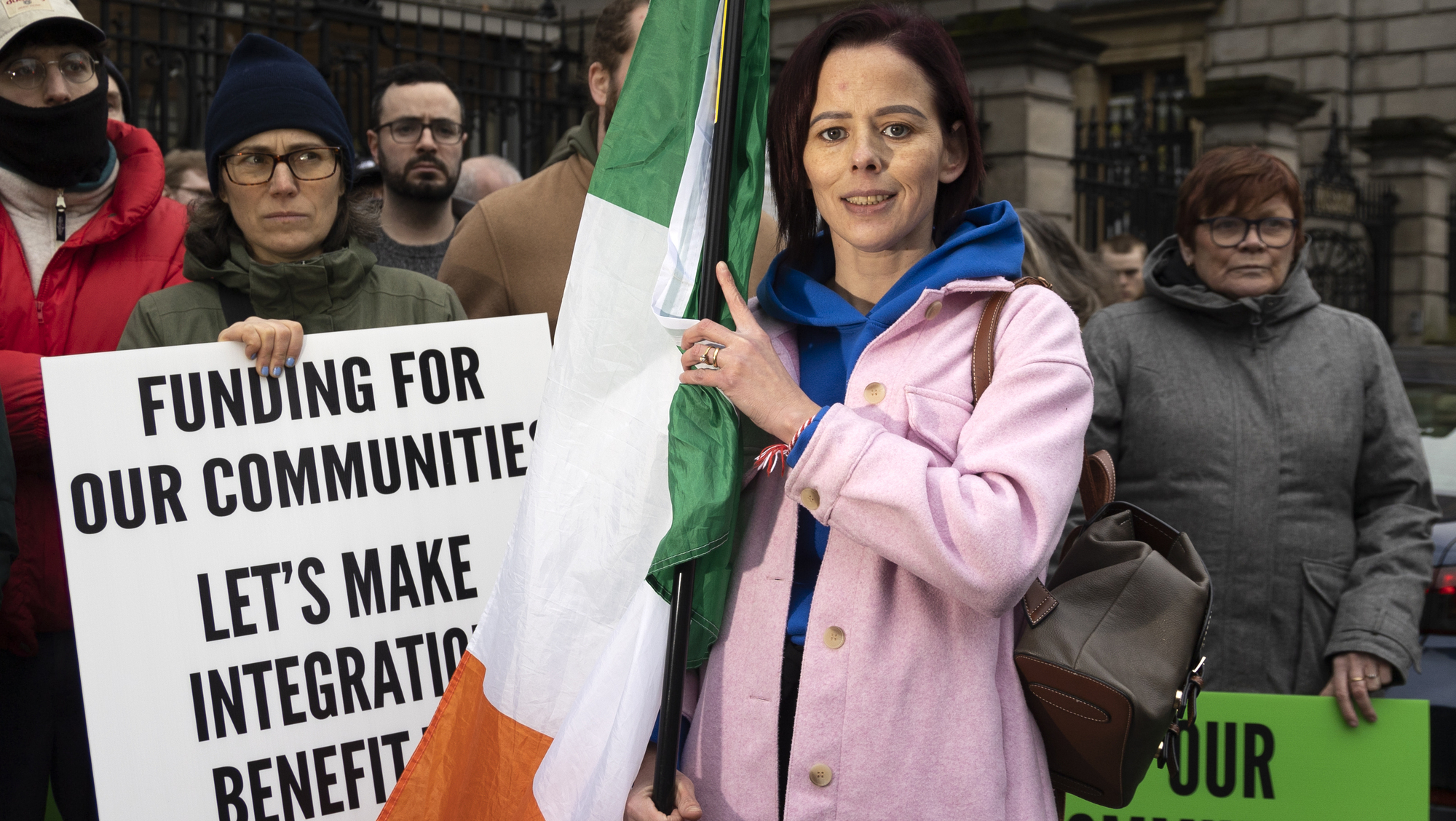
Senator Eileen Flynn at an anti-racism protest protest outside Leinster House. Picture: Sam Boal/Rollingnews.ie
In recent days, Senator Eileen Flynn has been subjected to a barrage of online abuse for speaking out against racism and nationalist propaganda. This is part of a growing pattern of abuse towards politicians. Ireland needs to heed what happened in the UK.
It is nearly 10 years since British Labour MP Jo Cox was murdered in cold blood by a far-right extremist during the Brexit referendum campaign. When her killer Thomas Mair was asked his name in court, he replied: “My name is death to traitors, freedom for Britain!"
Mair had been radicalised online in far-right and neo-Nazi chatrooms and forums. Five years later, conservative MP David Amess was murdered by a British citizen radicalised online to become a supporter of the so-called Islamic state.
One might expect these appalling deaths were a turning point in the acceptability of threats against politicians in UK. Unfortunately, abusive language and threats that were once confined to fringe online forums are now normalised on mainstream social media platforms.
A UK study by Amnesty International found politicians, particularly women, are subjected to relentless abuse online. One in nine messages sent to female MPs was identified as abusive. For those who are both female and from a minority background, the rate is as high as one in three.
In 2019, Sinn Féin TD Martin Kenny’s car was burnt out in an arson attack, which occurred after Kenny spoke out in favour of a proposed asylum seeker in his community. Social Democrat leader Holly Cairns closed her constituency office in Cork due to security concerns.
In the space of a few weeks in 2025, Simon Harris required armed gardaí at his family home due to multiple bomb threats, while former taoiseach Leo Varadkar was subjected to a homophobic tirade by a self-styled citizen journalist who filmed the confrontation for social media.
A man is due before the courts in July in connection with an alleged assault on Mary Lou McDonald and two canvassers the day before the presidential election last year. The incident was filmed and went viral online.
So, last week when a video of Senator Eileen Flynn speaking about racism and nationalist propaganda went viral, a predictable and inevitable online pile on began, with posts attacking Flynn’s “patriotism” or perceived lack thereof.
But this was a thin veneer for a relentless barrage of misogynistic, racist and bigoted attacks on Ms Flynn’s accent and background (Ms Flynn is from the Traveller community). Some high-profile individuals suggested she was mentally unfit to hold office and fabricated claims about her electoral record.
A key and little understood aspect of this campaign of harassment and abuse is that many accounts that targeted Ms Flynn financially benefited from this campaign.

Much of the abuse directed at Ms Flynn came from Irish accounts run by people who benefit from algorithmically amplification (so called blue tick accounts), and content monetisation. Monetisation is now a commonplace feature on social media platforms like X/Twitter, YouTube, Instagram, Facebook and TikTok, that allows the company to “share” revenue.
The more attention (likes, shares, comments etc) a post gets, the more revenue a user earns. Influencers also often have accounts on three or four platforms and post dozens of times a day, and can also benefit from tips, and paid subscribers so it is difficult to gauge how much they earn, but a single viral post on X can generate over €300 for an influencer, so this can become a quite lucrative activity for not a lot of work.
Naturally the most sensational, dramatic, and lurid framing drives engagement. Influencers scour the internet for video content they can repackage and use to promote their narrative, and earn.
The abuse directed at Ms Flynn did not only come from Irish accounts; international social media influencers whose attention was already on Ireland since the fuel protests latched onto it too. Defiant Ls, an account run by a Macedonian influencer who promotes Maga content shared the video, as did the account LibsofTikTok, with the caption, 'Irish Senator Eileen Flynn says that she is "terrified" to see her nation's flag and thinks it's "disgraceful" to fly it', received more than 250,000 views and over 1,300 comments, mostly abusive.
LibsOfTikTok has nearly five million fans and the account is run by Chaya Raichik, a right wing influencer who has previously targeted schools, hospitals and libraries across the United States. Victims of her attention have gone to be inundated with threats of violence.
Raichik’s inflammatory social media campaigns and targeted harassment have been described as a form of terrorism, a label she apparently revels in.
Recent research notes the overwhelming majority of Irish people do not condone protests outside the homes of politicians or threats to politicians. We have to understand the abuse, and the systems that enable this abuse are a “feature, not a bug” of modern social media platforms.
The business model is making life impossibly toxic, not just online, and not just for politicians, but for all of us. This isn’t going to stop until there is sufficient public pressure and political will to force the platforms to change.
It is no longer a matter of 'if' but 'when' an Irish politician is seriously harmed or killed. Ireland needs to act now before such a tragedy occurs.
- Aidan O’Brien is an analyst with the European Digital Media Observatory