The Taliban has weaponised misogyny. They're not alone
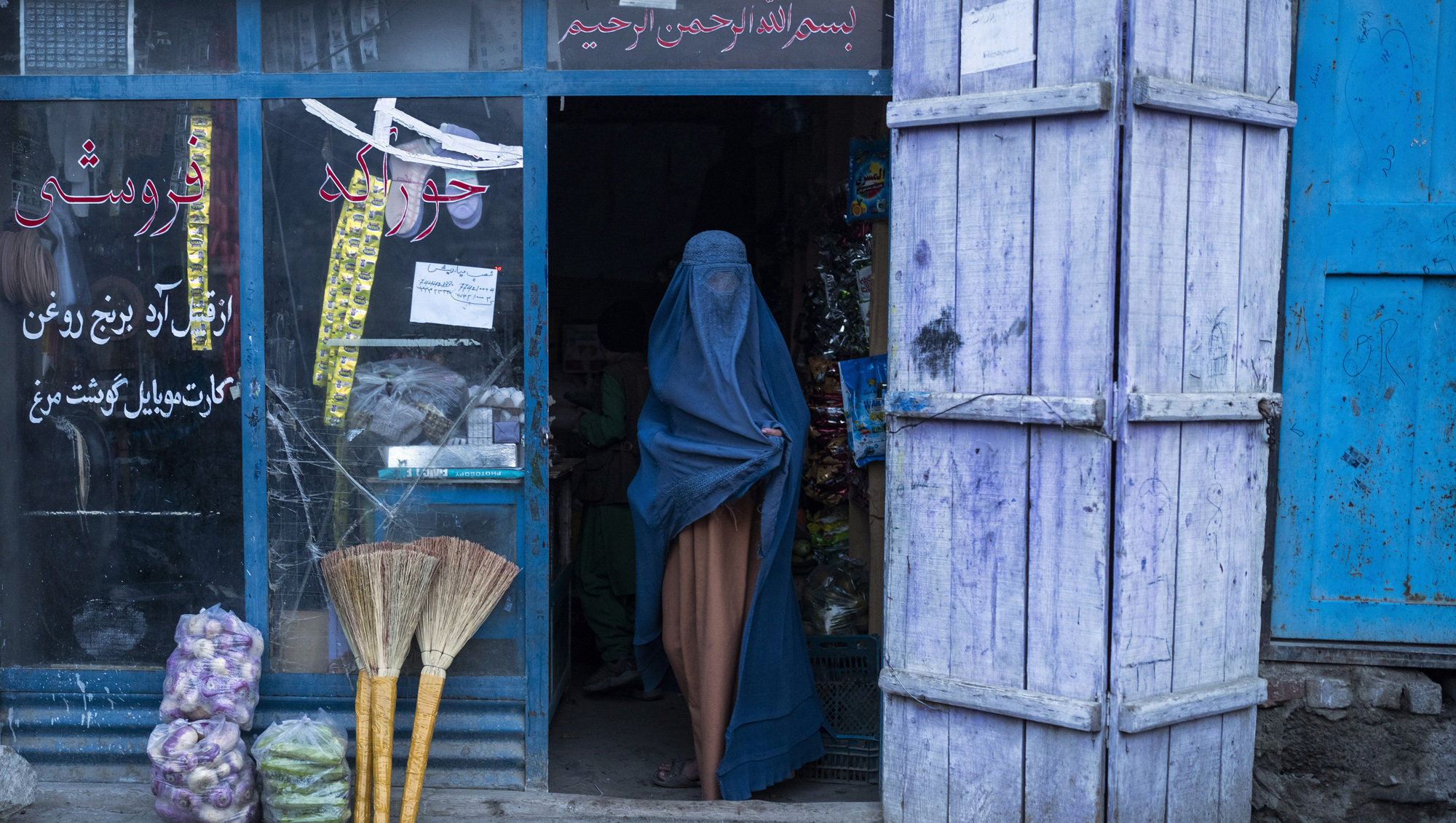
The Taliban has passed a law that allows men to beat their wives. This is presented by the all-male Taliban leadership as in accordance with God’s will.
Picture: AP/Petros Giannakouris
If you have ever wondered what misogynistic religion in the service of politics looks like then a recent story in the provided an answer. This was the opening paragraph: “The Taliban has passed a law that allows men to beat their wives as long as it does not cause ‘broken bones or open wounds’.”
The law is part of a new penal code, signed by the Taliban supreme leader, that has been distributed to courts across Afghanistan. It classifies spousal beatings as discretionary punishment rather than a criminal act.
There is no provision in this code for the 21st century that prohibits physical, psychological or sexual violence against women. All of this is presented by the all-male Taliban leadership as in accordance with God’s will.
The background to all of this is a strict version of Islam — enforced by the Taliban since they returned to power following the American withdrawal in 2021 — which has deprived women of many of the rights and freedoms they enjoyed for a period.
On their first day back in power in Kabul, the Taliban orchestrated a march of fully veiled women who filled an auditorium at a local university. This was seen as a snub to the previous 20 years of Western efforts to empower women.
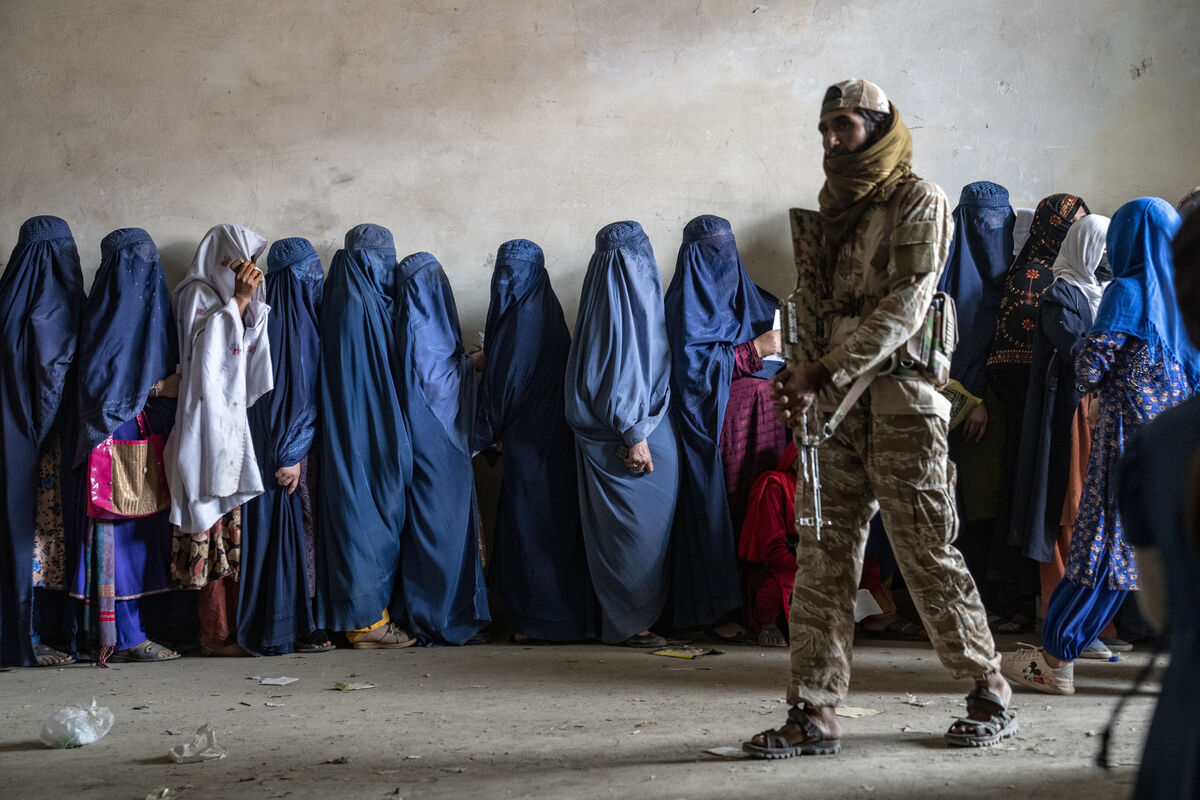
One of the first acts of the new government was to abolish the Ministry for Women’s Affairs. Since then, ever harsher measures have been rigorously employed for the subjugation of women.
But it isn’t just in Islamic countries that religion is being harnessed to repress women or to undermine their rights and freedoms and erode their equality as citizens. Misogyny knows no borders or denominational divides.
And in Islam, the submissiveness of Muslim women is taken for granted. Indeed, it is mandated by the Quran.
In the more radical forms of Islam — such as Wahhabism, which is the official religion of Saudi Ababa and also adopted in slightly modified form by the Taliban — women are regularly treated as little more than service-providers and a life support system for a vagina and a uterus.
Wahhabism is a fundamentalist, puritan religion based on a strictly literal interpretation of the Quran. It relegates women to the margins of society. One of the most high-profile critics of Wahhabism, Ayaan Hirsi Ali, outlined in her book , the plight of many Muslim women.
“After marriage, the mistrust of women only intensifies.” To ensure a wife’s fidelity a husband must deny her access to the outside world as much as possible.
“She must have his permission, or his company, for every step she takes outside the door. Supposedly, he has obtained this authority from Allah and from centuries-old traditions.”
In places like Afghanistan, women are being erased from public spaces. Girls are barred from secondary school, women from universities, from work and even moving freely without male guardians.
On the Catholic side, this passage from one of St Paul’s epistles — “I do not permit a woman to teach or to have authority over a man; she must be silent” — has long since been treated as normative by popes when it comes to the status and role of women in the Church. It is worth recalling that no women were permitted to participate in the Second Vatican Council (1962-65).
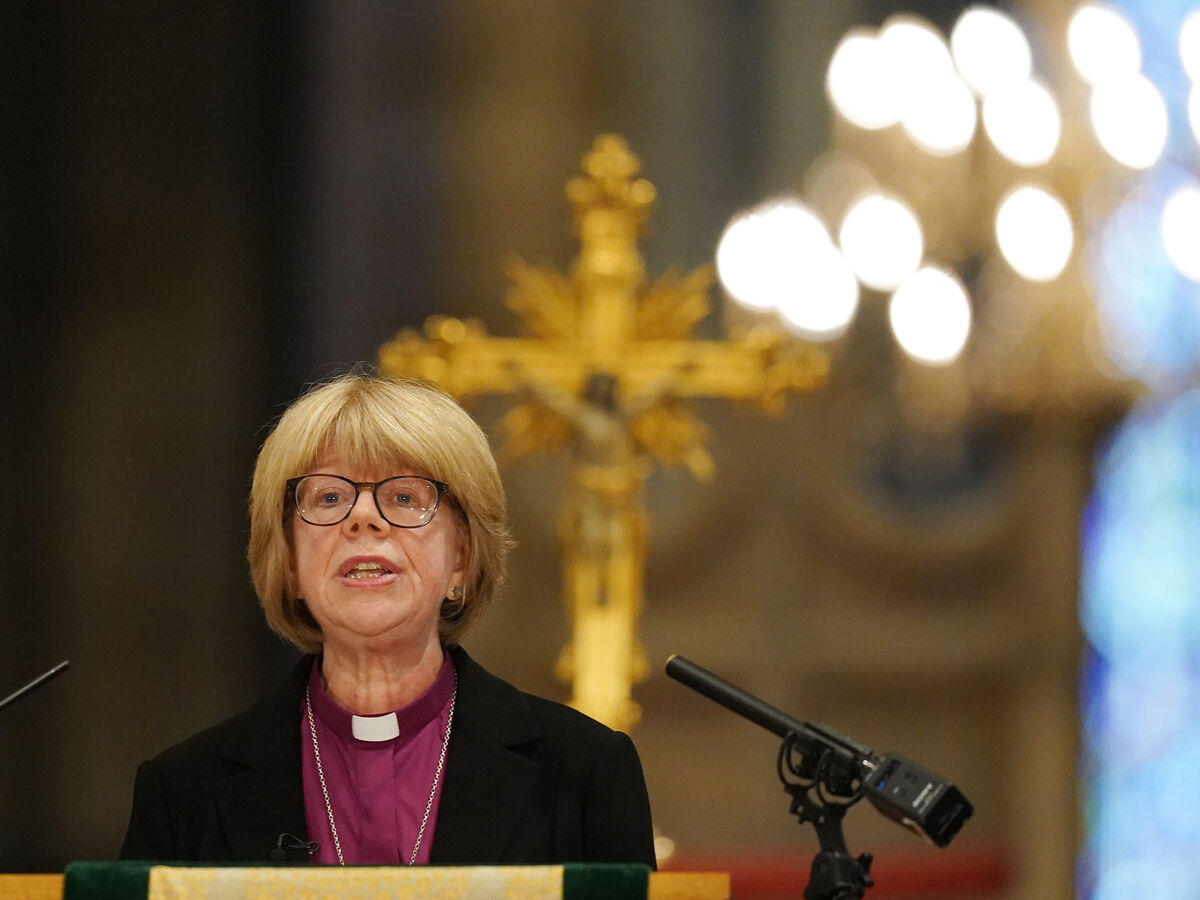
On the Protestant side, the approach has been much more progressive. To be fair to the Church of England (and the Church of Ireland), it now has women priests and bishops, and earlier this year Sarah Mullally was endorsed as Archbishop of Canterbury (she had been bishop of London), the first woman in that prestigious position in its 500-year history.
As such, she becomes the spiritual leader of the worldwide Anglican Communion, a conglomeration of national churches with an overall membership of 800 million. But sexuality in today’s much changed world still causes deep divisions within Anglicanism.
Do women deserve rights and a voice in society? Feminists will be quick to testify that to win those rights and that entitlement (suffrage) — American women, for instance, only got the right to vote in 1920 — a long and sometimes bitter struggle had to be undertaken. And the churches were often, and for too long, on the side of the reactionaries.
Today, with the rise of Christian nationalism in the USA, women’s rights are again under siege. In the America of President Donald Trump — described by the columnist Maureen Dowd as the "Emperor of Chaos" — religion is being relentlessly weaponised.
Trump’s relationships with Christian nationalist movements has intensified since his return to the White House, which now has a Faith Office led by televangelist Paula White Cain. She supported Trump in his re-election campaign, warning “Christians that don’t support President Trump will have to answer to God”. It hasn’t been forgotten that on January 6, 2001, as insurrectionists stormed the US Capitol, wooden crosses and “Jesus Saves” signs mingled with pro-Trump banners.
This weaponisation of religion is not in itself new. Ever since the emergence of the Moral Majority in the 1979 (founded by the Rev Jerry Falwell), religion has been exploited for political ends in American electoral politics.
The Moral Majority helped to propel Ronald Reagan to the White House in 1980. Fundamentalist Christianity has also been used effectively in campaigns to oppose civil rights, feminism, and even to block the Equal Rights Amendment (ERA) which would have erected a constitutional barrier to discrimination based on sex. Often conservative religious groups (including Catholics) offered their services willingly — there was no need for recruitment.
Since the Trump era — and especially during his second term in the White House — we have seen the rise of Christian nationalism (an ideology steeped in Christian supremacy, defined in broad strokes as the belief that America is divinely ordained for Christian rule based on a belief in the inerrancy of the Bible), using religion to promote racism, white supremacy and to challenge and undermine feminist gains.
The overturning of Roe v Wade (the 1973 ruling guaranteeing women a right to abortion) by a conservative Supreme Court in 2022 is just one facet of this.
These developments are being watched closely elsewhere, including here in Ireland where, as Emily O’Reilly reminded us in her 1992 book , the Catholic right spearheaded the successful campaign in 1983 to insert the so-called pro-life amendment into the Constitution (the infamous Eighth Amendment).
Today, reproductive rights are under siege in many places other than the USA, and not just in extremist Islamic societies. The Vatican, because of its recognition in international law as a sovereign state, is often at the forefront of these challenges in forums like the United Nations.
This means against the background of the patriarchal culture so deeply embedded in the Catholic Church, papal statements on the dignity of women and equality ring hollow. Without a cultural transformation (which requires a new theology of women) double standards and hypocrisy will continue to prevail.
CONNECT WITH US TODAY



Be the first to know the latest news and updates