Limerick garda trial: If there’s nothing to see here, why does it still matter?
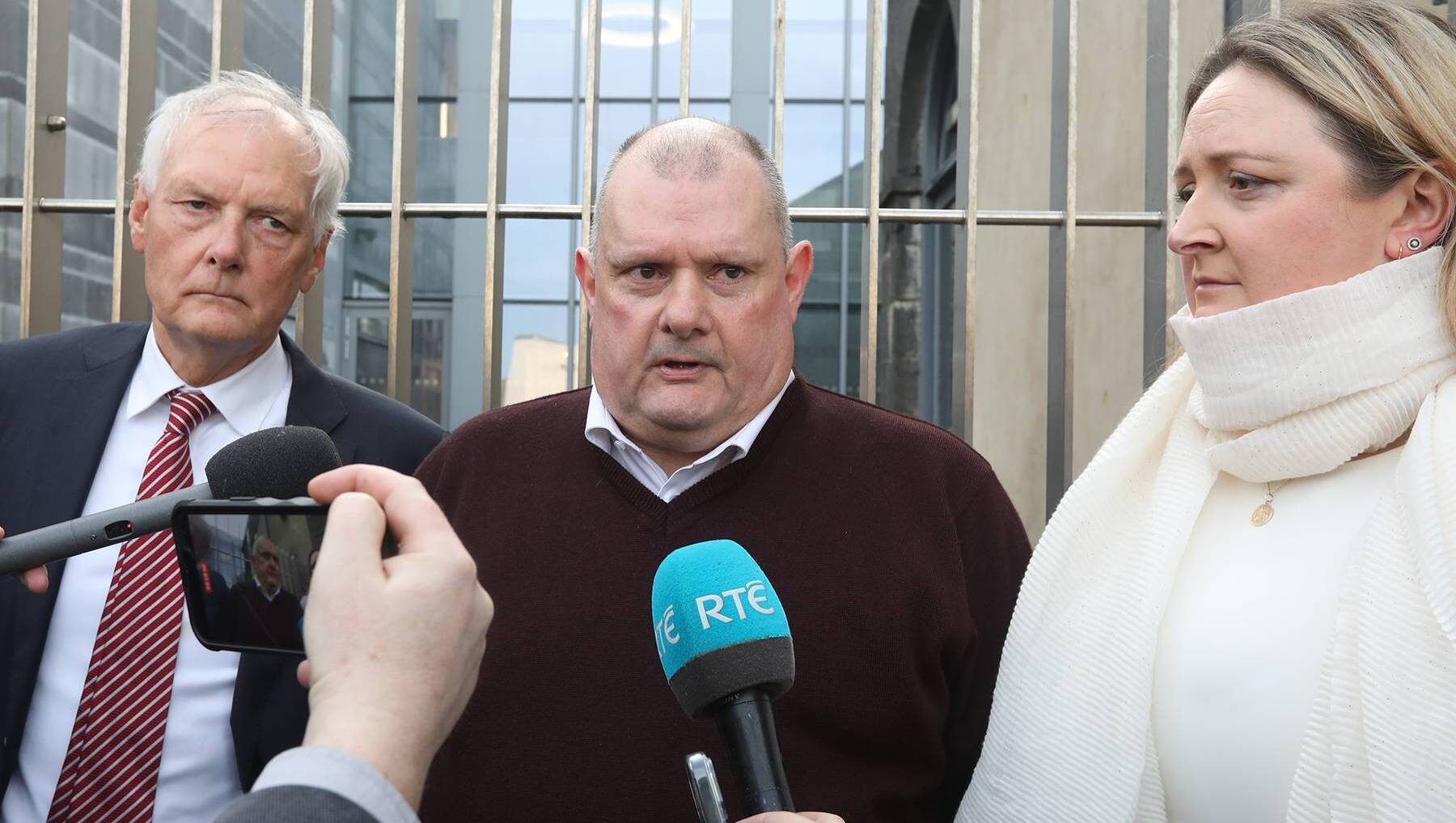
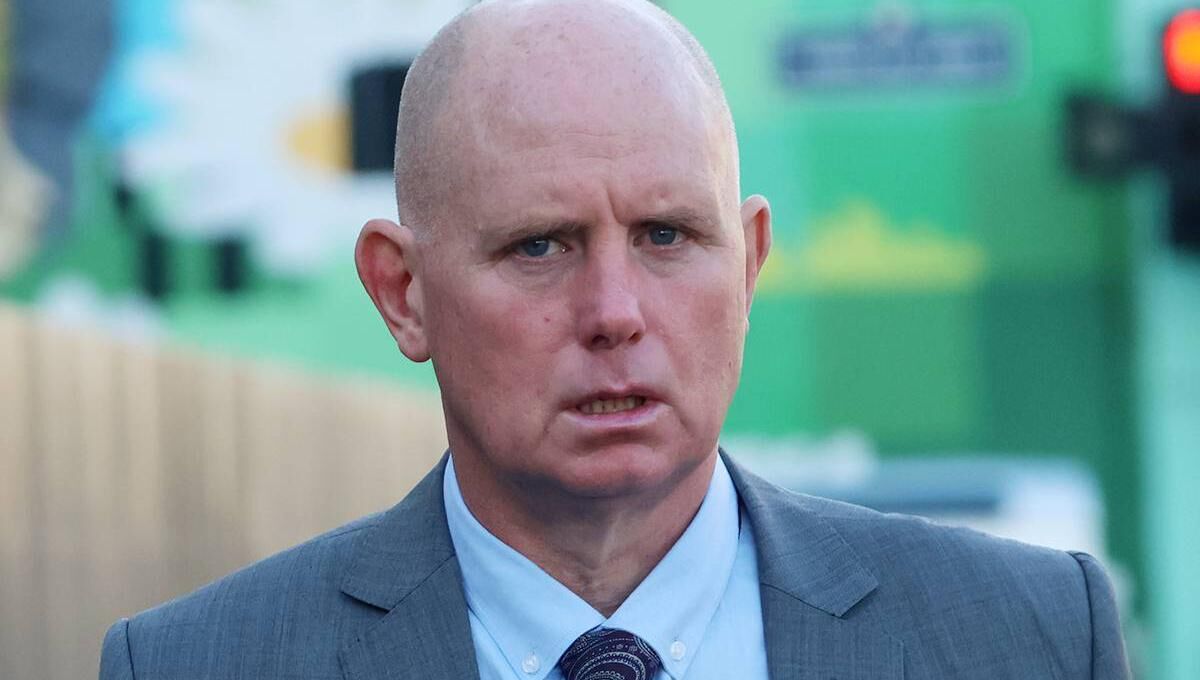
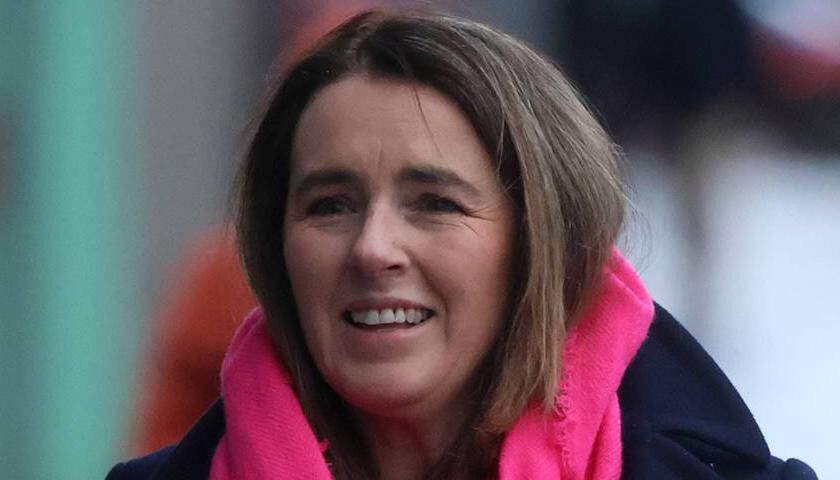
Eamonn O'Neill and Anne-Maire Hassett with solicitor Dan O'Gortman, left, outside Limerick Courthouse after all five defendants were found not guilty of a total of 39 counts of unlawfully interfering in potential or pending prosecutions involving 26 motorists. Pictures: Brendan Gleeson
Move along now, there is nothing to see here.
So goes the refrain from minister for justice Jim O’Callaghan in relation to the ending of a recent saga that had a major impact on policing in the Mid-West.
Mr O’Callaghan’s boss, Taoiseach Micheál Martin, has a different take on it.
“It seems that a review of what transpired needs to happen because it impacted Garda morale more broadly and had a significant negative impact on the careers of the five gardaí and others as well,” the Taoiseach told the Dáil.
Who among these cabinet colleagues is correct, and who believes accountability is a concept that should accompany actions invested with State power?
A quick recap.
On January 26 last, Limerick Circuit Court acquitted four serving gardaí and a retired superintendent of 39 counts of “attempting to pervert the course of justice”.
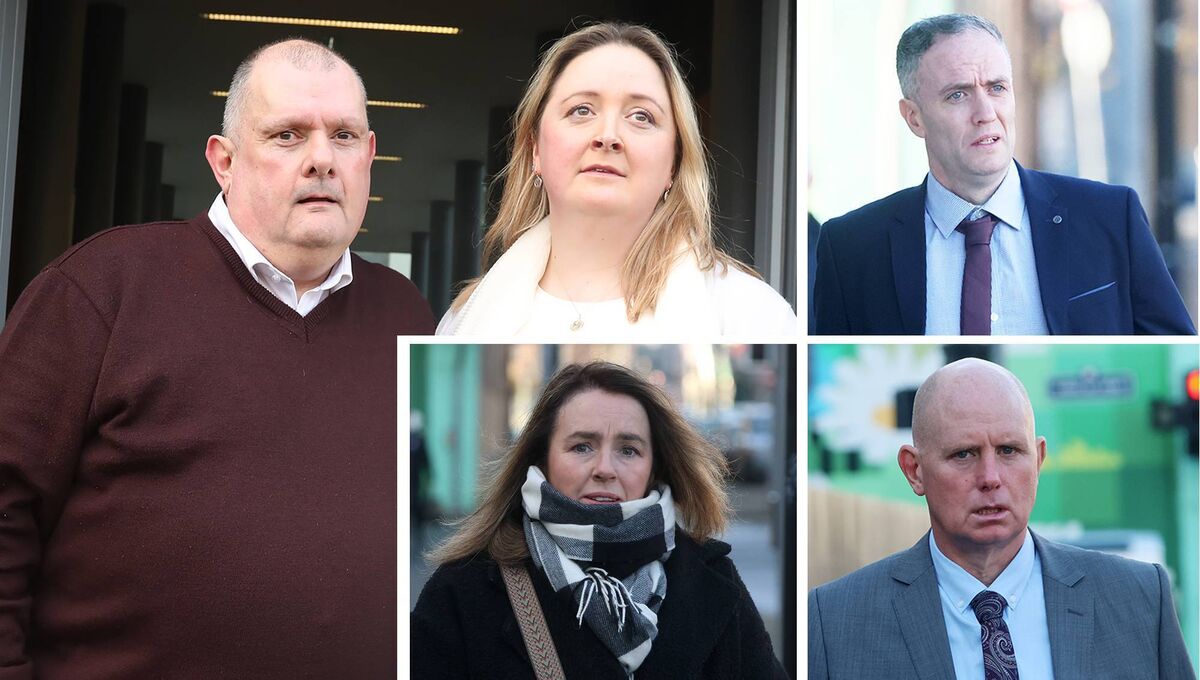
The trial of former superintendent Eamon O’Neill, Sgts Anne-Marie Hassett and Michelle Leahy and gardaí Colm Geary and Tom McGlinchey had lasted 35 days.
Their alleged crime was attempting to “square” speeding tickets for errant motorists, effectively quashing any offence before it is processed.
The attempted squares were not organised or planned.
They were, the gardaí maintained, using the discretion that is part of policing by consent.
The only common factor across the defendants was the connection of each count to Eamon O’Neill.
The retired superintendent had been subjected to a high-profile arrest in 2019, when he was still serving, on suspicion of passing information to organised crime elements.
It turned out there was no evidence against him and the DPP directed he not be prosecuted.
The investigation was conducted by the Dublin-based National Bureau of Criminal Investigation (NBCI), which went on to investigate the quashing of road traffic offences, a highly unconventional use of the bureau’s resources and power.
A question arises as to whether the latter investigation was in any way connected to the apparent mess-up in arresting O’Neill in 2019.
If that were the case, it would represent an egregious abuse of power that had serious outcomes on policing and for individual gardaí.
Two days after the acquittal, the Taoiseach told his own party’s TD, Cathal Crowe, in the Dáil that a lookback on what occurred was needed. He said he would consult the minister for justice on the matter.
It would appear the minister for justice is of a mind there is nothing to see here.
Last week, at an Oireachtas Justice Committee meeting, Labour TD Alan Kelly brought up the subject.
He asked Mr O’Callaghan who pulled rank, the minister or the Taoiseach?
The minister told him the five individuals concerned had been the subject of a lengthy criminal investigation, had been prosecuted and were acquitted.
“They are not guilty,” the minister said.
The minister is stepping around what is at issue.
Any remedy available to the five who were acquitted is not the primary matter.
What unfolded over the course of the investigation was highly unusual.
Why, for instance, was the NBCI, a crime fighting unit that is ordinarily concerned with murder and organised crime, detailed to investigate this matter?
The “squaring” of tickets is something that may well require further scrutiny.
It still goes on but on a very reduced scale.
If somebody in headquarters wanted to stamp it out altogether, why was the high-powered criminal investigation confined to Limerick?
Squaring tickets usually originates with a senior officer.
There are proportionately far more senior officers in Dublin than Limerick.
Why wasn’t this zero tolerance approach taken to those in the capital, including all personnel who work out of headquarters?
How come the only senior officer ensnared in the criminal investigation was Eamon O’Neill, who was by that time retired?
It is entirely implausible he was the only senior officer who had squared a ticket across the timespan the investigation examined.
Where was the zero tolerance there?
Then there was the prosecution.
The DPP, as Mr O’Callaghan pointed out, examined the file and prepared charges.
Did the DPP’s office come under any pressure to do so from any quarter?
One way or the other, the DPP appears to have been gung-ho to prosecute. In 2022, the office applied to have the trial switched from Limerick to Dublin.
This application is highly unusual, and often comes from a defendant who believes a change of location is required for a fair trial.
In this instance, it was the prosecutor who felt it would be unfair to hold the trial in the city where the offences were alleged to have occurred.
In the same year, the five defendants took an action to stop the prosecution based on how the matter was investigated.
The action was heard by Judge Tom O’Donnell, who, in a detailed judgment, ruled in favour of the defendants.
The DPP could have left things at that.
Instead, the director appealed that decision to the Court of Appeal and was successful, so the criminal trial went ahead.
But it wasn’t and the jury found after an exhaustive trial there was no case to answer.
During the trial, there was the strange spectre of prosecution Garda witnesses praising the professionalism and character of the defendants on trial.
Those defendants deserve to know why their lives and careers were turned upside down.
Beyond that, the public interest has a stake here.
As previously reported in this newspaper, detections for speeding in the Limerick division fell from 10,908 in 2019 to 7,680 in 2024 at a time when the national figure showed a small increase in detections.
Did the suspensions of members from the traffic corps in relation to this case have anything to do with that?
Or, quite possibly, morale among the corps, and the force in general in the area over the whole affair, was depleted to a point where it impacted on performance.
Contrary to what the minister for justice appears to believe, this was not a standard criminal justice matter where a crime is detected and investigated to be followed by a prosecution.
If he really believes that, there is nothing to see here, maybe he isn’t looking too hard.
Labour TD Alan Kelly told the Micheál Martin has to intervene if there is no further probe into what occurred.
“If the Taoiseach truly believes what he said in the Dáil, he needs to pull rank on the minister for justice and ensure that an inquiry happens,” he said.

CONNECT WITH US TODAY



Be the first to know the latest news and updates