Mick Clifford: Nobody needs to 'lawyer up' to investigate treatment of Limerick gardaí
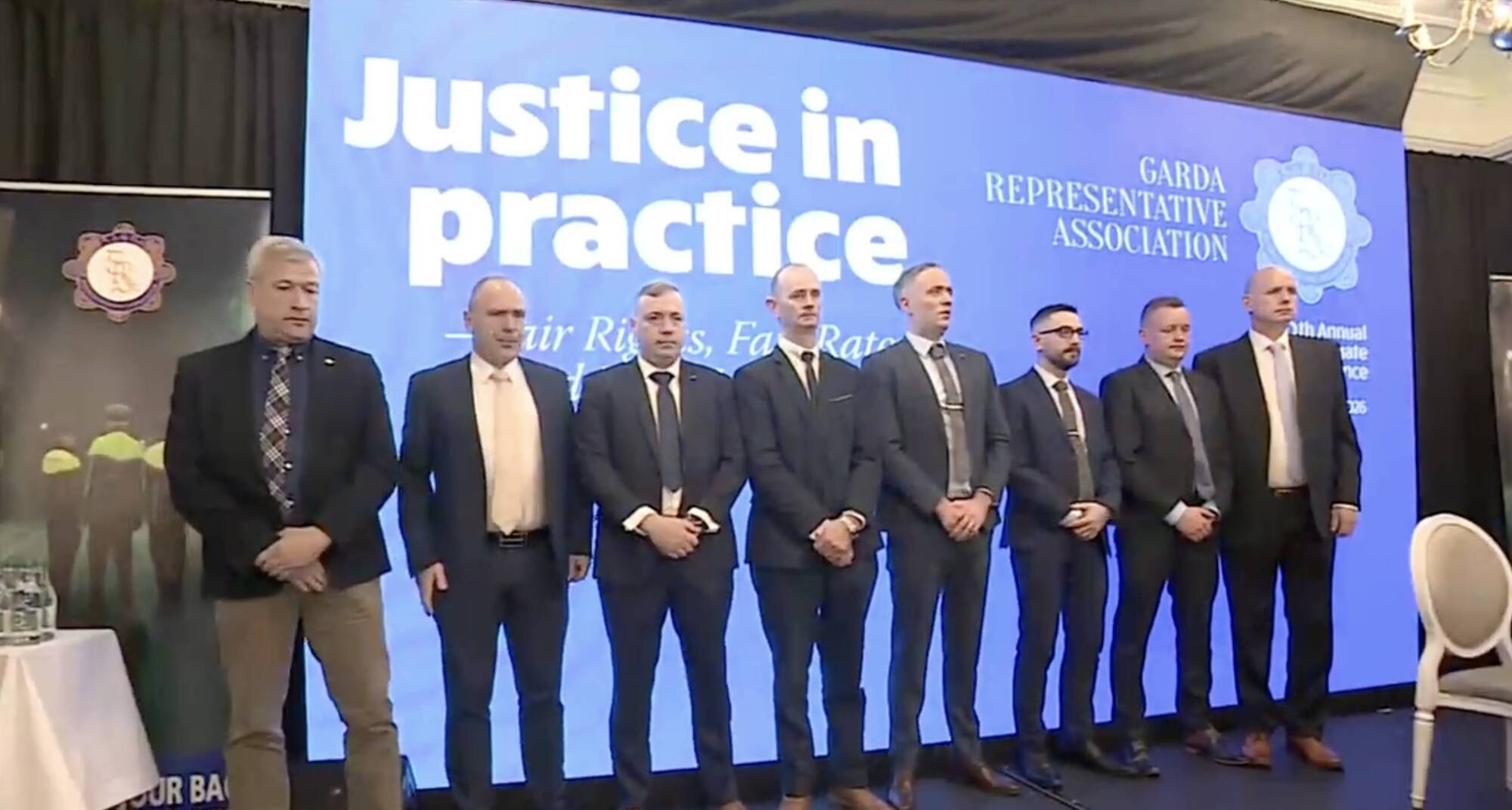
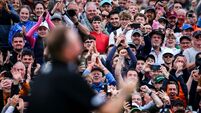
‘A shameful stain on our Organisation’s history’ … the GRA’s Annual Conference gives standing ovation to affected suspended members at the Castlecourt Hotel in Westport. Photo: RTÉ
There was a bizarre set piece at the Garda Representative Association (GRA) conference in Westport last week.
Eight serving members rose from their places among the roomful of delegates and filed up onto the stage. All of them had been subjected to long terms of suspension from their work, only to be found innocent of any wrongdoing at the end of their respective ordeals. The delegates all got to their feet and applauded the eight, as if wrapping a warm blanket about them following a night spent out in the cold.
Read More
One of them was Detective Garda Eamon Cunnane, the garda at the centre of the "bikegate" debacle in which he was investigated for lending a bike to an elderly man during covid. His case has been well aired, and he has now been financially compensated, and rightly so.
The other seven were associated with an extensive investigation into the “squaring” of road traffic offences in the greater Limerick area.
Colin Geary and Tom McGlinchey were acquitted of attempting to pervert the course of justice at Limerick Circuit Criminal Court last January.
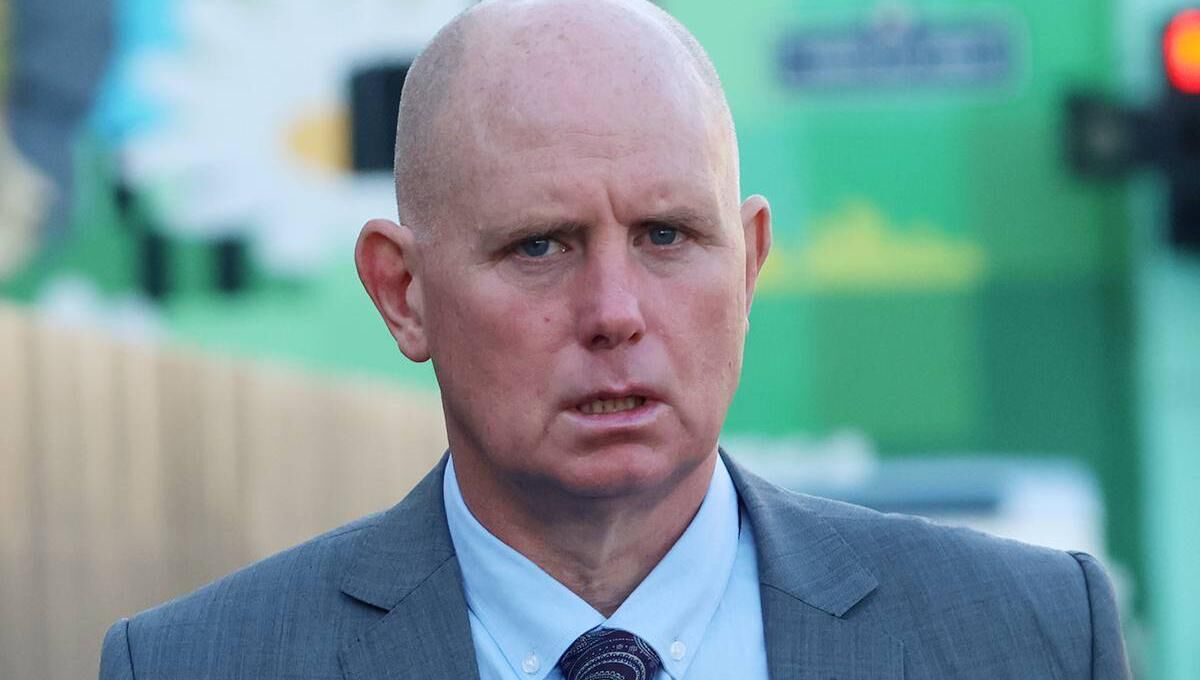
Their colleagues Anne Marie Hassett and Michelle Leahy, along with retired Superintendent Eamonn O’Neill, were also acquitted after a trial that lasted 35 days.
Niall Deegan, Paul Baynham, and Peter O’Donnell had been charged with the same offence, but the Director of Public Prosecutions withdrew the charges in the wake of the result of the trial that went ahead. Alan Griffin and John Shanahan were never prosecuted or subject to disciplinary process. All had been suspended for five and a half years.
The warmth with which their colleagues greeted the members on stage in Westport was in line with general attitudes towards them throughout the Garda organisation. There is widespread agreement that they were all very badly treated.
At the trial that concluded in January, the public gallery was full of serving and retired members, who burst out into spontaneous cheering when the verdicts were read out.
So what happened? According to the official response, we will never know. Justice minister Jim O’Callaghan was questioned by reporters at the conference about why a public inquiry into the whole farrago was not warranted.
He responded that the criminal justice system simply ran its course.
“If somebody presented me with prima facie evidence that the prosecution was built on malice and people were targeted, that is an issue that would be of public concern,” he said.
“I don’t have any evidence that the prosecutions were malicious.”
However, the issue is not whether the prosecution was malicious, but how they came to be. There is a whole chain of occurrences, coincidences, and unexplained elements to the case of all these gardaí that give rise to justified suspicion.
The fallout includes personal trauma for those caught up in it, but also the shattering of morale among rank-and-file gardaí in the Limerick division and a depletion in detections for road traffic offences over a period of five years.
For instance, before this case, no garda was ever charged with “attempting to pervert the course of justice” for quashing road traffic tickets on the premise that they were using commensurate discretion.
In instances where an individual officer — usually of senior rank — was suspected of abusing position in this respect, the obvious route was disciplinary. Why were these largely ranking gardaí put through this ordeal, many of them based on a very small number of so-called squares?
Why was retired Superintendent Eamonn O’Neill the only senior officer charged with any offence?
It stretches incredulity to suggest that no other senior officer in Limerick or anywhere across the country was engaged — to a greater or lesser degree — in using their power of discretion?
Why was the National Bureau of Criminal Investigation (NCBI) charged with investigating what would be a minor, local matter in every other context? Why wasn’t the Garda ombudsman called in?
Ranking gardaí caught up in this were interviewed in stations under caution in the same conditions as would be applied to a member of the public under suspicion of committing an offence. So why was Chief Superintendent John Scanlon interviewed in a suite in Garda HQ in Dublin for just 23 minutes, at an interview where no notes were taken? Mr Scanlon has since retired. He was not charged with any offence.
In 2023, after the four serving gardaí and Eamonn O’Neill were charged, they appealed the decision to prosecute them.
Judge Tom O’Donnell upheld their appeal at the Circuit Criminal Court. A main plank of the appeal was the conditions in which Mr O’Neill’s home was searched. Yet the officers directly involved in signing off on and conducting the search were not called as witnesses for the DPP.
This is perfectly legal, but highly unusual. Why were those with a high degree of knowledge about the investigation not called?
At that point, the DPP could have accepted Judge O’Donnell’s decision, accepted that the public interest might no longer be served by progressing further.
Yet the decision was appealed to the Court of Appeal in a successful challenge. Why go to such lengths in a case that was ultimately to prove unwinnable despite a 35-day trial?
What emerges is a scenario in which there was apparently huge enthusiasm in the NBCI, and, it would appear, the DPP’s office, to pursue this case irrespective of the cost, both financial and to policing, over what was a relatively minor matter.
Overhanging the whole farrago is the question as to whether the investigation, its extent and focus, was instigated as a deflection from a major foul-up committed against Mr O’Neill.
In May 2019, he and a colleague, Inspector Arthur Ryan, were arrested and questioned on what pretty soon became clear was a totally erroneous premise. The DPP subsequently ruled there was to be no prosecution against either man, yet the whole process rendered their respective careers badly damaged.
There is a school of thought that the major investigation into squares following that matter was an attempt to deflect from the debacle and go after Mr O’Neill on something relatively minor, along with anybody else caught up in it.
During the trial that ended in January, the former head of the NBCI was asked about such a theory. “Nonsense,” he replied.
Yet the questions persist, simply because all that followed Mr O’Neill’s initial arrest appears entirely disproportionate, if not downright illogical.
Understandably, there have been calls for a public inquiry into the whole matter. This is the standard response whenever a case arises that smells of injustice and cover-up. Such an inquiry is usually very expensive and can take years.
Why not just appoint a judge or senior counsel to examine the whole affair? Such an inquiry could be done quickly and without huge cost. The most recent example of this was the inquiry into events surrounding the death of Shane O’Farrell in Carrigmacross, Co Monaghan, in 2011.
The model is there. There would be no need for everybody to lawyer up, and the result, unlike an internal garda probe, would be accepted at least as being independent.
All that is missing is the willingness of the minister to initiate one.
Right now, it would appear that Mr O’Callaghan would much prefer if everybody forgot about what happened and simply moved on.
Just like the old times, when that was how it was done, when mistakes went uncorrected, injustices festered, and upheaval went unacknowledged.
Inevitably, the same mistakes kept happening and, the Limerick case would suggest, continue to do so.
CONNECT WITH US TODAY



Be the first to know the latest news and updates