Missing dogs tell a different story of greyhound welfare
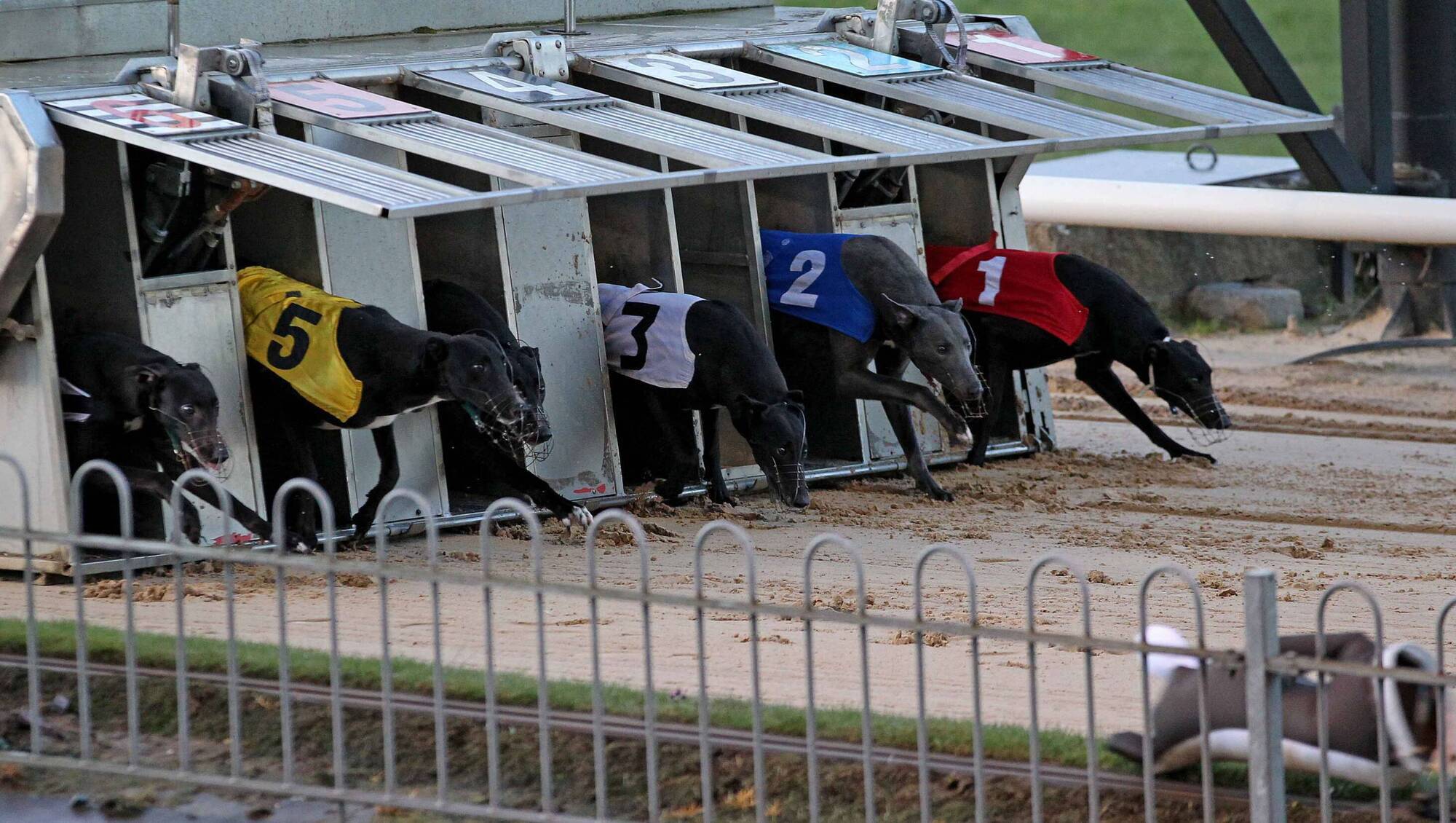
It appears that many of the thousands of dogs noted as being ‘active’ on the traceability system, but that weren’t showing up on the race management system , were in fact dead after all. File picture: Jim Coughlan
It has been a seismic few weeks for the sport of greyhound racing.
The votes of the Scottish and Welsh parliaments to ban racing from their jurisdictions further narrows the field of countries still hosting the sport professionally.
Going forward, greyhounds will be raced for sport in a bare handful of countries — select parts of the US, Australia, England, Northern Ireland, and our own Republic.
As agriculture minister Martin Heydon made clear in the Dáil last month, however, Irish representatives will not be following the example of their British counterparts. “I do not intend to ban greyhound racing here,” he said.
Read More
When People Before Profit TD Ruth Coppinger pointed out that, according to Dogs Trust Ireland, 869 dogs had died on the track in the past six years and that there is “very little traceability”, Mr Heydon called her statements “a dreadful slight” on the industry.
He added that Ms Coppinger’s assertion regarding traceability “is not borne out by the facts”.
The minister’s statement regarding the facts of the matter is relevant. Tuesday's report in the Irish Examiner shows that at any given time the details carried by Greyhound Racing Ireland on its traceability system are way out of kilter with the organisation's own figures on its race management system (RMS).
Our research shows that — for the sample cohort of animals born in 2021, queried via a series of parliamentary questions — the number of greyhounds listed as being active at a point in time on the traceability system is routinely at odds with those RMS figures by a factor of thousands.
The system said on multiple occasions that up to 2,000 more animals were active than the number of dogs who participated in trials or races over the same timeframe as noted on GRI’s own race management system (RMS), which meticulously details the results of every race and trial event online.
The traceability system relies on owners to update the status of their animals once every 42 days. If they don’t, after a further 30 days they are automatically suspended from racing activity. The suspension is automatically lifted when an owner updates a record. No other sanction applies.
Just under 11,000 suspensions have been doled out to trainers over the past two years — this prompts a number of questions. Are those suspensions really a deterrent, if so many of them are being handed down? And what is the point of the traceability system if it is entirely dependent upon racing owners to update it?
The decline in greyhound racing internationally is broadly due to welfare concerns.
Those concerns were most famously represented by RTÉ’s 2019 documentary , which claimed that over 6,000 Irish greyhounds were being culled annually for not being fast enough.
In the fallout from that broadcast, which shook the sport to its core in Ireland, GRI committed to introducing a traceability system to ensure the whereabouts and status of racing animals could always be determined.
In that way, in theory, no longer would huge numbers of animals disappear through the cracks.
That system was eventually introduced at a cost of close to €300,000. Why the system wasn't integrated with the existing race management system — for the purposes of cross-referencing if nothing else — is a question that GRI has not answered.
Responding to a series of queries from the regarding the robustness of its traceability figures, GRI said that its traceability and race management systems are entirely separate from each other, and that “one system does not purport to carry out the functions of the other”.
“Rásaíocht Con Éireann are fully satisfied the contemporaneous records provided are accurate,” a spokesperson said.
Yet when it was pointed out that a figure it gave the — of 1,026 greyhounds born in 2021 having raced or trialled in the 12 months to March of this year — clearly came from the RMS and not the traceability system, GRI did not respond.
It seems that two separate approaches are taken — when a parliamentary question is tabled, the traceability system is the source of the answer. For press queries and other purposes, GRI relies upon its race management system.
One thing is clear however — according to GRI’s own updated figures from the traceability system, accessed on April 1 of this year — too many racing dogs are disappearing.
It appears that many of the thousands of dogs noted as being ‘active’ on the traceability system, but that weren’t showing up on the RMS, were in fact dead after all.
Greyhound racing receives just under €20m in taxpayer funding on average from the Exchequer annually, and when that figure has come into dispute, Greyhound Racing Ireland has drawn attention repeatedly to its improved welfare record.
Greyhounds typically live well in excess of 10 years as pets. But with 3,300 animals born in 2021 dying before they reached half that lifespan, is this a welfare record that truly stands up to scrutiny?
In reality, there seems to be little appetite in Government to do away with greyhound racing at present, or at least the €100m horse and greyhound fund on which the sport is fundamentally reliant.
Things can change however. At Sinn Féin’s Ard Fheis in Belfast last weekend, a major talking point was the main opposition party’s shock vote to ban foxhunting.
Less heralded was the simple passage of Motion 30 without debate — which asserted that “funding for Horse Racing Ireland and Greyhound Racing Ireland should be set against the maintenance of strict animal welfare, labour and environmental standards”.
“I think people generally, both those for and against greyhound racing, are left uneasy about how it’s being run,” said Sinn Féin’s Chris Andrews.
“...People want more transparency, more accountability, and for GRI to have a proper business plan if they're to be receiving €19m every year,” he said.
“The number of deaths would suggest the welfare standards are not there.”
CONNECT WITH US TODAY



Be the first to know the latest news and updates