It’s time to tackle Celtic Tiger era building defects once and for all
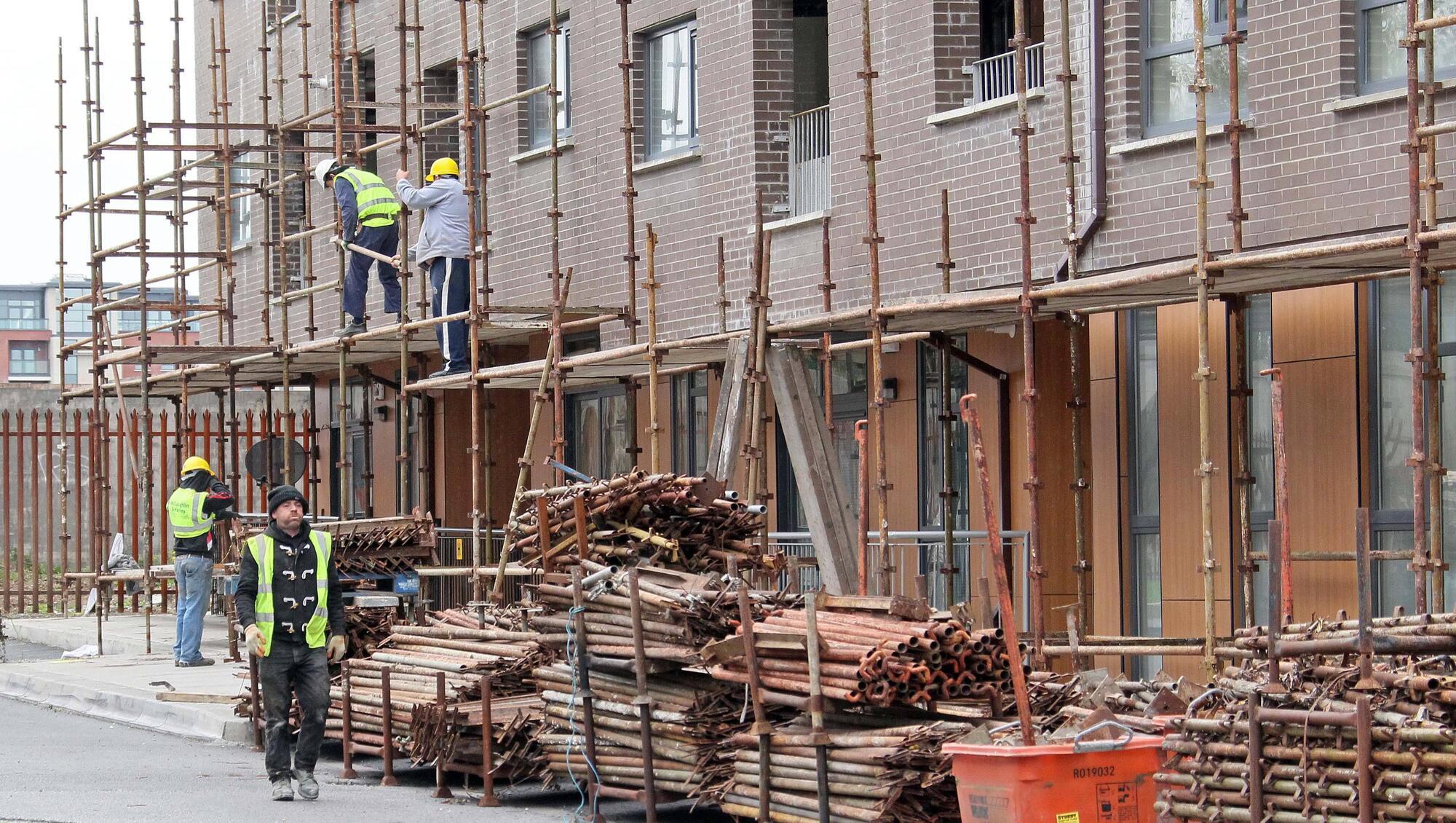
Scaffolding at Priory Hall in October 2011. Pictures: Colin Keegan/ Collins
It is now more than 11 years since the death of Fiachra Daly. He was one of the homeowners from the notorious Priory Hall apartments, forced to evacuate in 2011 due to serious fire safety defects.
The pressure of paying a mortgage on a home his family couldn’t live in, the invasive reporting requirements for the banks and the indifference of Government, pushed this hardworking family man to the limits. Eventually, he could take no more. On July 15, 2014, Fiachra Daily took his own life.

It was the powerful open letter to then taoiseach Enda Kenny from Fiachra’s partner Stephanie Meehan that eventually embarrassed the Government into action. For two years, the residents of Priory Hall had been requesting a meeting with the then minister for the environment Phil Hogan, to no avail.
"What will it take for some to listen and act…?" Stephanie asked the taoiseach.
Within days, the long-requested meeting with Government was arranged, a mediator was appointed, and in a matter of weeks a settlement was reached. But only for the residents of Priory Hall.
This started to change in 2017, when a Joint Oireachtas Housing Committee report on building control recommended a redress scheme for those impacted by building defects. The committee agreed that: “Ordinary owners who purchased in good faith should not be liable for the costs of remediation caused by the incompetence, negligence or deliberate non-compliance of others."
Spurred on by the cross-party report, homeowners and social landlords impacted by defects started to organise. The Apartment Owners Network, the Construction Defects Alliance and the 100% Not Our Fault Campaign demanded a redress scheme.
Significant success was achieved in the run-up to the 2020 general election with all parties bar Fine Gael including the call for a redress scheme in their manifestos. The subsequent Fianna Fáil-Fine Gael programme for government included a vague but important commitment to examine the issue of defects and support impacted homeowners.
In February 2021, then minister for housing Darragh O’Brien appointed a working group to examine the issue of building defects. The group published a detailed report in July 2022. It estimated up to 100,000 homes were impacted by defects with a potential remediation cost of €2.5bn.
A year and a half later, in December 2023, Mr O’Brien secured Cabinet approval to draft legislation to underpin a statutory remediation scheme. He also secured agreement to establish an interim remediation fire safety scheme for urgent works.

Both the draft legislation and the interim fire safety scheme were beset with delays throughout 2024 and into 2025.
Last November, a General Scheme of the Apartment & Duplex Defects Remediation Bill was published. Unfortunately, the scheme, as drafted, is fundamentally flawed.
Rather than replicating the successful Pyrite Remediation Scheme that addressed the Leinster pyrite scandal over the past decade, it is based on the wholly inadequate Defective Concrete Block grant scheme. Such an approach will not work.
It places all of the responsibility for managing remediation works on owners management companies, most of whom do not have the capacity or expertise to over see multi mullion euro construction projects.
Houses in multi-unit developments are not included despite clear evidence they are also impacted, such as Millfield Manor in Co Kildare.
There is no clarity on how the current interim fire safety scheme will operate alongside the new statutory scheme, or how necessary upgrade works will be funded where the OMC does not have the funds to do so.
There is confusion on what ancillary costs will be covered by the scheme, such as the provision of fire wardens and increased insurance costs, and how retrospective payments will be made and to whom.
Following pre-legislative scrutiny, the Joint Oireachtas Committee on Housing unanimously agreed our report in January, which has been published and forwarded to the minister.
We have recommended 19 significant changes to the legislation. This is not an a la carte menu. The minister must incorporate them all into the legislation or the scheme will fail.
Homeowners and tenants living in Celtic Tiger-era defective homes have done nothing wrong. They are the victims of light-touch building control regulation introduced by Fianna Fáil and Fine Gael during the 1990s, and shoddy work by large numbers of developers and builders during the Celtic Tiger era. They have been waiting for almost 15 years for redress.
The minister for housing James Browne has an opportunity to right this wrong. He can and must deliver a comprehensive, end-to-end scheme providing 100% redress for owners and tenants living in Celtic Tiger era defective homes.
- TD Eoin Ó Broin is the author of the Joint Oireachtas Housing Committee 2017 report Safe as Houses and of Defects: living with the legacy of the Celtic Tiger (Merrion Press 2021)