Claire McGing: Getting the balance right in Dáil Éireann
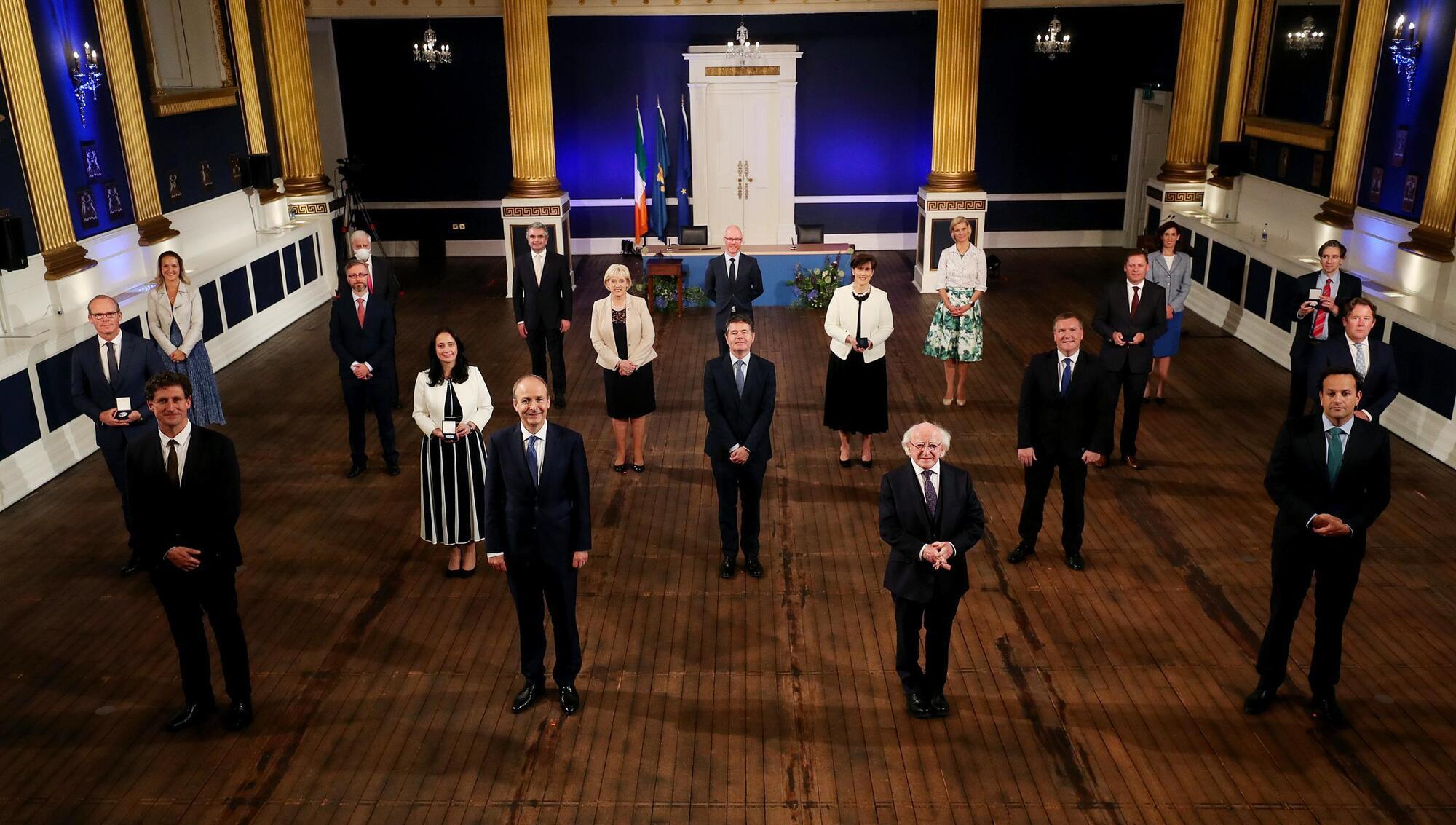
When President Higgins presented the new ministers with their Seal of Office in June 2020, six of the Cabinet members were women — just over 30%, however, in that year’s general election, the number of women elected was 36, representing 23% of seats in Dáil Éireann. File picture: MAXWELLS
The upcoming general election in Ireland, likely to be held before the end of the year, marks the third ‘cycle’ of gender quotas for party candidates.
Introduced in 2012 by the Fine Gael-Labour coalition, quotas were a response to both internal and external pressures to increase women’s representation in politics.
As part of a larger reform agenda for Irish political party funding, the legislation initially mandated that parties run at least 30% female candidates and 30% male candidates. In 2023, this threshold increased to 40%.
The consequences for non-compliance are significant, as parties risk losing half their annual public funding from the exchequer.
The legislation does not apply to independent candidates.

Scroll for results in your area
Although the quota specifically addresses the gender profile of party candidates, the legislative discourse during its introduction confirmed that the underlying objective was to increase the number of female TDs.
In the 2011 general election, female representation in the lower house reached a record high of just 15% (25 seats), reflecting a continuation of the stagnation seen since the 1990s.
Efforts by a number of parties to implement voluntary gender targets largely failed to improve the percentage of women holding Dáil seats.
Based on the experience of other European democracies that had adopted legislative quotas, it became clear that system-level change was necessary to achieve meaningful progress.
As we enter a new election campaign, it is timely to reflect on the effects of the quota law, highlighting where it has worked and identifying areas where further change is needed.
The 2016 general election was the first ‘quota’ election.
All political parties recorded an increase in the percentage of female candidates, meeting or exceeding the 30% threshold.
Notably, there was a 90% increase in the overall percentage of female candidates compared to 2011, which resulted in a 40% increase in the proportion of female TDs. Women won 22% of Dáil seats (35).
However, this level of growth was not sustained in 2020. In that election, the number of female TDs rose by only one, bringing the total to 36, representing 23% of seats.
This disappointing result was heavily shaped by party factors; while a number of female TDs in Fine Gael and Fianna Fáil lost their seats, a surge for Sinn Féin saw several new female candidates winning seats for the party.
While there were instances of controversy and pushback regarding quota implementation during some party conventions for the 2016 general election — mainly in cases where party headquarters instructed Fianna Fáil or Fine Gael members to select a female candidate — party leaders and strategists appear to have learned lessons from that first quota election.
While local issues still occasionally arise, a research report I recently conducted for Women for Election finds that the idea of gender-balanced tickets has become increasingly accepted and normalised within Irish party culture.
Gender quotas have undoubtedly altered the previously male-gendered dynamics of candidate recruitment and selection in Ireland.
In the past, political parties often claimed that the main challenge was the ‘supply’ of female candidates, suggesting finding local women willing to run for national office was difficult.
Nonetheless, all parties managed to recruit at least 30% female candidates in the 2016 and 2020 general elections.
Furthermore, as of October 18, 2024, data collected by Women for Election reveals that most parties are meeting or exceeding the 40% threshold for the upcoming election. Across the political system, a record number of women (165) are planning to contest for a Dáil seat.
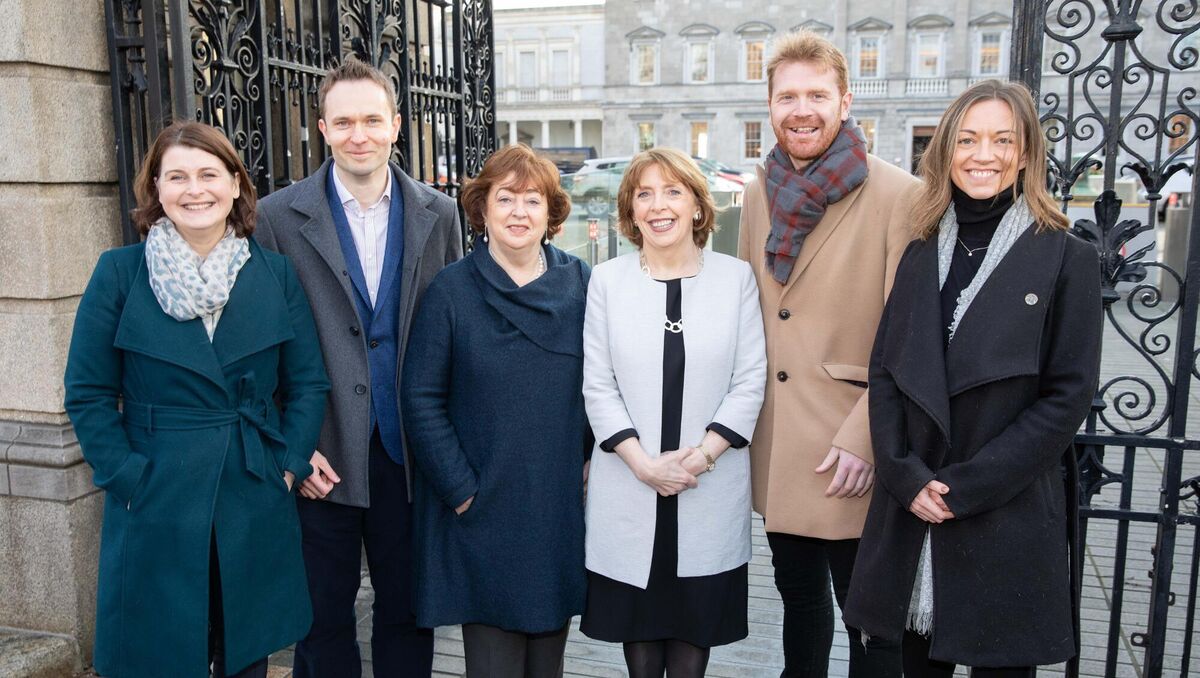
This data not only indicates that supply is no longer a primary barrier to increasing female political representation — if it ever was — but also highlights how the demand for female candidates due to gender quotas (linked to financial sanctions) has effectively increased the supply.
This progress has been further supported by government funding for key organisations that provide training and resources to equip women to run for elected office, including Women for Election, See Her Elected (SHE), and Women’s Collective Ireland.
However, the 2020 general election demonstrates that increasing the number of female candidates through quotas does not automatically lead to more women being elected as TDs.
This is particularly apparent in Ireland’s electoral system, where incumbency continues to provide a significant advantage among voters, resulting in low turnover.
This creates a potential ‘lag effect’ in the impact of gender quotas on women’s seat-holding.
For example, in 2020, 59% of female TDs and 80% of male TDs retained their seats, compared to only 13% of female non-incumbents and 14% of male non-incumbents.
Additionally, my research on the 2016 and 2020 general elections found that larger parties frequently added women to tickets too late in the campaign for them to have a realistic chance of securing a seat, in some cases using them as ‘sweepers’ for incumbent TDs.
In a localised political system like Ireland, successfully converting quotas into seats requires strong political will from party leadership and sufficient support for new women candidates.
It remains to be seen whether the 2024 general election will follow a similar pattern.
Despite the advancements made since the first quota election in 2016, it is important to acknowledge that gender quotas have not equally benefitted all groups of women in Ireland.
Traveller and Roma women, working class women, disabled women, migrant women, women of colour, rural women, and LGBTQ+ women are the most affected by policy decisions yet too often lack representation at the decision-making tables where these policies are shaped.
For this reason, the National Women’s Council (NWC) has convened the Alliance for Gender Quotas at Local Level, a collective of civil society organisations and academics advocating for the implementation of statutory gender quotas of 40% for local elections.
They are calling on the Government and political parties to implement additional intersectional measures alongside quotas to ensure that women, in all their diversity, are adequately represented in both national and local politics.
- Claire McGing is a social scientist. She has published extensive research on women’s political representation and elections in Ireland


CONNECT WITH US TODAY



Be the first to know the latest news and updates