Push for Gaza ceasefire as Israeli public opinion shifts
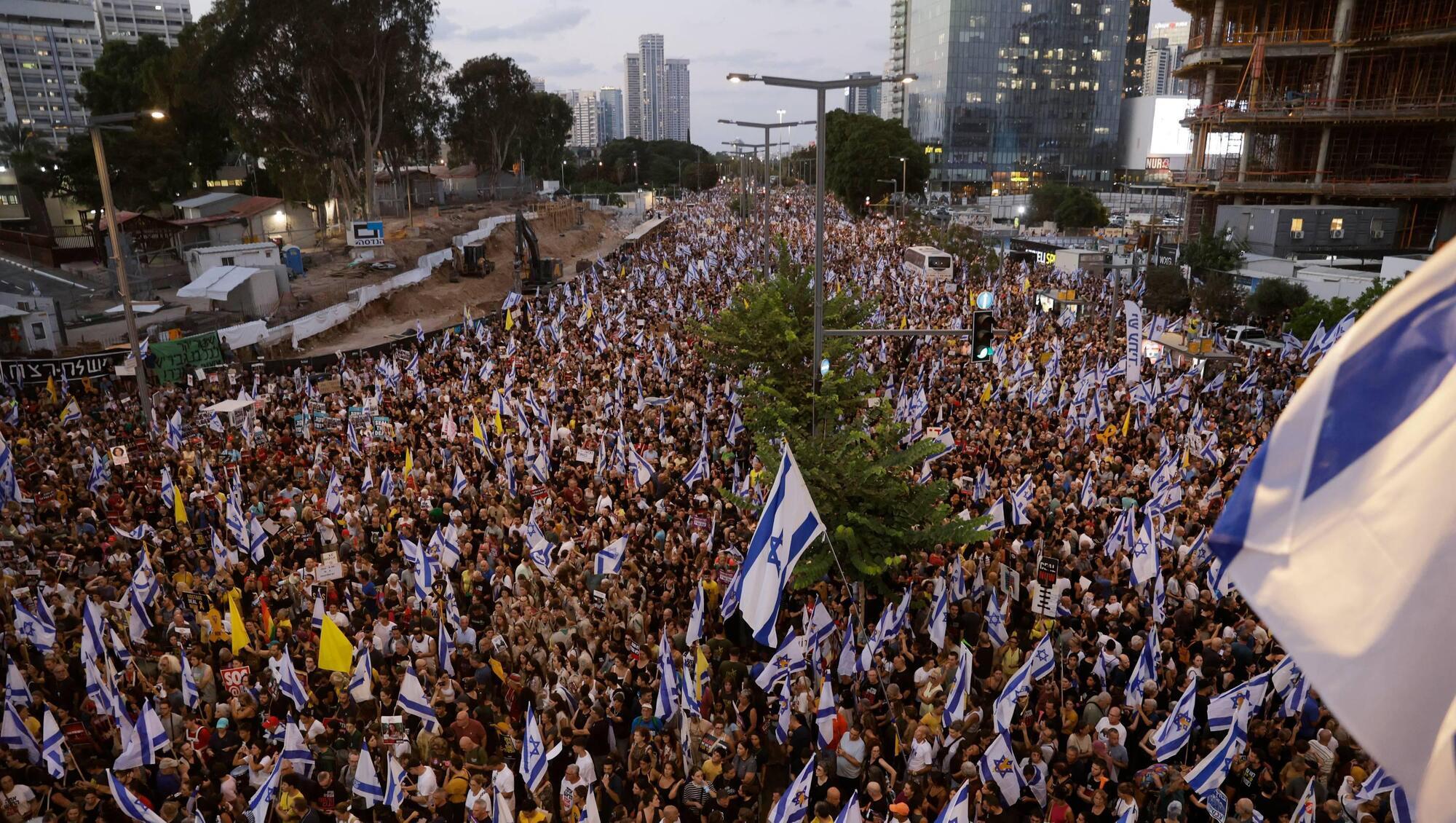
Protesters gather to demand a Gaza hostages deal in Tel Aviv, Israel, earlier this month; they are demanding that prime minister Benjamin Netanyahu justify the delay in signing the ceasefire deal due to the addition of new conditions. Picture: Amir Levy/Getty Images
“You make peace with your enemies, not your friends,” former Israeli prime minister, Yitzhak Rabin, used to say.
His enigmatic remark still echoes, decades later, as sharp divisions arose in Israel over how to resolve the war in Gaza.
The massive demonstration which took place on Saturday night, in Tel Aviv, had one single overarching objective, that of getting Israel’s prime minister Benjamin Netanyahu to conclude a deal for the release of the Israeli hostages in Gaza.
Organisers claim that half a million were present in Tel Aviv and another quarter of a million took part in other protests across Israel.
The demonstrations proved that Hamas’s psychological war, waged primarily through using the hostages, has shifted Israeli public opinion dramatically against the Israeli government’s position on the ceasefire talks.
In the meantime, the US is making one final effort to get its bridging proposals across the line.
According to Israeli media sources there are only two outstanding issues to be resolved: Israeli demands for an IDF presence in the Philadelphi Corridor and Hamas demands for Israel to release high security Palestinian detainees.
The Philadelphi Corridor is the 14km long, 100m wide, strip between Egypt and Gaza, established in 1979, as part of the peace treaty between Egypt and Israel.
Mr Netanyahu insists the IDF needs to maintain a presence in the corridor, to stop Hamas getting resupplied with weapons via Egypt.
The presence of the IDF in the corridor is a violation of the treaty, unless, of course, Egypt were to agree to temporary modifications.
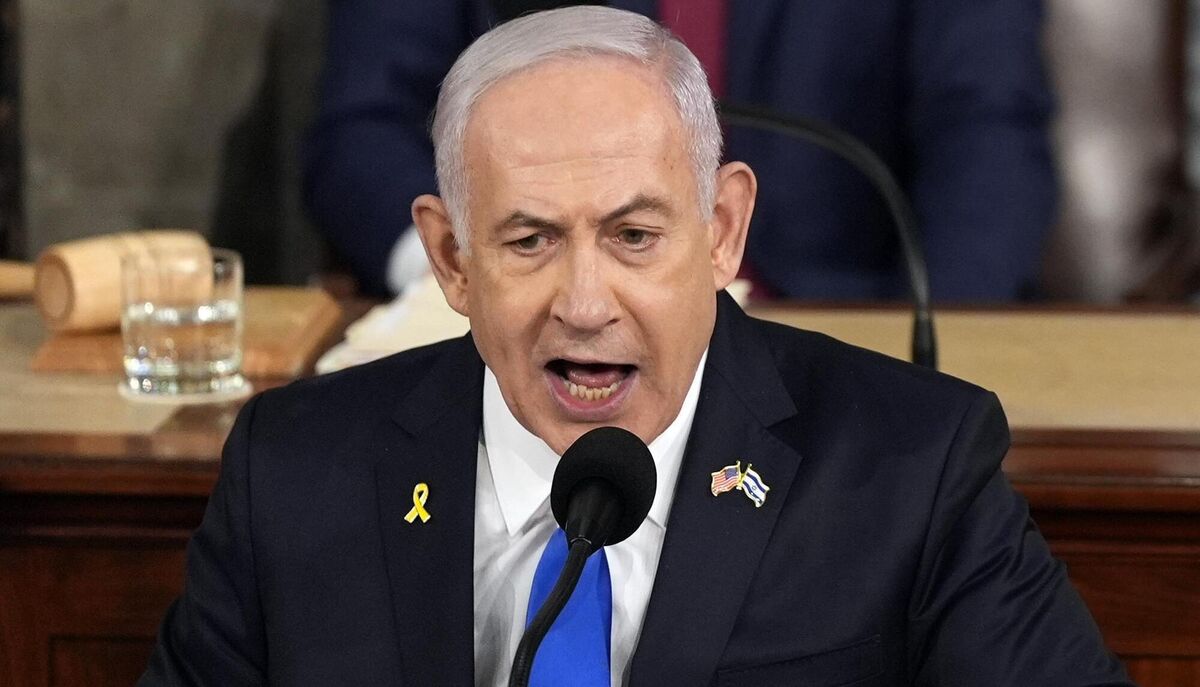
In his much televised media briefings this week, Mr Netanyahu made the case for preventing movement of military supplies across, and under the corridor.
His main point was that only an IDF presence in the corridor could guarantee Israel’s security.
Leaks from his own negotiating team insist that there is no need for an IDF presence in the corridor.
Moreover, on Friday, on the eve of the big demonstrations, Netanyahu was undermined further by the former Shin Bet chief, Nadav Argaman, who said the smuggling of military hardware into Gaza took place at Rafah Crossing Point, and not in the Philadelphi Corridor itself.
There is speculation, in the Palestinian and Qatari media, on Hamas’s efforts to get high security detainees released; most of these were detained by the Israelis in the West Bank.
The release of high profile prisoners, not necessarily Hamas people, would be a big boost for them, among the West Bank population.
Hamas will be seen to have succeeded where Fatah and the Palestinian Authority has failed.
One such high profile prisoner is Fatah’s Marwan Barghouti, jailed by the Israelis since 2002 on five counts of murder, which he denies.
If released, he could be a candidate to replace the present leader, Mahmoud Abbas.
On the other hand, if the list to be freed includes too many hardcore fighters with Israeli blood on their hands, Netanyahu’s government could collapse.
The Israeli right wing includes politicians with really extreme views, on Gaza, that are rarely mentioned in the Western media.
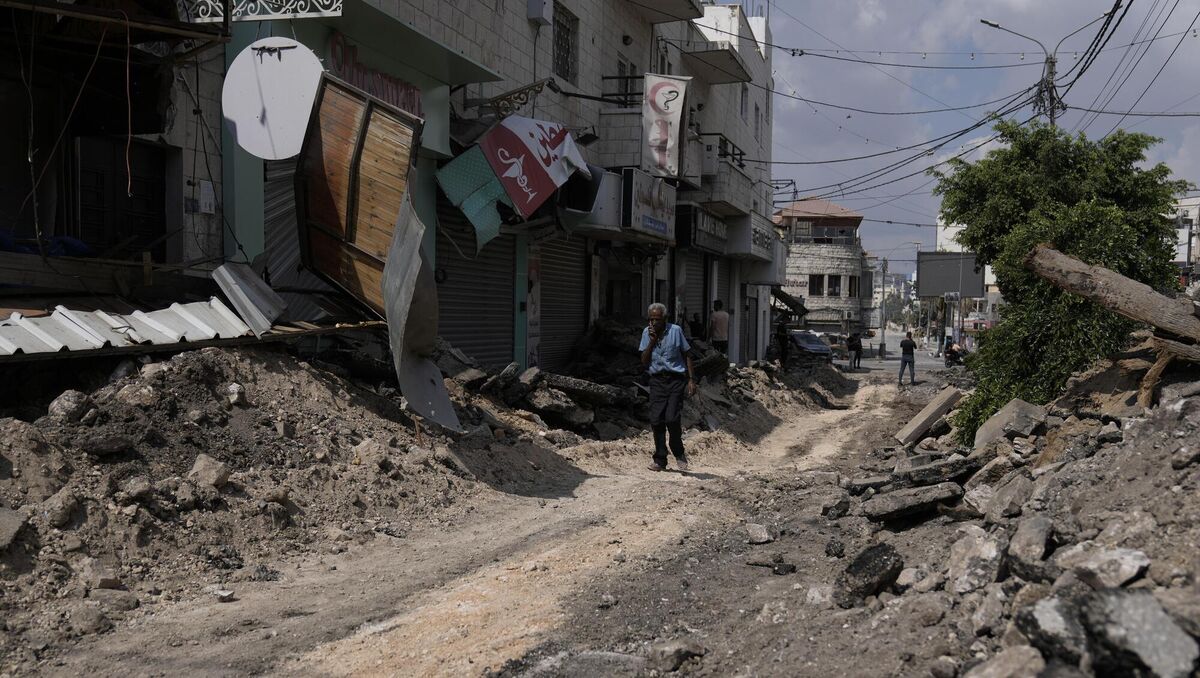
Hamas has called for an insurrection in the West Bank and recent IDF operations there can be seen in this light.
On the one hand, it shows the Israeli government will deal ruthlessly with West Bank resistance to its occupation and also protect Israeli settlers.
At the same time, it sends a message, that, in extremis, Israel could turn Jenin, Tulkarm, and other towns into another Gaza.
Since the war in Gaza started, more than 600 Palestinians and 23 Israelis have been killed in the West Bank.
The most recent incidents include a 13-year-old Palestinian girl killed on Friday in her home, after a firefight broke out when armed Israelis civilians entered her village.
Also on Friday, a US-Turkish pro-Palestinian activist, Aysenur Ezai Eygi, was shot in the head and killed, allegedly by a sniper when IDF opened fire on protesters.
On Sunday morning a truck driver crossed from Jordan to the West bank and shot dead three Israeli civilian security guards at the Allenby Bridge Crossing with Jordan.
Also known as King Hussein Bridge, it is very familiar to Irish military observers, who served with UNTSO (UN Truce Supervision Organization), when travelling on duty from Jerusalem to Amman and Damascus.
Further north, Hezbollah rocket attacks and Israeli air attacks continue at the southern Lebanon Border.
On Sunday Israel conducted airstrikes against alleged Iranian fighters positions in Syria, killing 18 people.
The key to avoid a widening of the overall conflict, lies in getting a ceasefire agreement in Gaza. In this regard, the latest proposals have been put to Hamas by Egypt and Qatar.
The US is expected to present its revised proposals to Israel shortly. The delay is attributed to the US wishing to see Hamas’s reply to the proposal first.
For a ceasefire to take place in Gaza, whether temporary or permanent, there should be a clear agreement in advance on a huge range of detail.
The first and obvious step is that the ‘guns go silent’, and all activities, that gives a military advantage in a designated area, should also cease.
There should be no advance forward of the ceasefire line and no reinforcement by belligerents.
The disengagement of opposing forces in contact should be effected as soon as possible; the longer opposing forces are in direct contact, the greater the risk of a ceasefire unravelling.
Of course, the Philadelphi Corridor is just one piece of the security requirements for Gaza and should not be taken in isolation.
There is an alternative option to an IDF presence, that is, an international security mission.
The mandate for such a mission will need to address the security concerns of both belligerents, in this case, Israel and Hamas.
It will need to address the security of the Gazan population, its diminished infrastructure, its health system, and humanitarian relief operations.
Once the list of tasks have been identified, the structure of such a mission can be tailored to meet the security requirements.
Such a security mission could follow similar models which have worked elsewhere.
If agreement can be achieved in the UN Security Council, the core of the mission could be a UN peacekeeping/peace making force, supported by unarmed military observers and UN civil police.
UNTSO, the oldest peacekeeping mission is already in Israel and the four surrounding Arab countries and could form the nucleus of the unarmed military observers.
If there is no agreement in the UN, there is also the model of the MFO (Multinational Forces and Observers) in Sinai back in the early eighties.
Where there is only partial agreement on UN involvement, a hybrid model might be deployed, with the UN, and for example, the EU, taking on different tasks.
The point is that there are many options available to implement a ceasefire agreement, once its parameters are agreed.
As we await the decisions on the latest initiative, the death toll in Gaza is about to reach 41,000.
- Dorcha Lee is a retired army colonel and defence analyst


CONNECT WITH US TODAY



Be the first to know the latest news and updates