Kieran Shannon: Cork GAA's Páirc Uí Chaoimh gamble is finally paying off
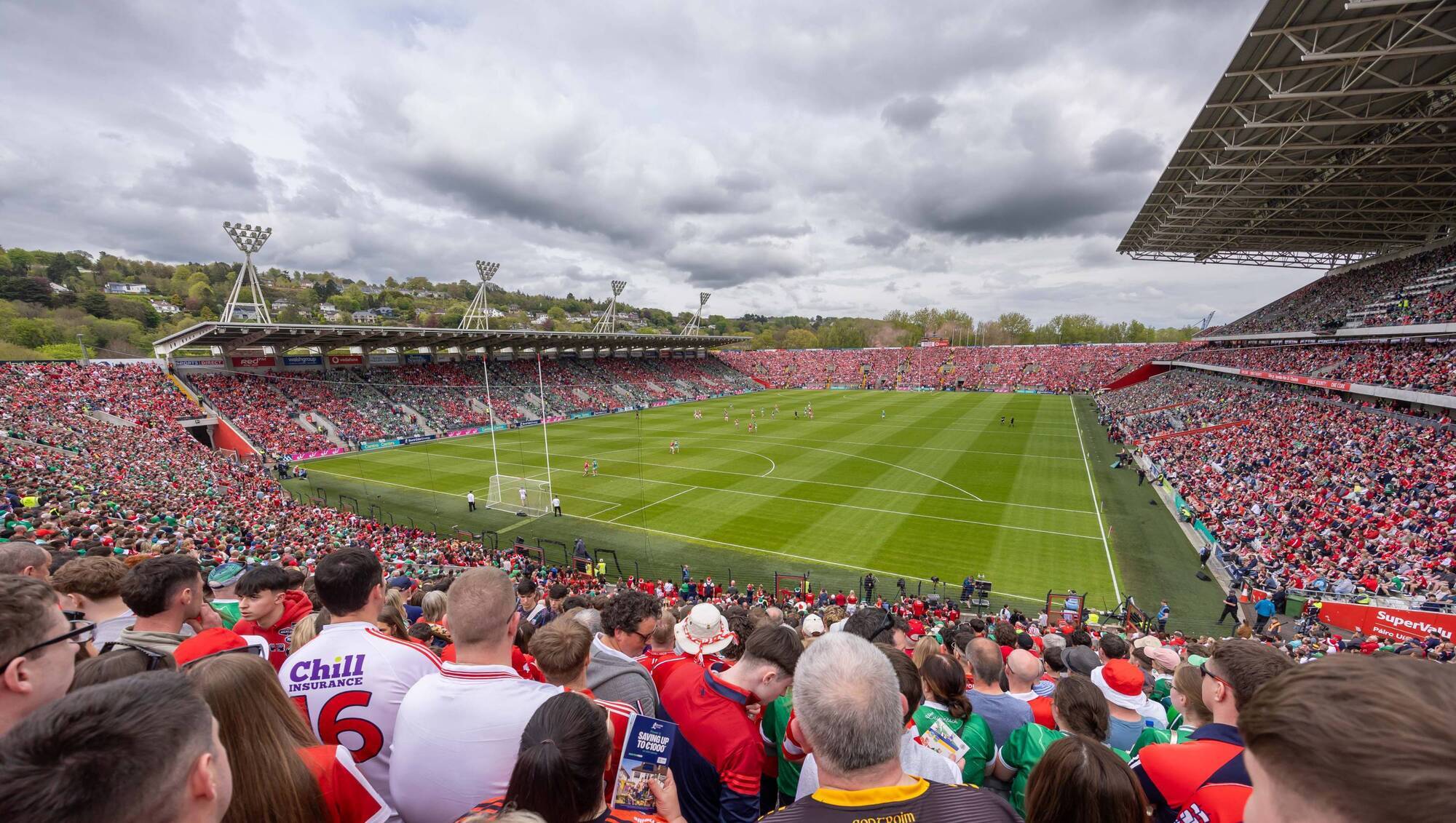
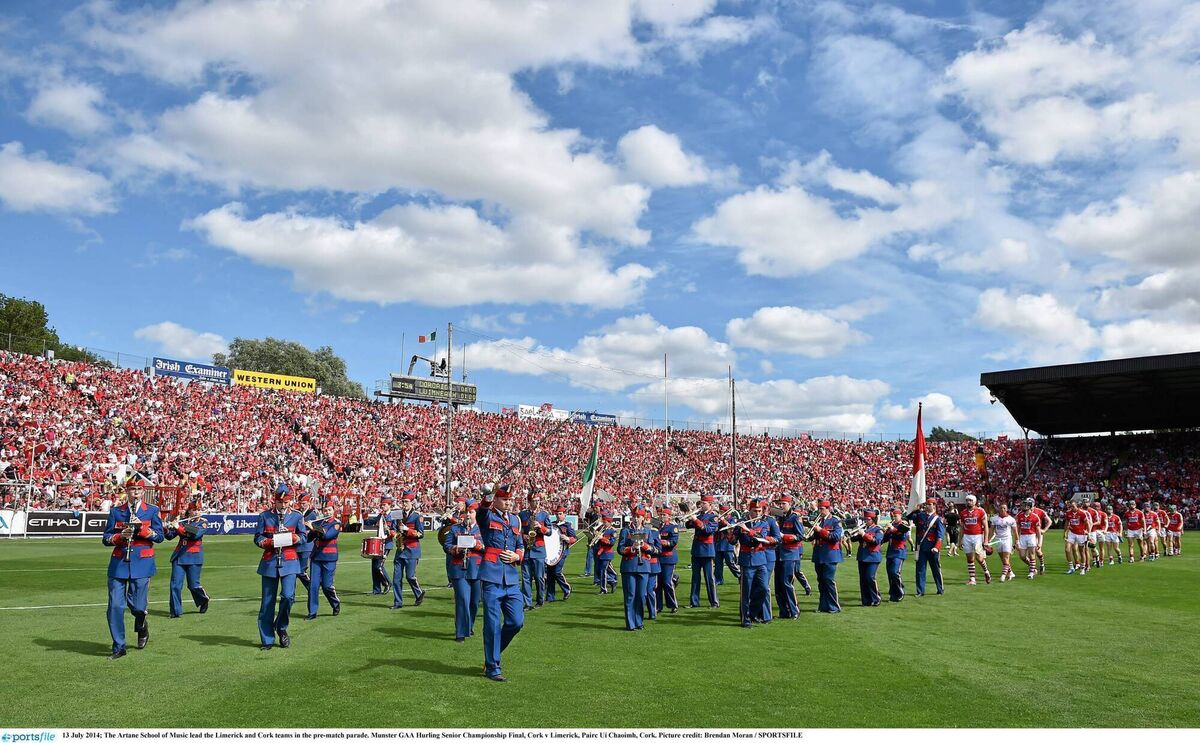
CROWDED HOUSE: Cork's hurling resurgence and the rivalry with Sunday's Munster SHC final opponents Limerick has already created new memories and a lot of noise around the remodelled Páirc Uí Chaoimh. Pic: Morgan Treacy, Inpho
We can now say that it has been worth it. Every cent. Even though it’ll take nearly another quarter of a century for that very last cent to be paid off.
Days before the old Páirc Uí Chaoimh was given a fitting send-off with Cork triumphing over Limerick in the 2014 Munster hurling final, Frank Murphy, in a sitdown interview with Tony Leen, expressed not just his hope but confidence that his successor as Cork county secretary wouldn’t be burdened with the crippling debt of a new stadium as he once had.
When the old Páirc first opened its gates 50 years ago with a blitz of Munster finals – a couple of seismic Cork-Kerry clashes were followed by another Cork-Limerick decider in hurling – its initial contract price of just under £1 million had skyrocketed to £1.7 million. Interest rates were a frighteningly punitive 16%. The interest due in 1980 alone was £171,000.
“It was a chastening time,” Murphy recounted. “It was scary stuff, a matter of survival. Essentially we weren’t viable.”
Read More
He was adamant that upon commissioning another redevelopment at the site of the old Athletics Grounds, history shouldn’t repeat itself.
“I’m conscious of the legacy that will be left to the successor in this office, that this cannot be an albatross around Cork GAA’s neck into the future.”
By Murphy’s estimation the cost of the new Páirc Uí Chaoimh would be €70 million, which would be fully covered by funds from the government, Munster and Central Council and the board’s own kitty.
“We have taken a conscious decision – though GAA headquarters are still wondering about it – there will be no bank borrowing on the redevelopment of the stadium.”
GAA headquarters’ scepticism, though, was justified. Within a fortnight of Kevin O’Donovan assuming Murphy’s role in December 2018, Croke Park had been called in to bail out the stadium that ultimately cost €96 million; as O’Donovan himself would lament a few years later, “Predictions that the stadium would open debt-free now seem like a distant memory.”
And if it wasn’t the debt that was embarrassing the county board in those early years, it was the pitch. Only a couple of months after Croke Park’s intervention, and just 18 months after the facility had opened in the late summer of 2017, the playing surface cut up during a national league double-bill featuring both senior county teams. The only other senior games played in the stadium that season were the Munster football final and the hurlers’ two home games in the Munster championship; everything else was relocated to Páirc Uí Rinn as the pitch in the new stadium was resurfaced and resolved once and for all.
Even as recently as Cork’s first home league game of 2024, Donal Óg Cusack spoke for a considerable constituency within the county when describing the redeveloped venue as a “huge millstone that’s been left around Cork’s neck”, and even compared the venue to “some couple’s home where they have a nice front room but don’t have dinner on the table.” His stance was essentially the same as it had been a decade earlier – he’d have much preferred a centre of excellence to develop Cork teams, not “a monument” to simply host them.
But now, on the eve of it hosting its first Munster senior hurling final involving its own team? It all feels so different. The idea of Cork not having a stadium that size, that grand, to house its hurlers and supporters seems archaic, impractical even.
It’s not just Cork GAA that has been enhanced by the stadium’s majesty. So has the GAA itself. Often a televised GAA match can look small-time with the backdrop of empty terraces and a sea of stone or plastic; even last weekend’s thrilling Monaghan-Mayo game in Clones suffered from such an aesthetic. When the action is coming to you from an inevitably-packed Páirc Uí Chaoimh, it radiates atmosphere. Big-time. International, even.
For that, Murphy can be forgiven, even if the debt he failed to foresee won’t. Vision rather than vanity informed his decision and drive to rebuild the Páirc.
But in a way the house he built has been haunted – in the best and most colloquial sense of the term. The round-robin provincial championship that guarantees so many home championship games for Cork was only passed months after the new stadium opened. If it wasn’t for that response to – and greatest legacy of – football’s Super 8s, it’d be much harder to justify such an outlay when Munster was already hardly short of stadia.
Under the old format and in the old Páirc, the place by the summer was mostly somewhere other counties played, not Cork themselves, bar the footballers’ biennial home clash with Kerry.
After Brian Corcoran’s debut year of 1992, which remarkably featured three home Munster championship games (including one against Kerry), only two of Cork’s following 19 Munster championship games were in Páirc Uí Chaoimh – the 1996 and 2001 first-round losses to Limerick; all bar one of the others were either in Thurles (10) or the Gaelic Grounds (six). The 2005 Munster final was only Joe Deane’s third senior championship game at the venue, even though by then he was in his 10th year on the team. Tipp’s Brendan Cummins was playing his 17th senior championship game there.
It’s a whole new ball game and ballpark now. Sunday will mark the 14th championship game that the Cork hurlers will have played in the new Páirc. That’s the same number as they played in the old Páirc from 1992 to 2014, and just eight less than the old Páirc afforded them in the 39 seasons it was open.
The real step-change has been in recent seasons. Cusack’s ‘couple’s front room’ remarks came in February 2024; up to then Cork had been averaging crowds of ‘only’ 31,680 at home championship games in the new Páirc and just once in their seven games had its attendance exceeded 36,800. At that point you could have argued that the stadium should have been downscaled to a 30,000 capacity, saving the board tens of millions and years in debt. But then that summer that 36,800 watermark was reached for a narrow loss to Clare. With the Pat Ryan era on the line, over 41,670 swelled into the Páirc on a Saturday night for a magical win over Limerick.
Since then every home championship game has been a sellout, as was the 2025 league final. Even their home round-robin league games over the past two seasons the crowd has never dropped below 19,500. The great Cork team of 2006 in their pursuit of a third consecutive All-Ireland could afford to play all three of their home league games that season in Páirc Uí Rinn. Going for the league and going to see the team in the league just wasn’t a thing on Leeside back then. Now it’s all the rage, going to see a hurling team the whole county is proud of playing in a stadium it is similarly now proud of.
It’s unfortunate that it has yet to have an outstanding football moment to share with the Cork public the way the old Páirc had Tadhgie Murphy’s goal in ’83, Dinny Allen’s in ’88, and all the wins against Kerry there during the career of Anthony Lynch. The nearest thing was Mark Keane’s goal during covid but the place was deserted. John Cleary’s team have obviously decided that they’re better off making Páirc Uí Rinn a cauldron, and their home at this point in time; even with the county now returning to Division 1, it’s unlikely — bar a Munster final against Kerry — that they’ll be playing any home games anywhere else.
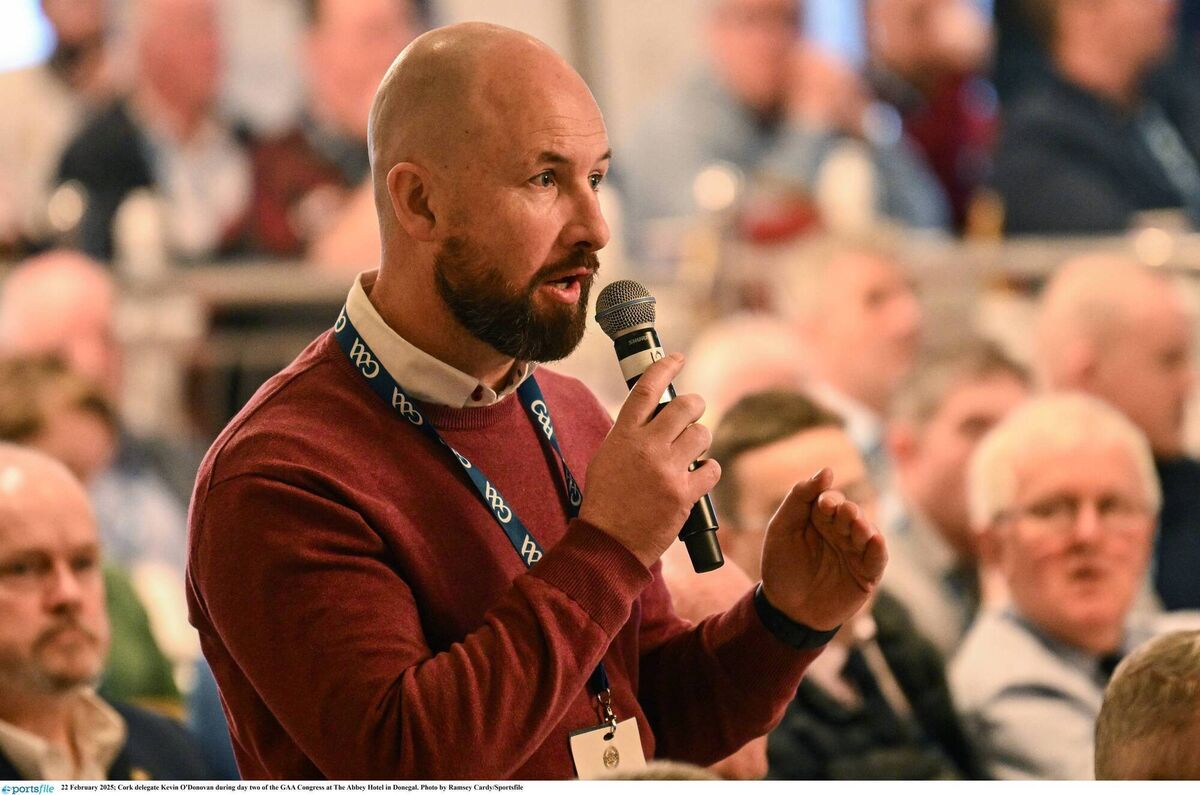
And of course the new Páirc has one other glaring deficit – its debt. O’Donovan has been able to restructure it whereby as of last year they owe Croke Park (approximately €18 million) more than the bank (roughly €12 million) that will be repaid by 2048. It is still a millstone for the board, especially O’Donovan.
But the Cork GAA public itself no longer carries or feels that weight. For all the downsides there are to county board meetings no longer being accessible to the media, it has helped the collective mood that the stadium’s debt only generates headlines annually at county convention rather than every month.
There is still a question – being pursued through the courts – as to why the stadium’s costs overran significantly, but also an appreciation and even relief in light of the Casement Park and national children’s hospital fiascos that it was built when it was built; a 43,500 capacity stadium for €96 million would be some bargain now.
SuperValu could further activate its generous sponsorship by helping create an even greater matchday experience outside the venue. The local authorities, having had a few more years to see just how much the stadium has enriched the city, could surely do more to facilitate rather than block the board’s plans for a museum and visitor centre on the premises.
But overall it’s working. O’Donovan has regularly allayed concerns like Cusack’s that the stadium’s debt would impede the preparation of county teams. “There is nothing going to fill that stadium faster than an All-Ireland winning senior Cork hurling or football team,” he’d tell me in 2021. “And there’s nothing to turn that debt around faster than a full stadium.”
Again and again.
A collection of the latest sports news, reports and analysis from Cork.
CONNECT WITH US TODAY



Be the first to know the latest news and updates